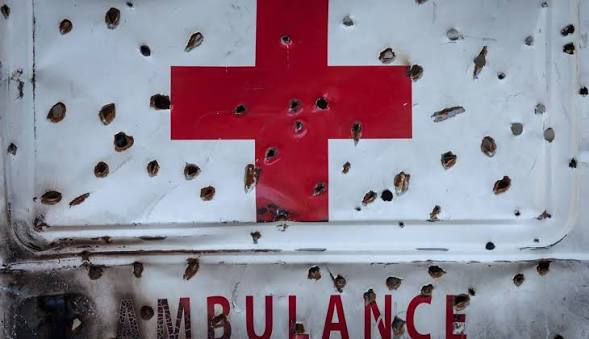
The Nursing and Midwifery Council of Nigeria (NMCN) and the International Committee of the Red Cross (ICRC) and other stakeholders have moved to de-escalate attacks on health facilities across the country.
They made the commitment at the workshop for the development of a Continuing Professional Development module on “De-Escalation of Violence in Healthcare Settings,” in Abuja.
In his welcome remarks, the registrar and chief executive officer of Nursing and Midwifery Council of Nigeria, Dr Ndagi Alhassan, lamented that nurses still encounter threats and aggression at health facilities.
He noted that healthcare workers are expected to provide care regardless of the circumstances in which they find themselves despite working in environments threatened by violence.
“At present, in some healthcare environments, nurses and midwives encounter aggression, threats, hostility, emotional distress, overcrowding, conflict and other circumstances capable of escalating into violence.
“This reality places a unique responsibility on us as regulators, educators, healthcare institutions and professionals to ensure that our nurses and midwives are adequately prepared not only to deliver clinical care, but also to communicate effectively, recognize early warning signs, prevent escalation and respond appropriately when difficult situations arise,”.
In his opening remarks the Deputy Head of Delegation, ICRC James Matthews, reaffirmed ICRC commitment to the initiative which he said reflects a shared commitment to creating safer environments for healthcare workers and for the patients and communities they serve.
According to him, healthcare workers should be able to carry out their professional duties in an environment where they are treated with dignity and respect and where violence, threats and intimidation do not become part of their everyday working reality.
He reiterated that research on violence affecting healthcare delivery in Nigeria has highlighted the importance of addressing this challenge and strengthening the capacity of healthcare personnel to prevent and respond appropriately to situations that may escalate into violence.
“The development of this CPD course represents an important complement to the work already being undertaken with the Nursing and Midwifery Council of Nigeria to strengthen Protection of Healthcare within nursing education. “While the latter provides nurses with foundational knowledge and understanding, this initiative seeks to translate that foundation into practical skills for nurses already in professional practice.
“De-escalation is not simply about managing difficult behaviour. It is about communication, recognition of early warning signs, appropriate intervention, personal safety and, ultimately, preserving the ability of healthcare workers to continue providing care.”
He commended the Nursing and Midwifery Council of Nigeria for taking the lead in developing a structured professional development response to violence against health workers.
We are also grateful to all the experts and practitioners participating in this workshop for bringing their experience and perspectives to the process.
He reaffirmed ICRC commitment to supporting the effort through technical expertise and experience in the protection of healthcare.
“We hope that the discussions over the next three days will result in a practical, context-specific and sustainable CPD course that can contribute meaningfully to safer healthcare environments across Nigeria,” he said .
In her remarks, the Humanitarian Affairs Advisor-Protection of Healthcare Programme, International Committee of the Red Cross(ICRC) Nigeria, Juliet Kelechi Unubi, said, “I’m very pleased that this engagement with the Nursing and Midwifery Council of Nigeria has come to fruition. Beginning with the integration of the Protection of Healthcare module into nursing education, which is targeted at nurses in training, we are now taking the next step with an initiative aimed at nurses already in professional practice.
“This Continuing Professional Development initiative is particularly important because it seeks to provide practising nurses with practical tools to recognise early warning signs of escalation, communicate effectively, respond appropriately and safely, and know when to call for additional support.
“The ICRC places strong emphasis on partnerships, and we are very pleased to be undertaking this work together with the Nursing and Midwifery Council. What we have done so far, what we are doing now, and what begins with this workshop are all part of the ICRC’s broader commitment to creating safer conditions for the delivery of healthcare.
“We are therefore very pleased to be here today and to support the Council in taking this important work forward”.
We’ve got the edge. Get real-time reports, breaking scoops, and exclusive angles delivered straight to your phone. Don’t settle for stale news. Join THISTIMES on WhatsApp for 24/7 updates →
Join Our WhatsApp Channel