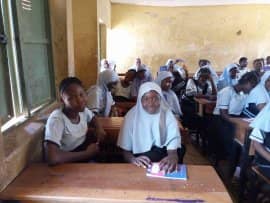
The Alliance of African Civil Society Organisations (AAfriC) has called on African governments, international organisations, and the private sector to invest more in girls’ education, health and leadership to promote inclusive and sustainable development across the continent.
The organisation, in a statement to mark the 2026 International Day of the Girl Child, observed on 11th October, said this year’s theme underscored the urgent need to invest in girls’ leadership, education and innovation to secure a more equitable and sustainable future.
It stressed that inclusion must be central to policies and programmes, particularly for girls with disabilities, those displaced by conflict, those from marginalised communities, and victims of forced labour, exploitation and child marriage.
It said many girls across Africa continue to face barriers to education, healthcare, safety and economic opportunities, while conflict and forced displacement further expose them to hardship.
The group added that girls with disabilities face additional, often overlooked, obstacles to participation and protection.
AAfriC said that equipping girls with knowledge, skills, and opportunities to make their voices heard would enable them to contribute to community resilience, enterprise, and climate-smart innovation.
The organisation reaffirmed its commitment to expanding access to education through community-driven initiatives to keep girls in school.
It also pledged to support innovation and enterprise led by girls and young women, promote climate resilience by equipping girls to lead adaptation and environmental protection efforts, and strengthen leadership pathways for girls from diverse backgrounds.
The Convener of AAfriC, John Ede, said every girl deserved the opportunity to learn, lead and thrive, regardless of her ability, location or circumstances.
“Every girl—regardless of ability, location, or circumstance—deserves the chance to learn, lead, and thrive. Inclusion is not optional; when we remove barriers and centre the voices of the most marginalised girls, we unlock solutions that benefit whole communities and strengthen resilience across the continent,” Ede said.
He emphasised the need to remove barriers preventing marginalised girls from fully participating in society, noting that inclusive programmes could unlock solutions that benefit entire communities.
AAfriC urged the African Union, regional multilateral organisations, national governments, international organisations, civil society networks and the private sector to prioritise investments in girls’ education, health and leadership.
It also called on partners to create safe and inclusive spaces where girls could innovate, express themselves and assume leadership roles without fear or limitation.
We’ve got the edge. Get real-time reports, breaking scoops, and exclusive angles delivered straight to your phone. Don’t settle for stale news. Join THISTIMES on WhatsApp for 24/7 updates →
Join Our WhatsApp Channel