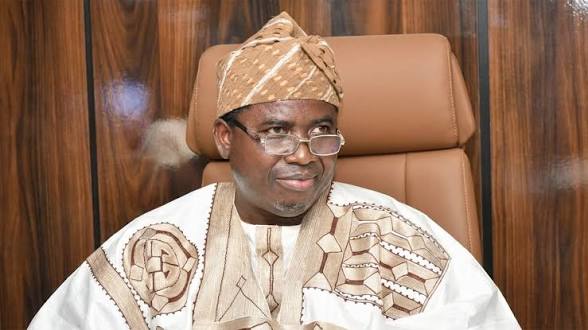
The Independent National Electoral Commission (INEC) has warned that Artificial Intelligence (AI) could influence how Nigerians vote in the 2027 general elections but insisted that the technology must never determine who emerges as the country’s next president.
INEC Chairman, Prof. Joash Amupitan, gave the assurance on Wednesday in Abuja while delivering a keynote address at the AI and Democracy Forum 2026, organised by Yiaga Africa in partnership with the commission and other stakeholders.
Amupitan acknowledged that AI could significantly influence the information available to voters, raising concerns about its potential misuse during elections.
“Will algorithms decide the 2027 votes?” he asked.
“No, algorithms will not and must never decide the 2027 vote.
“2027 votes must be decided by the sovereign people of Nigeria,” he declared.
The INEC chairman warned that the growing influence of AI presented both opportunities and threats to Nigeria’s electoral process.
“AI will undeniably shape the information environment in which citizens form their choices, influence the speed and security of electoral logistics, and alter the tactics of both democratic actors and anti-democratic actors,” he said.
He maintained that electoral authorities must prevent the technology from undermining voters’ rights or compromising the credibility of elections.
“Our task, therefore, at this forum and within the commission, is to ensure that AI remains a servant of democracy, not its master,” Amupitan stated.
The chairman disclosed that INEC was exploring AI-powered systems to detect suspicious voting patterns, mathematical inconsistencies and other irregularities in results uploaded from polling units.
According to him, the technology could help identify errors before results are accepted into the commission’s results management system, although human oversight and statutory procedures would remain essential.
Amupitan also revealed that INEC had established a dedicated AI unit within its Information and Communication Technology department and was finalising a governance framework to regulate the technology’s deployment.
He explained that AI could improve election logistics, identify duplicate biometric records and strengthen cybersecurity across the commission’s digital platforms.
The chairman said managing more than 100 million registered voters across 176,846 polling units would require effective technological support, particularly in communities affected by insecurity and difficult terrain.
However, Yiaga Africa Executive Director, Samson Itodo, warned that introducing advanced technology would not automatically guarantee credible elections.
He expressed concern over declining public confidence in the electoral process, citing findings from a recent national voting intention survey.
“It is one thing to deploy technology; it is another thing for the personal integrity of those managing those technologies to deliver,” Itodo said.
He also cautioned against AI-powered platforms presenting themselves as authorities on election results, stressing that INEC alone has the legal responsibility to declare winners.
The presidential and National Assembly elections are scheduled for January 16, 2027, while governorship and state Houses of Assembly elections will take place on February 6, 2027.
We’ve got the edge. Get real-time reports, breaking scoops, and exclusive angles delivered straight to your phone. Don’t settle for stale news. Join THISTIMES on WhatsApp for 24/7 updates →
Join Our WhatsApp Channel