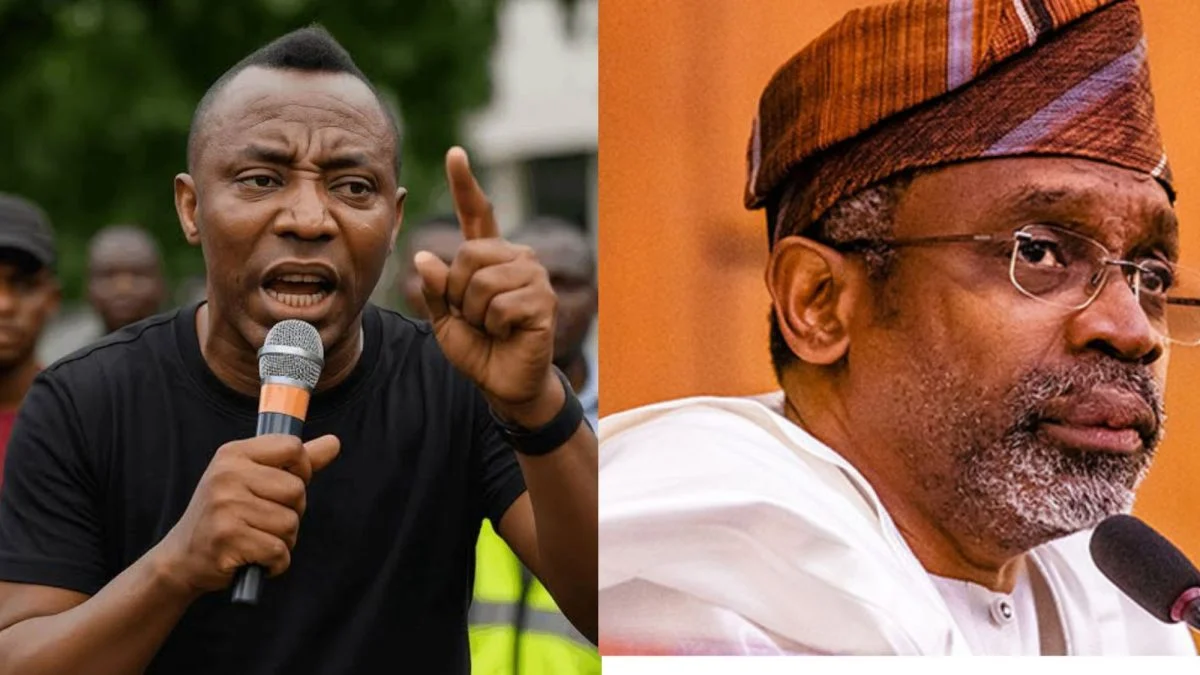
The presidential candidate of the African Action Congress (AAC), Omoyele Sowore, has criticised the appointment of Femi Gbajabiamila as chairman of Nigeria’s Presidential Task Force on Ebola Preparedness.
He questioned the decision to place a politician without medical training in charge of a critical public health response.
Sowore also raised concerns about the Federal Government’s handling of Nigeria’s first imported case of Ebola Virus Disease, warning against any attempt to politicise the outbreak or use it to restrict democratic participation ahead of the 2027 general elections.
He made the remarks in a statement issued on Wednesday following the Federal Government’s confirmation on Tuesday that a woman who recently travelled from Uganda had tested positive for Ebola in the Federal Capital Territory.
The activist questioned why Gbajabiamila, the Chief of Staff to President Bola Tinubu, was appointed to lead the task force instead of a qualified epidemiologist, infectious disease specialist or public health professional.
He said Nigerians deserved explanations about the government’s preparedness, disease surveillance systems and coordination with other countries following the reported case.
Sowore also questioned the circumstances surrounding the patient’s travel history, citing a statement by Uganda’s Ministry of Health that the woman had transited through the country after visiting the Democratic Republic of the Congo.
Ugandan authorities subsequently maintained that the country had no confirmed active Ebola cases and raised concerns about delays in receiving information from Nigeria regarding the woman’s travel and medical history.
“If these accounts are accurate, why has Nigeria not promptly provided the necessary information?” Sowore asked, questioning the effectiveness of the country’s disease surveillance and international public health coordination mechanisms,” the presidential hopeful said.
He also expressed concern that the outbreak could be exploited for political purposes, alleging that the Tinubu administration might use the situation to undermine voter participation ahead of the 2027 elections.
According to him, Nigerians must remain vigilant against any attempt to use a public health emergency to suppress democratic participation or restrict fundamental freedoms.
“Public health emergencies must never become excuses for suppressing democratic participation or restricting fundamental freedoms,” he said.
Sowore, however, urged Nigerians not to panic, stressing that the outbreak required a transparent, science-driven response rather than political considerations.
He called for full disclosure of relevant information, effective contact tracing, appropriate medical intervention, protection for frontline health workers and independent scientific oversight.
“Nigerians deserve transparency, scientific competence, and accountability, not political bureaucracy or secrecy in the face of a potentially deadly epidemic,” he said.
In June, President Tinubu approved the establishment of a Presidential Task Force on Ebola Virus Disease Preparedness and Emerging Public Health Threats and directed the immediate release of N10 billion for emergency intervention.
The funding was intended to strengthen the operational preparedness of the Nigeria Centre for Disease Control and Prevention (NCDC) and support critical national public health emergency response activities.
The task force, chaired by Gbajabiamila, comprises representatives of relevant ministries, departments and agencies, as well as state representatives.
Following the confirmation of the Ebola case, the Minister of Health and Social Welfare, Professor Ali Pate, said the patient had been isolated and was receiving medical care.
Pate disclosed that health authorities had identified 44 contacts for monitoring, including healthcare workers, patients, caregivers and people who might have travelled with the patient.
The Federal Government also urged Nigerians to remain calm, rely on verified information and comply with public health guidance as surveillance measures were strengthened.
It advised citizens to maintain good hand hygiene, familiarise themselves with Ebola symptoms and seek guidance from public health authorities if they suspected exposure.
Meanwhile, the Director-General of the World Health Organisation (WHO), Dr Tedros Ghebreyesus, has urged countries in the region to maintain a high level of preparedness following Nigeria’s first reported case of Ebola caused by the Bundibugyo virus.
In a statement on his official X handle on Wednesday, Tedros said contact tracing was ongoing and that the WHO was working with the governments of Nigeria, Kenya and the Democratic Republic of the Congo to strengthen the outbreak response.
“Contact tracing is ongoing. WHO and partners are working with the governments of Nigeria, Kenya and the DRC to strengthen the overall outbreak response,” he said.
He added that sustained vigilance was necessary to ensure early detection, prevent further transmission and protect healthcare workers and communities.
“WHO urges all countries in the region to sustain a high level of readiness, which is essential to detect cases early, prevent onward transmission and protect health workers and communities,” Tedros said.