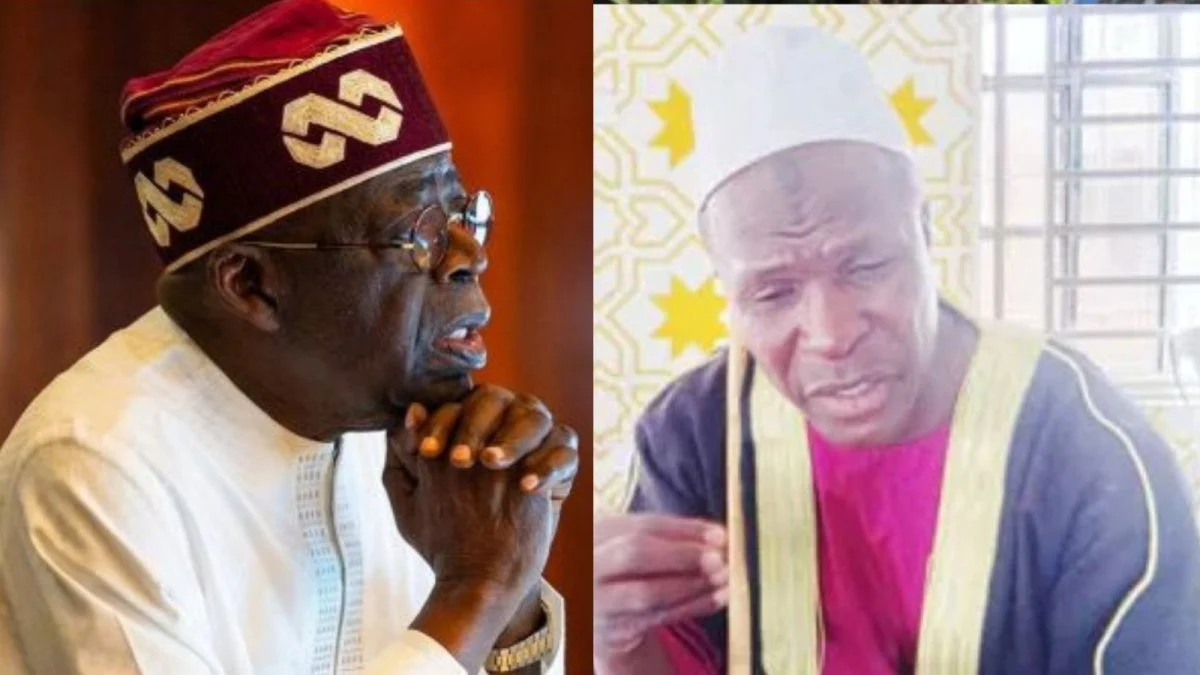
Imam Dahiru Abubakar has been removed from his position at a mosque in Madina quarters of Bauchi metropolis following repeated disagreements with the mosque committee over his public support for President Bola Ahmed Tinubu’s re-election bid ahead of the 2027 general elections.
Abubakar was accused of using his preaching sessions after obligatory prayers to defend Tinubu’s administration against criticism over insecurity and the economic difficulties facing Nigerians.
His removal reportedly followed another incident on Sunday morning after the Subhi prayer, despite earlier warnings from the mosque committee.
The imam reportedly told worshippers that President Tinubu should not be blamed for the country’s security and economic problems and deserved another opportunity to lead Nigeria.
His position, however, was said to have generated concerns among members of the mosque committee, who objected to the use of religious gatherings for political discussions.
A source familiar with the matter said the committee had taken action after Abubakar continued making the comments despite previous interventions.
“He would tell the congregation after prayer that Tinubu did not cause insecurity and that he deserved to be reelected.
“A committee was set up after he did the same thing last weekend and he was subsequently removed,” the source said.
Abubakar, while explaining his position, acknowledged that his sermons had included comments about the president and the 2027 elections.
He maintained that his intention was to discourage worshippers from holding Tinubu personally responsible for the country’s security and economic challenges.
According to him, the problems confronting Nigeria should also be considered within a wider religious context, particularly his belief that the difficulties are part of what he described as an “end times phenomenon.”
“I have been preaching to the people to stop castigating President Tinubu for the insecurity and economic challenges. They prepared to vote for him and give him another mandate in 2027 to continue his mandate.
“My preaching centred on telling people to embrace fear of God and stop blaming leaders for the insecurity, particularly President Tinubu, because only God’s intervention can stop the challenges with the power of prayers, and that didn’t go down well with the committee of the mosque.
“My preaching priorities are fear of God and our day-to-day activities. I cited examples of what is happening, especially insecurity in African countries like Sudan, Chad, Mali and others facing crisis. I asked whether President Tinubu was responsible for their insecurity.”
Although Abubakar argued that his preaching was intended to encourage faith and discourage the congregation from blaming political leaders for every national problem, the mosque committee said its concerns went beyond his support for Tinubu.
Chairman of the mosque committee, Imam Abubakar Jibrin, confirmed the imam’s removal and said the committee had repeatedly warned him against using the mosque for political activities.
“Our major challenge with him was not only his campaign for Tinubu but the way and manner he gathered many people in front of the mosque and sometimes entered the mosque purposely to discuss politics,” Jibrin said.
He explained that the committee had held discussions with Abubakar and cautioned him against turning the mosque into a venue for political mobilisation.
According to Jibrin, the committee considered the practice inconsistent with its understanding of the mosque’s primary purpose as a place of worship.
“The mosque committee sat down with him and cautioned him against turning the mosque to a political platform because of the Quranic verse which says the Mosque is solemnly for worship of Allah alone. We vehemently rejected the use of the mosque for political meetings. We warned him not once or twice but many times, but he didn’t heed our pleas.
“Even though we believe that politics is the process of producing leaders in the country, there are laid down procedures, which are political parties, and the activities should take place in their political party offices and not in the mosque.”
The committee chairman also disclosed that the dispute involved a proposal by Abubakar to change the mosque’s name from Masjid Abdullahi Bin Zubbair to Masjid Imam Bola Ahmed Tinubu mosque.
The proposal was reportedly rejected by the committee, which maintained that the mosque belonged to the community and that its name should not be changed to reflect support for a political figure.
“All the committee members said ‘no’ because the mosque belongs to the community. This mosque has a committee of which I am one of the members, and when he insisted, we rejected the idea and resolved that the mosque name would remain Masjid Abdullahi Bin Zubbair.”
Jibrin said the committee had completed its decision to remove Abubakar and would not reverse it.
He maintained that the imam could establish his own mosque if he wished to continue his activities without the restrictions imposed by the committee.
“He should go and build his personal mosque, or politicians should go buy a mosque for him; that is not our business. Let me clarify that we, members of the committee of the mosque, are not against the candidate of any political party. Our prayer is to Allah to choose the best for the country, be it President Tinubu or any candidate among the presidential candidates that would become a blessing to the country,” Jibrin added.