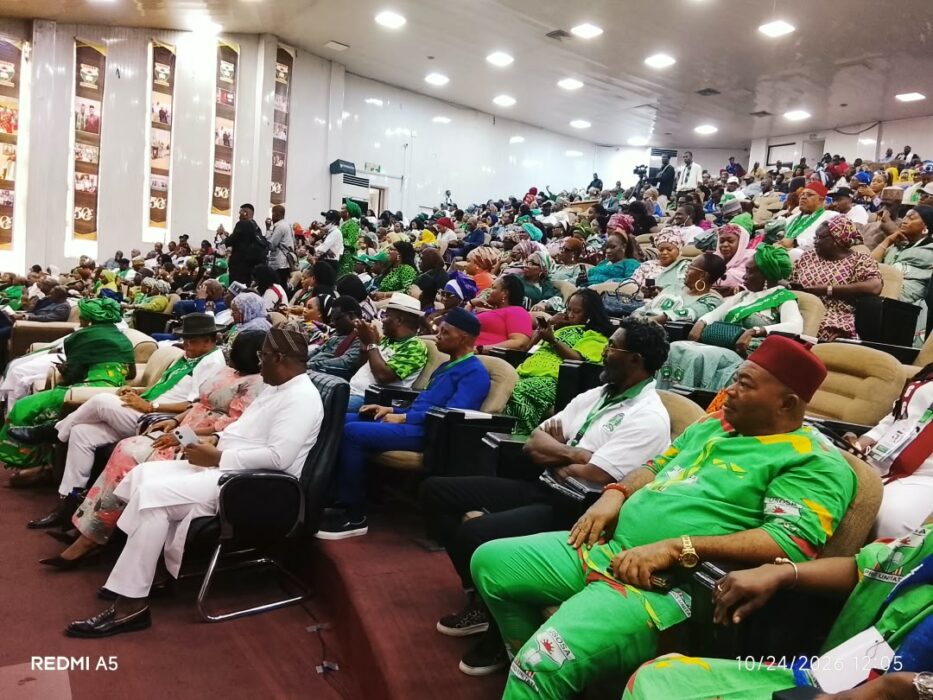
The Minister of Defence, General Christopher Musa, and other prominent alumni of Nigeria’s Unity Schools have challenged members of the Unity Schools Old Students Association (USOSA) to take the lead in rescuing the country’s education sector and restoring the declining standards of Federal Government Colleges.
They made the call at the 50th Anniversary Plenary and Annual General Meeting of USOSA, held in Abuja on Saturday with the theme, “Over 60 Years of Unity Schools: Preserving National Unity and Reimagining Education for Nigeria’s Future.”
Represented by Major General Garba Abdullahi, the minister urged the alumni association to deploy its influence, experience and resources towards strengthening national unity, improving educational standards and preparing young Nigerians for emerging security and technological challenges.
Musa said USOSA was a strategic national asset whose members could contribute significantly to Nigeria’s peace, stability and development, noting that the Unity Schools had, for more than six decades, brought together young Nigerians from different ethnic, religious and geographical backgrounds.
“From a defence and security perspective, the bond you share is the ultimate shield against divisiveness. You are living proof that our diversity is not a point of vulnerability but our greatest collective strength,” he said.
The minister, however, cautioned that the country could not rely solely on the achievements of previous generations, stressing that national security was closely linked to human capital development and the quality of education available to young people.
He challenged USOSA to champion national cohesion, drive institutional and security innovation, and establish strategic endowment funds to support the sustainable development of Unity Schools.
Musa also urged the association to establish structured endowment funds to finance and maintain laboratories, libraries, hostels and other essential facilities, thereby reducing the schools’ dependence on strained government budgets.
“You occupy critical positions in the public service, the military, corporate governance and the international community. You are proof that a united, prosperous and secure Nigeria is achievable,” he said.
In his remarks, the President-General of USOSA, Michael Magaji, said the association’s 50th anniversary was an opportunity to reflect on its journey, celebrate its achievements and strengthen its contribution to Nigeria’s education sector.
Magaji, who was preparing to hand over leadership, expressed gratitude to members, past leaders, volunteers and partners who had contributed to the association’s growth, describing his tenure as a call to service rather than an opportunity to occupy an office.
He recalled that USOSA had grown from modest beginnings into a national network connecting alumni of Federal Unity Colleges, with an expanding presence across Nigerian cities and an increasingly active diaspora community.
“What you see today in USOSA is the result of a long, tortuous, painful, rigorous journey, but it is about our country. It is not about Mike Magaji, or any individual. It is about our country and the future of our country,” he said.
Magaji stressed that the quality of education remained a defining factor in the development of any nation, arguing that the experience gained in Unity Schools had equipped their alumni with the values and leadership skills needed to contribute to national development.
He called on members to become more actively involved in the governance of education and the country, adding that the association’s achievements should inspire a stronger commitment to public service.
“Show me your education and I will tell you the kind of country you have. All of us have been privileged to come from this very rich background that has produced great alumni. It is time for us to consolidate this position and become more actively involved in the governance of education and of this country,” he said.
He added that USOSA had deliberately strengthened engagement with alumni in the United Kingdom, Canada and the United States, recognising the value of their international experiences, professional networks and resources to Nigeria’s education system.
As part of these efforts, he disclosed that USOSA had partnered with BudgIT, a civic organisation focused on public finance and budget transparency, to help monitor expenditure and promote accountability in Federal Unity Colleges.
“We believe that the relevance of USOSA must ultimately be measured by the difference we make in the lives of our members and in our schools.
“Our country needs citizens who understand that our diversity does not have to divide us. It needs people who have played together, learnt together, competed together and formed lifelong friendships across ethnic, religious and geographical boundaries,” he said.
The keynote speaker and Managing Director of Ibom Air, George Uriesi, called on USOSA to take responsibility for restoring the academic standards and boarding-school experience that once distinguished Federal Unity Colleges.
Uriesi recalled that the Unity Schools were established to bring together young Nigerians from different parts of the country, enabling them to learn about one another and develop lasting friendships across ethnic, religious and regional boundaries.
According to him, the policy provided students with an opportunity to experience Nigeria’s diversity first-hand at a formative stage of their lives, helping to build the foundation for national integration.
“The standard of education we received, fellow Unisens, was, to say the least, world-class. But what was very important to me was the exposure I got to the different people of Nigeria at the age of 11, for the first time away from the direct supervision of my parents,” he said.
The airline executive, however, expressed concern that the standards of the Unity Schools had declined over the years, citing overcrowding, changes in student populations and the weakening of the educational environment that once distinguished the institutions.
He said the deterioration had reached a point where some alumni who had hoped to send their children to their former schools were no longer confident that the institutions could provide the same quality of education they had enjoyed.
Uriesi argued that the challenge extended beyond individual schools, reflecting broader problems within Nigeria’s education system and society.
“USOSA has to take the lead. Don’t focus on fixing FGC Warri or FGC Sokoto alone. Let’s fix the Unity Schools. Let’s return them to the standards they were known for when this initiative began,” he said.
Uriesi also called for a long-term strategy that would enable alumni to measure their impact over the next two decades, with the goal of ensuring that future students enjoyed the same quality of education and national exposure that shaped previous generations.
“Our children deserve the same solid educational experience we enjoyed: growing up as teenagers, building friendships with people from different parts of the country, and learning to understand and appreciate Nigeria’s diversity,” he said.
We’ve got the edge. Get real-time reports, breaking scoops, and exclusive angles delivered straight to your phone. Don’t settle for stale news. Join THISTIMES on WhatsApp for 24/7 updates →
Join Our WhatsApp Channel