Nigeria’s Ebola index patient has been evacuated to Switzerland aboard an air ambulance from Abuja, the Coordinating Minister of Health and Social Welfare, Professor Muhammad Ali Pate, has confirmed.
In a statement published on his official X account on Monday, Pate said the evacuation took place earlier that morning with his approval.
He added that the patient’s spouse, who had remained asymptomatic, accompanied her on the flight.
Pate said the patient was clinically much improved, stable, conscious and communicating at the time of the evacuation, with her laboratory test results approaching baseline levels. However, he cautioned that her improved condition did not mean she was no longer infectious.
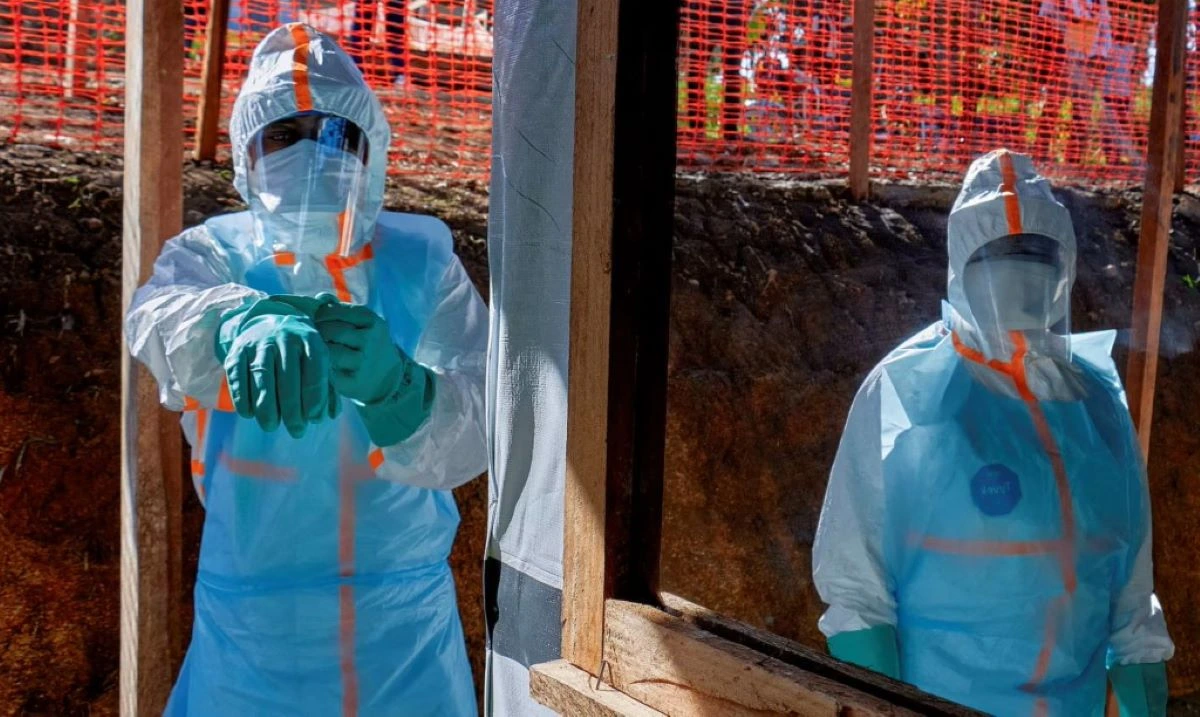
The minister said strict public health protocols were followed during the evacuation and thanked the clinical staff who treated the patient, as well as the public health personnel who coordinated the transfer.
Pate said further updates would be provided after the patient and her spouse arrived at their destination. His confirmation followed an earlier report by ARISE News, which said the patient had been transported from the private jet wing of the Nnamdi Azikiwe International Airport in Abuja.
Nigeria confirmed its first imported case of Bundibugyo Ebola virus disease on October 20, 2026, after laboratory tests detected the infection in a woman who had recently travelled from Uganda.
The Coordinating Minister of Health and Social Welfare, Professor Muhammad Ali Pate, announced the case in Abuja, stating that the patient was receiving medical care in isolation as authorities began tracing people who might have been exposed to the virus.
Authorities also strengthened surveillance at the country’s entry points and urged health facilities to identify and promptly report suspected cases.
The Nigeria Centre for Disease Control and Prevention (NCDC) disclosed on Sunday, October 25, that it had identified two additional suspected Ebola cases and 53 primary contacts as surveillance and investigations continued.
The agency clarified that the two suspected cases had not been confirmed by laboratory tests and should not be treated as confirmed infections.
Meanwhile, Nigerian, Ugandan and international health authorities have been investigating the source of the infection. Genomic analysis showed that the virus detected in Nigeria was closely related to the strain identified in Kenya’s initial case, although Nigerian authorities said no direct epidemiological link between the two patients had been established.
Nigeria’s Ebola case emerged amid a wider regional outbreak of Bundibugyo Ebola virus disease, with infections reported in the Democratic Republic of the Congo (DRC) and Kenya, raising concerns about cross-border transmission.
In Nigeria, the Federal Government has said it is drawing on lessons from the 2014 Ebola outbreak. Health authorities have urged medical facilities to remain vigilant and advised Nigerians to practise good hygiene and seek guidance if they develop Ebola-like symptoms after travelling to affected areas.