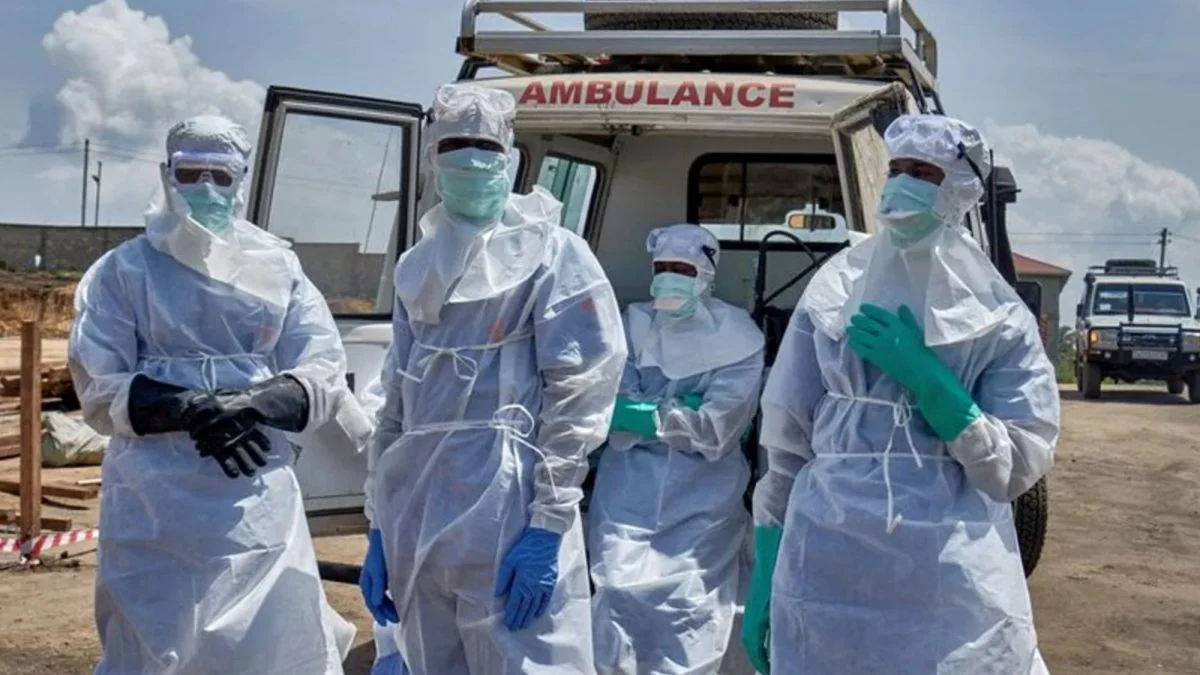
The Nigeria Centre for Disease Control and Prevention (NCDC) has identified two suspected cases of Ebola disease in Nigeria’s North-East region, raising fresh concerns over the country’s efforts to contain the viral disease.
The agency disclosed the development on Saturday in a statement published on its official X account.
It said both individuals had been isolated while investigations and laboratory tests were being conducted to establish their health status.
According to the NCDC, public health officials have commenced the process of identifying and documenting people who may have had contact with the suspected cases.
The exercise is expected to help determine whether there are possible links to other infections and establish the extent of any potential exposure.
The agency also confirmed that laboratory testing was ongoing, stressing that the identification of the two individuals as suspected cases should not be interpreted as confirmation that they have contracted the disease.
In its statement, the NCDC said, “Two suspected cases of Ebola disease have been identified in Nigeria’s North-East region. Both individuals have been isolated, contact identification and listing is ongoing, and laboratory testing is being conducted.
“Being classified as suspected cases does not mean they are confirmed Ebola cases; confirmation is subject to laboratory results.
“The public is advised to maintain good hand hygiene, practise enhanced sanitation and follow guidance from public health authorities. Further updates will be provided as verified information becomes available.”
The development comes amid an ongoing Ebola disease response in Nigeria following the confirmation of an imported case of the Bundibugyo strain in the Federal Capital Territory on October 20, 2026.
The confirmed case involved a 42-year-old woman who arrived in Nigeria from Uganda on October 3 through an international flight that passed through Addis Ababa, Ethiopia.
According to information released by health authorities, the woman began experiencing symptoms on October 7, four days after arriving in the country.
She initially visited a private health facility before being admitted to another hospital on October 11.
The NCDC was subsequently notified on October 19, leading to investigations and the collection of samples for laboratory examination. The agency’s National Reference Laboratory confirmed the infection on October 20.
The patient’s symptoms included fever, diarrhoea, general body aches and a sore throat. Health officials also reported that she did not experience bleeding.
Following the confirmation, the Federal Government activated a public health response involving the NCDC, the Federal Ministry of Health and Social Welfare, FCT health authorities and other relevant partners.
Contact tracing was also expanded to identify individuals who might have been exposed to the infected woman.
The exercise initially identified 44 contacts before the number increased to 53 during the NCDC’s October 25 briefing.
The contacts included healthcare workers, household members, domestic staff and other individuals who had interacted with the patient during the period under investigation.
The NCDC subsequently intensified surveillance and monitoring activities to ensure that anyone who developed symptoms after possible exposure could be identified and assessed promptly.
In an update on October 25, the Director-General of the agency, Dr Jide Idris, explained that the response was focused on identifying contacts, protecting healthcare workers, strengthening laboratory capacity and preventing further transmission.
He also called on Nigerians to cooperate with public health officials, particularly teams involved in contact tracing and monitoring.
The Federal Government later provided another update on the confirmed case, explaining that genetic analysis showed that the virus was related to the strain identified in Kenya.
However, authorities cautioned that genetic similarities alone did not establish a direct transmission link between the infections.
Meanwhile, the response has continued to receive international attention. The confirmed patient was medically evacuated to Switzerland on October 26 for further treatment.
Her husband, who was identified as a close contact, was also placed under isolation in Switzerland.
As of October 29, the European Centre for Disease Prevention and Control reported that 62 contacts linked to Nigeria’s confirmed case had been identified and were undergoing follow-up.
Ebola disease is a serious viral infection that can cause severe illness and death. It spreads through direct contact with the blood, secretions, organs or other bodily fluids of an infected person, as well as contaminated materials and surfaces.
The disease does not spread through ordinary casual contact in the same way as airborne respiratory infections.
However, people who care for infected patients without appropriate protective measures can face a significant risk of exposure.
Symptoms can include fever, weakness, headache, muscle pain, sore throat, vomiting, diarrhoea and, in some cases, unexplained bleeding.
The period between infection and the appearance of symptoms can range from two to 21 days.
Health authorities have continued to emphasise the importance of early detection, proper isolation and strict infection prevention measures in containing the disease.
The NCDC has urged Nigerians to maintain proper hand hygiene by washing their hands regularly with soap and running water or using alcohol-based hand sanitisers.
It also advised members of the public to avoid direct contact with the blood and bodily fluids of anyone suspected of having the infection.
Healthcare workers have equally been advised to maintain a high level of suspicion when attending to patients with symptoms that could indicate Ebola.
They are expected to observe appropriate infection prevention procedures and promptly report suspected cases to the relevant public health authorities.
The agency has also warned against spreading unverified information, urging Nigerians to rely on official announcements for updates on the situation.
The identification of the two suspected cases does not necessarily mean that Nigeria has recorded two additional Ebola infections.
Their status will depend on the outcome of the ongoing laboratory investigations.
Further details are expected from the NCDC as the investigations progress and verified results become available.