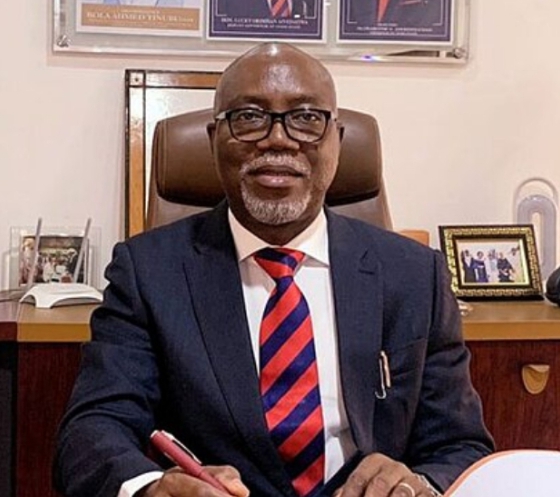
The Independent National Electoral Commission (INEC) has flagged 268 voter records over suspected artificial intelligence-generated photographs and other irregularities discovered in the preliminary Register of Voters ahead of the 2027 general elections.
The commission said its automated verification system had identified the questionable entries, which are currently undergoing further examination.
It also confirmed that steps had been taken to remove records found to contain artificially generated photographs and other forms of irregularities.
INEC’s Director of Information and Communication Technology, Lawrence Bayode, disclosed this during an appearance on Channels Television’s Sunday Politics.
Bayode explained that the commission was using its Automated Biometric Identification System (ABIS) to examine the flagged records and establish the nature of the irregularities.
He said the system had identified 268 entries requiring further investigation, adding that the commission had started reviewing them to determine which should be removed from the register.
“What we are currently doing now is looking at all these 268 records that ABIS already flagged as AI-generated or even something of irregularities,” he said.
The INEC official further disclosed that some individuals might have exploited a special registration arrangement created for persons living with disabilities.
The arrangement allows people who have incomplete fingers or no fingers to register as voters through an alternative process.
However, Bayode suggested that the provision may have been abused by individuals who used it to create questionable voter profiles.
He explained that the commission was reviewing the affected entries and would remove those established to be fraudulent.
“Those that we have seen, we are cleaning up,” Bayode said.
He also made a distinction between photographs generated entirely through artificial intelligence and genuine pictures that had only been enhanced using AI applications on mobile phones.
According to him, the use of AI technology to improve the quality of an actual photograph would not automatically disqualify a registered voter.
He maintained that INEC would not remove genuine voter records simply because an application had enhanced the photographs attached to them.
“Those that we know it is the AI on the phone that helped enhance their pictures, we can’t exclude such people because it was the AI on the phone that does that.
“Such people will still be on the register but those AI-generated, those photographs, all these will be removed. We are already looking at them,” he said.
The development follows the controversy that greeted the publication of INEC’s preliminary Register of Voters on October 26, 2026.
Several Nigerians raised concerns after screenshots of questionable voter photographs began circulating on social media.
Some of the images were suspected to have been generated using artificial intelligence rather than captured through the commission’s normal registration procedures.
The complaints were particularly prominent in parts of Edo State, where photographs attached to some voter records attracted public attention.
Beyond the suspected AI-generated images, the publication also generated concerns about possible multiple registrations, the inclusion of deceased persons and reports from registered voters who claimed that their personal details were missing from the online register.
Rabiu Kwankwaso, the Nigeria Democratic Congress vice-presidential candidate, called for a comprehensive investigation into the allegations.
Kwankwaso said the commission needed to go beyond issuing public assurances and ensure that the investigation was conducted transparently.
He also called for an independent examination of the affected records, insisting that the findings should be made public and anyone found responsible should face the consequences under the law.
“While I welcome INEC’s decision to investigate the matter, but Nigerians deserve more than assurances. The investigation must be thorough, transparent and independent (outside of INEC’s internal affairs), with its findings made public and any individuals found culpable held accountable in accordance with the law,” he said.
The former Kano State governor also called for proper verification of questionable voter entries.
He urged the commission to investigate possible duplicate registrations and artificial identities to prevent manipulation of the electoral register.
Similarly, political economist Pat Utomi expressed concern over the development, warning that the discovery could affect public confidence in the electoral process.
Utomi said the appearance of suspected AI-generated photographs in a document meant to support democratic participation raised questions about the commission’s verification procedures.
“INEC cannot afford to be careless with the credibility of Nigeria’s electoral process. The presence of AI-generated images in a register meant to support our democracy raises serious questions about verification, transparency and accountability. Our democracy is at stake here!”
The National Coordinator of the Obidient Movement, Dr Moses Paul, also demanded an explanation from the electoral commission.
Paul questioned how photographs suspected to have been generated through artificial intelligence entered the preliminary register.
“OUR DEMOCRACY IS UNDER THREAT! INEC must explain how AI-generated images found their way into a register meant to protect our electoral process. Who verified these records, and who is accountable?” he wrote.
He further maintained that Nigerians expected clear answers from the commission, adding that the issue should not be treated with secrecy.
Meanwhile, the Director of the Policy and Legal Advocacy Centre, Clement Nwankwo, raised concerns about the credibility of the voter register.
Speaking during an interview on ARISE News, Nwankwo questioned the increase in the number of registered voters from over 90 million to approximately 103 million.
He called for greater clarity on the verification process and the measures adopted by INEC to ensure that the figures accurately reflected eligible voters.
Nwankwo also pointed to the growing use of artificial intelligence in producing digital content, warning that the technology could create new challenges for electoral institutions if proper safeguards were not in place.
“Technology has of course come forward, and now what we see is what is now referred to as AI-generated information and photographs that have been inserted into the voter register.”
He further called on INEC to improve communication with political parties and other stakeholders concerning its preparations for the 2027 elections.
According to him, problems associated with voter registration and the transfer of polling units could also prevent eligible Nigerians from participating in the elections if they were not properly addressed.
INEC had earlier defended its decision to publish the preliminary register online, explaining that the document was the same one displayed physically across Registration Areas nationwide between October 9 and 15.
The commission’s Chairman of the Information and Voter Education Committee, Mohammed Kudu Haruna, said the publication was part of the statutory process that allows registered voters to examine their details and report any errors.
He explained that the preliminary register was not the final certified document.
The Display, Claims and Objections exercise was specifically designed to allow Nigerians to identify questionable entries, report missing information and request corrections before the register is finalised.
The commission also maintained that the publication did not mean its internal data-cleaning exercise had been completed.
INEC said it was investigating the circumstances surrounding the suspicious photographs, including possible technical and procedural lapses that might have allowed the entries to appear in the database.
The commission’s chairman, Professor Joash Amupitan, also confirmed that the affected records were being examined and that appropriate corrective measures would follow verified findings.