Lagos State Governor, Babajide Sanwo-Olu, has urged Nigerian banks to channel the additional capital raised through the recently concluded recapitalisation exercise towards financing industries, expanding businesses and creating employment opportunities.
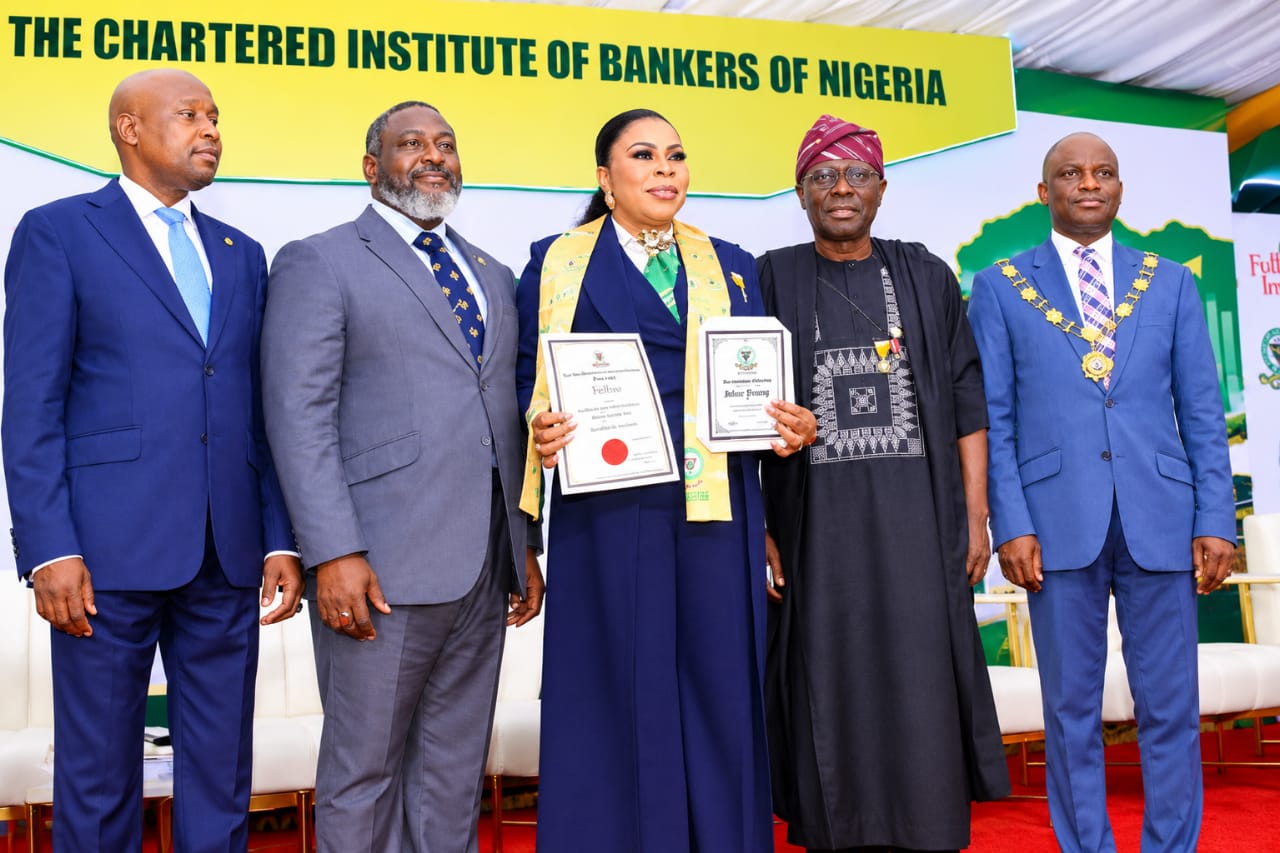
Sanwo-Olu made the call on Saturday, October 31, 2026, while delivering his special remarks as host governor at the 2026 Fellowship Investiture Ceremony of the Chartered Institute of Bankers of Nigeria (CIBN), held at Harbour Point Events Centre, Victoria Island, Lagos.
The ceremony celebrated 755 distinguished recipients, comprising 18 Honorary Fellows, 460 Elected Fellows and 277 Honorary Senior Members, according to CIBN President and Chairman of Council, Dele Alabi, who disclosed the figures in his opening remarks.
Sanwo-Olu said the successful recapitalisation of Nigerian banks had strengthened the financial system, but stressed that the next priority should be ensuring the additional capital translates into productive investments, industrial expansion and employment.
He noted that Nigerian manufacturers require affordable, long-term financing to purchase machinery, expand production and compete in international markets. Similarly, agricultural processors need funding for storage, processing and distribution, while growing businesses require credit facilities that reflect the realities of their operations.
Also speaking, CIBN President and Chairman of Council, Dele Alabi, said the successful completion of the recapitalisation exercise had shifted attention towards how effectively banks would deploy their increased capital to support Nigeria’s productive sectors.
He said the additional capital provides an opportunity to finance industrial development, infrastructure, small businesses and other activities capable of generating sustainable economic growth.
The CIBN president also disclosed that the institute would hold its MSME Forum on December 1, 2026, to develop practical approaches to improving access to finance and supporting enterprise growth. He added that the institute was advocating the establishment of SME Hubs across the country to provide businesses with financing, capacity development, digital tools and access to markets.
The Central Bank of Nigeria (CBN) introduced its banking sector recapitalisation programme as part of efforts to strengthen the financial system, improve banks’ capacity to absorb economic shocks and position lenders to finance larger transactions.
On April 1, 2026, the apex bank announced that 33 banks had met the revised minimum capital requirements following the conclusion of the exercise.
The regulator disclosed that banks raised a combined N4.65 trillion in fresh capital over the 24-month period, with 72.55% sourced from domestic investors and the remaining 27.45% from international markets.
Despite the stronger capital position of Nigerian banks, access to affordable financing remains a major challenge for businesses, particularly micro, small and medium-sized enterprises (MSMEs).
In September 2026, the CBN reset the Monetary Policy Rate (MPR) by 350 basis points to 23%, following the 307th meeting of its Monetary Policy Committee in Abuja. The adjustment brought the benchmark down from 26.5%, although the 23% rate remains relatively high for businesses seeking affordable credit.