| Number an improvement, but not good enough – Female Legislators | It will amplify women voices, says Ex-NDP Chairman
BY OUR CORRESPONDENTS
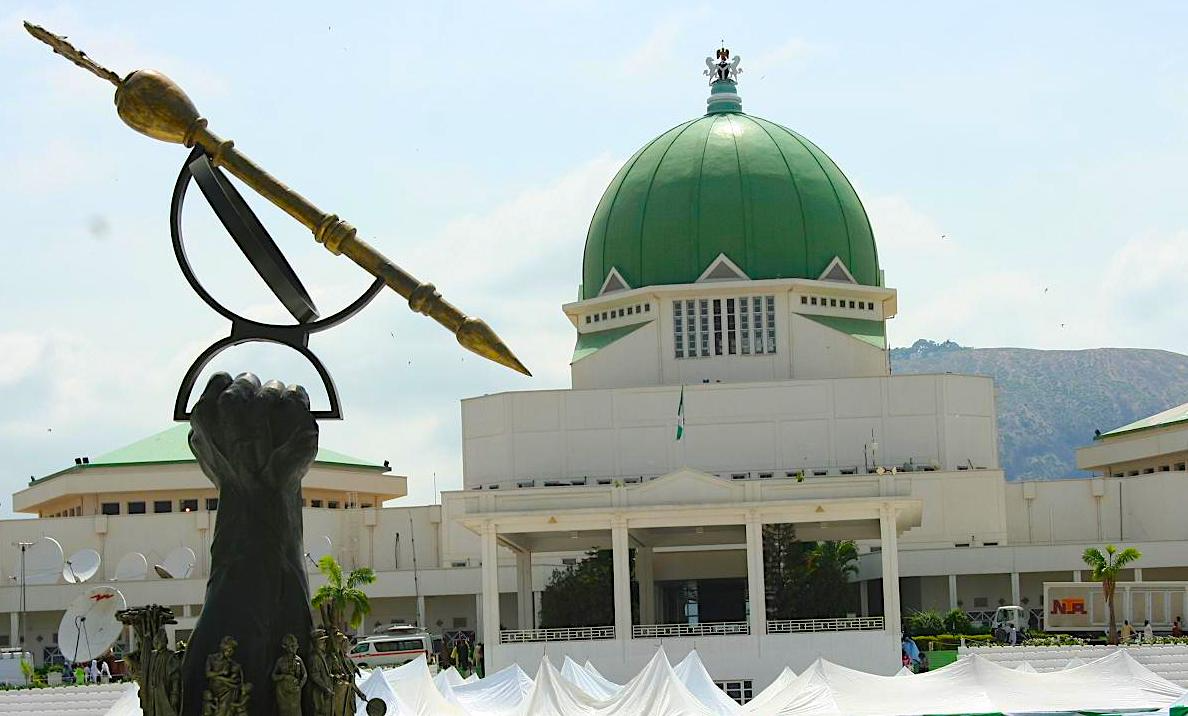
Nigerians across professional and gender lines have expressed divergent views on the National Assembly’s proposal to create 182 additional legislative seats reserved exclusively for women.
While supporters describe the initiative as a necessary intervention to address decades of political exclusion, critics argue that the allocation is inadequate and may not dismantle the structural barriers preventing women from securing elective positions.
The proposal has generated debate among civil society organisations (CSOs), women’s rights advocates, lawyers, serving and former lawmakers, and political activists. While many welcome it as an opportunity to improve women’s participation in governance, others demand more seats, transparent selection procedures and safeguards against political manipulation.
The Reserved Seats for Women Bill seeks to amend the 1999 Constitution by creating 37 additional seats each in the Senate and House of Representatives, with one seat for women in every state and the Federal Capital Territory. It also proposes three additional seats in each of the 36 state Houses of Assembly, distributed across the senatorial districts.
The arrangement would create 182 seats: 74 at the federal level and 108 across state legislatures. The seats would be additional to existing positions, take effect after the expiration of current legislative tenures and be reviewed every 16 years.
The bill is among 44 prioritised constitutional amendment proposals before the 10th National Assembly. Although lawmakers planned to vote on the proposals in December 2025, the process remained largely inconclusive, with only the modified State Police Bill passed and transmitted to state assemblies for concurrence.
The proposed intervention comes against the backdrop of women’s poor representation in elective positions. Women occupy only four of the Senate’s 109 seats and 14 of the 360 seats in the House of Representatives. Following the 2023 general election, only 48 women secured seats in the 988-member state Houses of Assembly, representing approximately 4.85 per cent.
Supporters Say Representation Is Necessary
The lawmaker representing Kosofe Federal Constituency, Lagos State, Kafilat Ogbara, urged the National Assembly to pass the bill, arguing that women’s inclusion in governance is essential to national development and should not be viewed merely as an attempt to improve representation statistics.
She said years of conferences, workshops and commitments had yielded little progress because the political system remained exclusionary.
“Women are still underrepresented in our political spaces, not because we lack capacity, not because we lack interest, not because we lack the vision, but because the system has not been designed to include us,” she said.
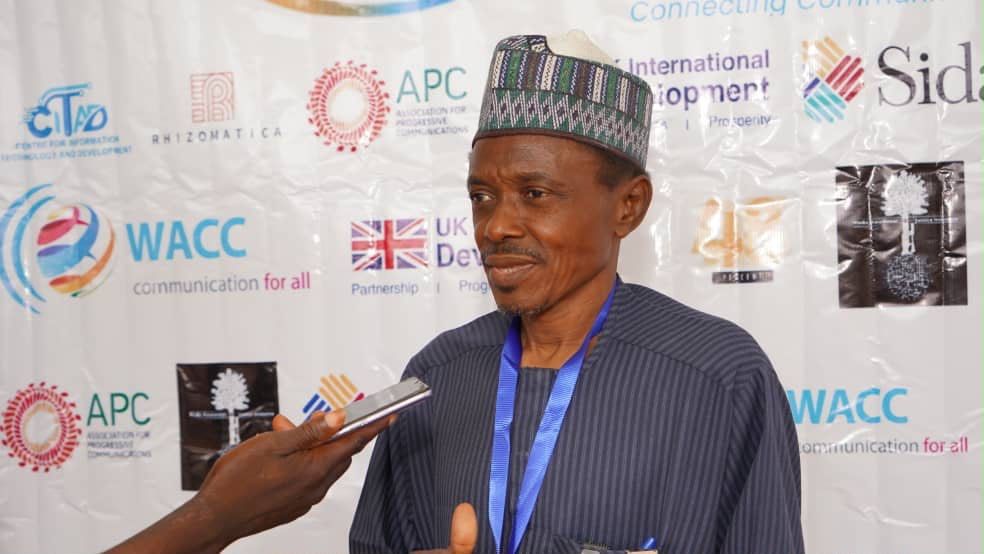
Former National Chairman of the Youth Democratic Party, Georgina Dakpokpo, described the proposal as transformative, although insufficient to achieve proportional representation. She said increased female participation would strengthen legislation on maternal health, education, gender-based violence and economic inclusion.
“Though not yet proportional, these seats would amplify women’s voices on issues that directly affect them, like maternal health, education and gender-based violence,” she said.
A member of the International Federation of Women Lawyers (FIDA), Rahila Dauda, described Nigeria’s poor record of female representation as embarrassing and urged lawmakers to pass the bill.
“Nigerian women want this bill now,” she said, calling on the National Assembly to make history.
The Executive Director of the Women’s Inclusion, Empowerment and Leadership Development Initiative (WIELD-I) also described the proposal as a starting point for correcting longstanding inequalities.
She identified high nomination fees, inadequate campaign financing, discriminatory party structures, political intimidation and exclusion from decision-making as major obstacles facing female aspirants.
“Reserved seats offer an opportunity to address some of these inequalities through deliberate institutional intervention. It is not about granting women undue advantage; it is about correcting an imbalance that has persisted for decades and making our democracy more inclusive,” she said.
However, she warned that political interests could hijack the initiative without transparent implementation that accommodates young women, women with disabilities and those from different socioeconomic backgrounds.
She also insisted that the proposed 74 federal seats must not become a ceiling on women’s participation.
States Welcome Bill But Demand More
Across the states, women’s groups and lawmakers have largely welcomed the proposal but questioned whether three additional seats per state assembly would be sufficient.
In Imo State, where the House of Assembly currently has no female lawmaker, activist Peace Dike of Virgin Heart described the proposal as affirmative action capable of correcting longstanding inequalities.
“It’s just seeking additional seats for women to occupy and show their leadership qualities. As civil society, Nigeria should embrace the opportunity,” she said.
However, she warned against politicians using the positions to install their wives or associates, insisting that credible women must emerge through transparent processes.
The lawmaker representing Okigwe North Federal Constituency, Miriam Onuoha, also backed the bill, citing her legislative performance as evidence of women’s capacity.
“I sponsored 23 bills in my first year, the highest among Imo lawmakers, yet I am the only woman. If one woman can do that, imagine what five more Imo women can do.
“The reserved seats are not charity. They are correction. Men have had 27 years to open the door; they locked it. This bill creates a new door,” she said.
In Bayelsa, lawmaker Ebizi Ndiomu-Brown said the reserved seats would provide women with a stepping stone to greater political participation but insisted that they must have a decisive role in selecting their representatives.
In Benue, where the state has two female lawmakers and two female members of the House of Representatives but no female senator, the House of Assembly expressed support for the initiative. Its spokesperson, Zape Michael Upaa, however, urged political parties to produce credible female candidates.
Women’s groups in Oyo also welcomed the bill but considered three seats inadequate. Mrs Adewunmi Olaide of Cedar for Human Welfare attributed women’s exclusion to patriarchal structures, cultural expectations, financial constraints and discrimination within political parties.
In Akwa Ibom, activists lamented the absence of female representatives from the state’s three senatorial districts and 10 federal constituencies in the National Assembly, describing the situation as political injustice.
Plateau FIDA Chairperson, Naankus Fyaktu, described the proposal as commendable but insufficient. The state currently has no female member in its House of Assembly following court decisions affecting two female lawmakers.
Similarly, Taraba FIDA Chairperson, Maijankai Shallom Donald, said the proposed seats would represent approximately 15.7 per cent of the National Assembly’s 469 positions, leaving women significantly underrepresented.
She urged lawmakers to pass the bill before the 2027 general elections and insisted that the reserved positions must be filled through direct elections rather than appointments by governors.
“We are not asking for seats as a favour; we are asking to be allowed to serve. Nigeria cannot develop with one hand tied behind its back by excluding 50 per cent of its population,” she said.
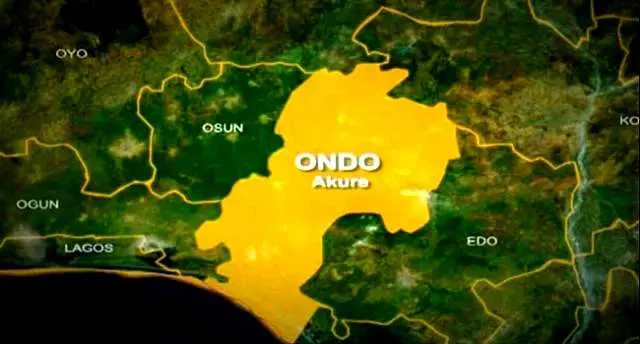
In Ondo State, lawmaker Atinuke Morenikeji Witherspoon rejected the proposed allocation.
“No, it’s not good enough, it’s not acceptable. We won’t accept that. I’m not in support at all. Women should be given more seats,” she said.
Kogi lawmaker Comfort Egwaba Nwuchola, however, described the proposed increase to three female lawmakers in the state assembly as an improvement, while lawyer Lilian Okolo advocated 12 women in the 36-member legislature.
In Kaduna, the state’s only female lawmaker, Munira Suleiman Tanimu, called for additional seats across all 23 local government areas. She said the absence of more women in the assembly had made it difficult to secure support for legislation promoting women’s representation.
Kwara, which currently has five female lawmakers in its state assembly, welcomed the proposal as an opportunity to strengthen women’s participation.
In Enugu, where only two women occupy the 24-member assembly, activist Ifeoma Ogbodo supported the amendment but warned against political hijacking. Osun stakeholders, however, rejected the proposed allocation, arguing that removing violence and financial barriers would create a more conducive environment for women to contest elections.
Cross River FIDA Chairperson, Affiong Onung, and former lawmaker Itam Abang considered the proposed seats insufficient but urged women to accept them as a starting point.
“It’s better than nothing. We are not satisfied, but we are like, if we can get more, that would be better for us,” Onung said.
Abang linked women’s participation in leadership to peace and effective conflict management, citing her eight years in office as evidence of her experience.
In Borno, former federal lawmaker Asabe Vilita said women were not seeking to compete with men but wanted adequate representation in governance.
“We are not competing with men. All we are soliciting and demanding is adequate representation for women in leadership,” she said.
Former Ogun State Speaker, Titi Oseni, also welcomed the initiative, arguing that reserved seats would encourage women facing financial and domestic pressures to seek elective positions.
Gombe and Kebbi, which currently have no female representation in their respective state assemblies or National Assembly delegations, were also identified as states where the proposal could address persistent exclusion.
In Ekiti, lawmaker Mariam Ogunlade and NAWOJ Chairperson Adewumi Ademiju urged the National Assembly to pass the bill without delay. Ademiju, however, demanded at least 35 per cent representation in line with the National Gender Policy.
Rivers stakeholders also welcomed the proposal, with former lawmaker Victoria Nyeche describing it as a development that would advance women’s political participation.
In Kano, women’s rights advocate Gambo Ahmed Mustafa welcomed the initiative, lamenting that none of the 40 members of the state assembly was female.
Nasarawa stakeholders similarly supported the bill but argued that three seats were inadequate. Esther Andrew advocated 14 female lawmakers in the state’s 24-member assembly, while former Minority Leader Mary Enwongulu urged women not to abandon the struggle for elective positions.
35 Per Cent Target, Transparency Remain Key Demands
Former presidential candidate Funmilayo Adesanya-Davies described the proposed 182 seats as historic but insisted that they should constitute a minimum allocation rather than the ultimate target.
“This is historic. For over 20 years, Nigerian women have demanded special seats and affirmative action, and this is the first time we are seeing such concrete numbers. Is it enough? No, but it is a very good starting point,” she said.
She argued that the 74 federal seats would represent only about 15.7 per cent of the National Assembly, far below the 35 per cent affirmative action target and women’s share of the population.
“We are satisfied with the principle, but we want more in number and security. Seventy-four seats at the National Assembly out of 469 is still only about 15.7 per cent. With our population being 49.5 per cent of Nigeria, we should be pushing for at least 35 per cent affirmative action.
“We want this 74 to be the floor, not the ceiling,” she said.
Adesanya-Davies also called for safeguards against governors, political godfathers and party leaders turning the seats into rewards for political loyalists and relatives.
The debate has consequently extended beyond the number of seats to the procedures for selecting representatives, their legislative powers and the duration of the arrangement.
While some stakeholders favour direct elections, others want transparent nomination procedures that give women a decisive role in choosing candidates. Advocates also insist that women elected through the arrangement must enjoy the same rights, committee opportunities and leadership prospects as other lawmakers.
Despite their differences, many stakeholders agree that reserved seats alone cannot resolve the challenges confronting women in politics. Electoral reforms, affordable nomination forms, access to campaign financing, stronger party structures and protection against political violence remain essential.
The central demand is that women should not be treated as beneficiaries of political goodwill but as equal participants in democratic governance.
Whether the proposed 182 seats will mark a turning point or become another unfulfilled promise depends on the National Assembly, state legislatures and the safeguards established to ensure meaningful representation.
We’ve got the edge. Get real-time reports, breaking scoops, and exclusive angles delivered straight to your phone. Don’t settle for stale news. Join THISTIMES on WhatsApp for 24/7 updates →
Join Our WhatsApp Channel