Across Ministries, Departments, and Agencies (MDAs) in Nigeria, a silent fiscal drain is noticeable. In government yards, police commands, agricultural extension stations, and municipal offices across the country, thousands of operational vehicles sit decaying under sun and rain.
These are not mere scrap metal parked away, they represent billions of Naira in unliquidated capital expenditure, while public operations suffer mobility constraints and logistics deficits.
In an era defined by fiscal discipline, soaring exchange rates, and squeezed national budgets, replacing these fleets through outright purchasing is neither financially sustainable nor prudent. The national cost of immobilized fleets is staggering, causing delayed emergency responses, reduced agricultural extension mobility, impaired security coverage, and inflated procurement budgets.
No doubt Nigeria stands at crossroads where public asset management must shift from a habit of disposable procurement to a culture of lifecycle optimization and strategic engineering. Leading this transformation is the National Agency for Science and Engineering Infrastructure (NASENI), through its flagship Asset Restoration Programme (ARP).
For decades, public fleet management followed a costly pattern: purchase vehicles with foreign exchange, utilize them through their primary warranty period, and abandon them at the first sign of complex mechanical failure or unavailable imported spare parts.
This throwaway culture created two distinct economic bottlenecks: Capital Flight; where Billions in foreign exchange are spent importing brand-new replacement vehicles and Asset Stranding; where Valuable public assets lose up to 90 per cent of their utility long before the end of their design lifespans due to minor failures, missing components, or inadequate routine overhaul systems.
Unlocking this tied-up value requires an engineering framework that treats grounded fleets not as waste, but as candidates for industrial revitalization. Moreover, under the Asset Restoration Programme (ARP), NASENI intervenes to reverse this narrative using its indigenous engineering capacity.
Operating through its network of Development Institutes across Nigeria, NASENI offers a structured mechanism to diagnose, restore, re-engineer, and redeploy idle government machinery and vehicles through Reverse Engineering and Local Parts Fabrication.
One of the primary causes of fleet abandonment is the scarcity or prohibitive cost of OEM (Original Equipment Manufacturer) spare parts. NASENI is leveraging advanced manufacturing technologies—including CNC machining, 3D printing, and metallurgy—to reverse-engineer obsolete or high-cost components locally. This capability restores operational integrity while building domestic manufacturing capability.
However, restoration alone is insufficient if operating costs remain high. In line with national energy transition targets, NASENI is integrating clean-energy retrofitting into fleet recovery. Through partnerships such as its initiative with the Nigerian Police Force, the Agency reactivates operational vehicles while converting them from costly premium motor spirit (PMS) to Compressed Natural Gas (CNG) or clean electric power. This reduces recurring operational fuel costs for government agencies by up to 50 per cent–60 per cent.
Refurbishing a commercial or operational vehicle through reverse engineering typically costs around 20 per cent and 35 per cent of the price of procuring a new equivalent unit. By restoring thousands of grounded utility pickups, patrol trucks, and heavy tractors, the federal and state governments can unlock hundreds of billions of Naira in functional value without expanding capital budgets.
However, systematic auto-recovery benefits extend far beyond government ledger sheets. Some of the benefits attached to Asset restoration include Enhanced Public Security: Rapid-response agencies like the Nigerian Police Force depend directly on fleet availability. Reactivating grounded patrol cars and utility trucks directly restores tactical mobility in unserved and rural areas.
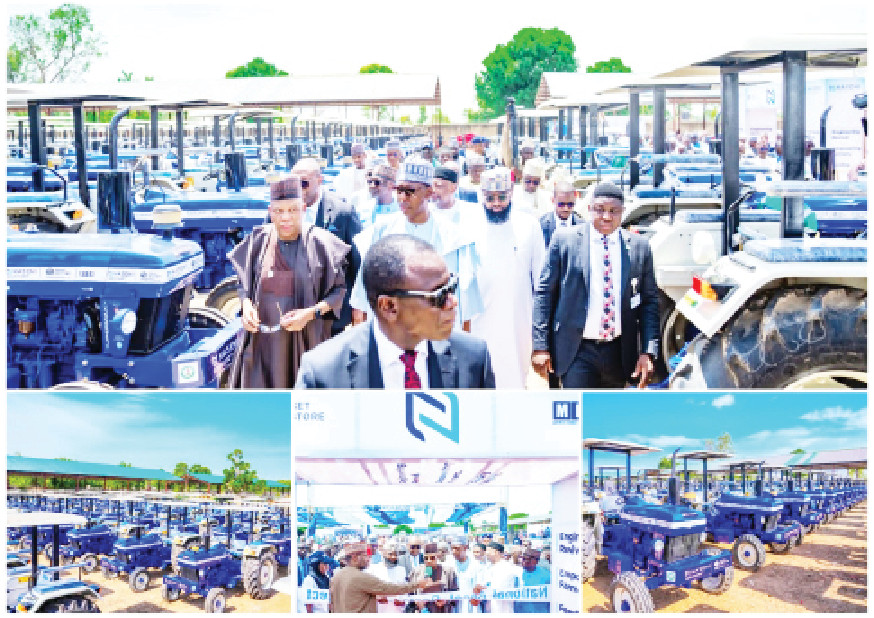
Agricultural Extension and Food Security: Restoring grounded tractors and heavy machinery under NASENI’s ARP revitalizes land preparation capacity for smallholders and state agricultural projects, directly supporting food security initiatives.
Job Creation and Technical Upskilling: Fleet recovery at scale creates a demand for specialized mechanics, automotive electricians, and machinists, creating high-value jobs and expanding local engineering talent.
Therefore, for the Auto-Recovery model to deliver sustained national value, public sector fleet policy must shift from ad-hoc interventions to mandatory lifecycle management which will enable MDAs to undergo annual asset condition assessments to flag idling vehicles before irreversible degradation sets in.
It will also ensure that before authorization is granted to procure new operational vehicles, MDAs should be required to verify whether existing assets can be restored or converted by NASENI at lower cost. Nigeria’s public fleet crisis is an engineering opportunity in disguise. Every rusted patrol car, parked tractor, or idle service van in a public compound represents capital waiting to be put back to work.
So, through the Asset Restoration Programme, NASENI provides a practical, homegrown path toward fiscal discipline, technology transfer, and operational efficiency. By choosing recovery over premature replacement, the government can save billions, power its energy transition, and demonstrate that indigenous engineering is capable of driving national development.
We’ve got the edge. Get real-time reports, breaking scoops, and exclusive angles delivered straight to your phone. Don’t settle for stale news. Join THISTIMES on WhatsApp for 24/7 updates →
Join Our WhatsApp Channel