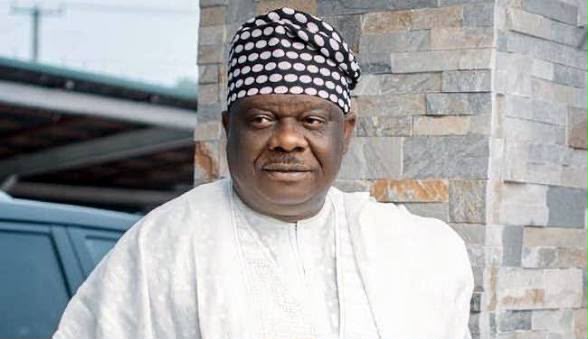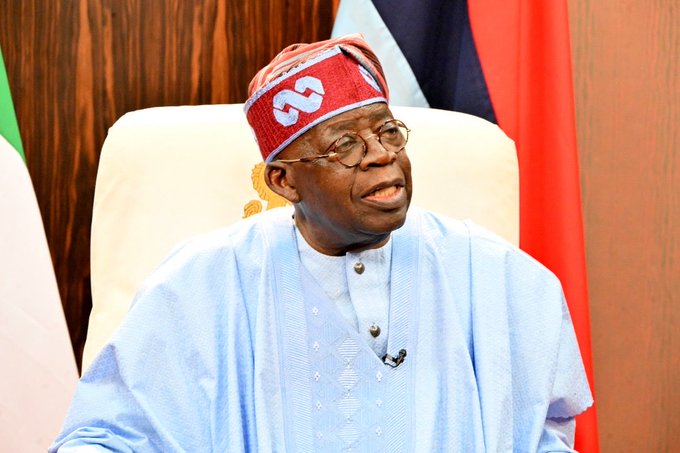
The Chairman of the Nigerian Ports Authority (NPA), Senator Dayo Adeyeye, has predicted that President Bola Tinubu will secure victory in all 36 states in the 2027 presidential election, expressing confidence in the administration’s performance and expanding political influence.
Adeyeye, who also chairs the South-West Agenda for Asiwaju (SWAGA), dismissed the chances of opposition parties, particularly the African Democratic Congress (ADC), arguing that they lacked the political structures and grassroots presence to defeat the ruling All Progressives Congress (APC).
He spoke with journalists in Ado Ekiti on Wednesday, attributing Tinubu’s growing political support to his administration’s achievements and the prospects of a second term.
The former National Assembly member said the Federal Government’s economic reforms had boosted allocations to state governments, giving them greater capacity to pay workers’ salaries, pensions and gratuities.
“The increased financial allocations available to state governments have enabled many governors to perform better than their predecessors.
“I said over three months ago that President Tinubu was likely to win all 36 states, and I am becoming increasingly convinced that it will happen.
“I am absolutely confident and ready to campaign anywhere for Tinubu. I believe he deserves massive support in the 2027 election, and now, I predict that he will win in all the states of the federation,” Adeyeye said.
He explained that SWAGA was formed to strengthen Tinubu’s political base in the South-West, noting that presidential candidates needed solid support in their home regions to build wider national acceptance.
“Tinubu has built a formidable political foundation across the South-West. The president’s support base has continued to expand beyond the region,” he said.
While admitting that Nigerians were still grappling with economic challenges, Adeyeye maintained that the administration’s major policy decisions, particularly the removal of petrol subsidy and the unification of the foreign exchange market, had helped avert a worse economic situation.
“The administration’s economic policies, including the removal of fuel subsidy and unification of the foreign exchange market, have prevented the country from sliding into a deeper economic crisis,” he said.
He said Nigeria was already facing severe fiscal pressures before Tinubu took office in May 2023, with dwindling government revenue, fuel scarcity and the high cost of sustaining the petrol subsidy.
Recalling the prolonged fuel queues and the activities of black-market operators at the time, Adeyeye argued that although petrol prices had risen following the subsidy removal, the country had recorded improved product availability and fewer instances of prolonged scarcity.
He further maintained that the foreign exchange reforms had made the market more transparent, curbed opportunities for arbitrage and improved the financial position of state governments.
Adeyeye also highlighted the Federal Government’s student loan scheme and increased funding for universities as measures aimed at easing the financial pressure on families and strengthening the education sector.
He commended Tinubu for what he described as efforts to address funding challenges in public universities, arguing that better remuneration and improved financing had contributed to industrial harmony and reduced recurring strikes by the Academic Staff Union of Universities (ASUU).
Turning to the opposition, the NPA chairman questioned the ADC’s capacity to challenge the APC, particularly with former Vice-President Atiku Abubakar as its presidential candidate.
He said the party lacked significant political representation across the country, pointing to its absence of governors and limited presence in the National Assembly and state legislatures.
“ADC is a party without a governor in any of the 36 states. How many members does it have in the National Assembly? How many state assemblies does it control? You cannot compare a party without a demonstrable political structure with the APC,” he said.
Adeyeye also questioned Atiku’s political standing in Adamawa State, arguing that the former vice-president did not enjoy the support of his home state governor.
“Atiku is from Adamawa, but the governor of his state is not supporting him. The legislature in the state has not witnessed any significant movement to the ADC. How do you intend to challenge and defeat an incumbent president when you cannot establish a formidable political base in your own state?” he said.
We’ve got the edge. Get real-time reports, breaking scoops, and exclusive angles delivered straight to your phone. Don’t settle for stale news. Join THISTIMES on WhatsApp for 24/7 updates →
Join Our WhatsApp Channel