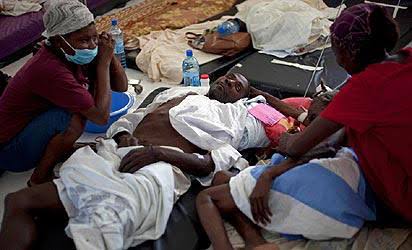
Cholera deaths in Borno State have risen to 37, while more than 3,000 cases have been recorded across 36 wards in seven local government areas, as health authorities intensify response measures to contain the outbreak.
The Executive Secretary of the Borno State Contributory Healthcare Management Agency, Dr. Saleh Abba Kaza, confirmed the figures on Saturday, describing the situation as a serious public health emergency that has stretched the state’s health system.
He said the outbreak began with the first incident reported on May 1 and was confirmed on May 4, with Maiduguri Metropolitan Council recording the highest number of infections at over 2,000 cases, followed by Jere with more than 1,000 cases.
Other affected local government areas include Mafa, Konduga, Monguno, Ngala and Magumeri, with the outbreak spreading across 138 communities in the state.
Dr. Kaza said over 100 new cases were recorded within the last 24 hours alone, noting that the situation has pushed the state’s case fatality rate to about one per cent.
He warned that the outbreak had overwhelmed health facilities, stressing the need for urgent and coordinated interventions to curb further spread.
“Following the first incident report on May 1 and confirmation on May 4, it is confirmed that we are facing a serious health crisis as a devastating cholera outbreak has struck Borno, with over 3,000 reported cases and 37 tragic deaths across 36 wards in seven local government areas within the month of May,” he said.
“In the last 24 hours, over 100 cases were reported… Maiduguri Metropolitan Council has the highest incidence, recording more than 2,000 cases, followed by Jere with over 1,000,” he added.
He attributed the spread of the disease to contaminated water sources, poor sanitation and the ongoing rainy season, warning that open defecation and unsafe waste disposal were worsening the situation.
“To protect our communities, we urge enhanced Water, Sanitation and Hygiene (WASH) practices. Contamination of pipe-borne water and dams has been detected. Chlorination of water is very important,” he said.
“Open defecation remains a serious risk. With the rainy season upon us, waste can be washed back into our living areas, thereby spreading the disease,” he warned.
He also urged residents to maintain strict hygiene practices, including handwashing, safe food preparation, and prompt reporting of symptoms such as vomiting and diarrhoea to nearby health facilities.
Dr. Kaza advised residents to contact the state emergency ambulance hotline for evacuation and treatment, warning against reliance on unqualified home remedies.
He added that the state government, in collaboration with partners including the World Health Organisation, UNICEF, Médecins Sans Frontières and others, was working to roll out cholera vaccination, while stressing that immunisation does not replace basic hygiene measures.
“Together, we can protect our communities. Let’s unite to stop the spread of cholera. Your health and safety are paramount,” he said.
We’ve got the edge. Get real-time reports, breaking scoops, and exclusive angles delivered straight to your phone. Don’t settle for stale news. Join THISTIMES on WhatsApp for 24/7 updates →
Join Our WhatsApp Channel