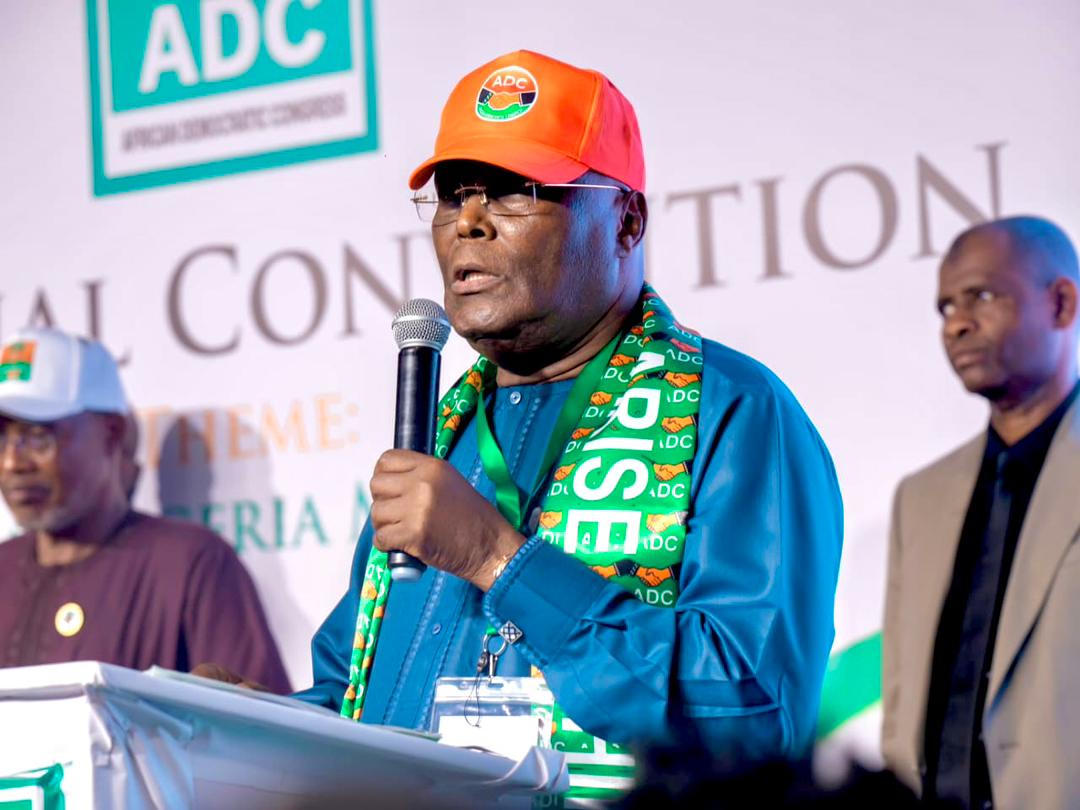
The selection of the vice-presidential running mate for the African Democratic Congress (ADC) presidential candidate, Alhaji Atiku Abubakar, will be determined by the party’s statutory organs and stakeholders rather than a unilateral decision by the candidate himself.
Inside sources within the campaign have revealed that the former Vice President has ceded the choice to the party’s leadership, ensuring a collective decision-making process through the National Working Committee (NWC) and the National Executive Committee (NEC).
“Yes, he is the candidate but he has said he would concede to the party organs to decide for him, who his running mate will be.
“It isn’t a decision that he can take unilaterally. The National Working Committee and the National Executive Committee of the party will have to meet and take a position.
“As we speak, it is even likely that a small ad hoc Committee has been set up to look at likely candidates,” a senior party source said.
An ad-hoc committee is reportedly being set up to critically evaluate potential candidates from the southern part of the country to balance the ticket, given Atiku’s northern background.
Several prominent southern political figures are already being considered by the party leadership, with former Rivers State Governor and Minister of Transportation, Rotimi Amaechi, reportedly topping the list.
Party insiders note that those favouring Amaechi are looking at his extensive political profile as a two-term governor, former minister, and the runner-up in the recent ADC presidential primary. Former Deputy Speaker of the House of Representatives, Emeka Ihedioha, is also under active consideration as the party leaves the slot open to contenders across the South-West, South-South, and South-East regions to find a candidate who will add the highest strategic value to the campaign.
The cautious approach by the ADC leadership could be to avoid the internal crisis that fractured Atiku’s previous presidential bid in 2023 over the running mate selection.
In the buildup to that election, a committee had recommended then-Rivers Governor Nyesom Wike for the vice-presidential slot, but Atiku bypassed the recommendation to pick Ifeanyi Okowa. The decision led to a rebellion led by Wike and the “G5” group of governors, who withdrew their support and ultimately contributed to Atiku’s defeat by President Bola Tinubu.