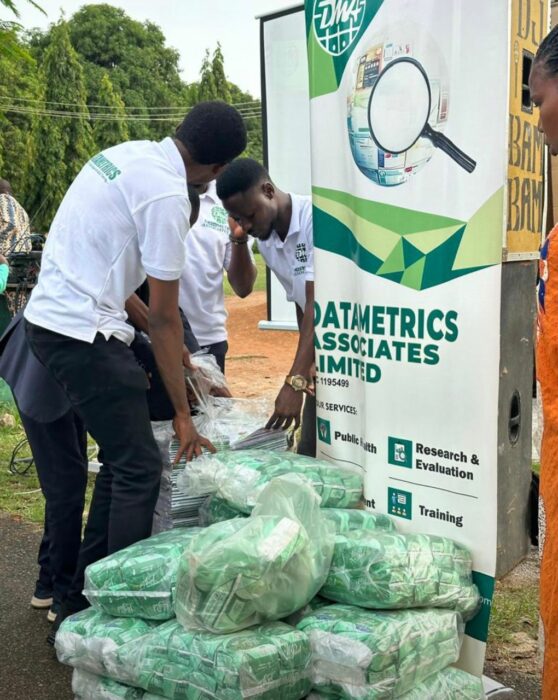
A development-focused private organisation, Datametrics Associates Limited, has marked its 12th anniversary with a renewed call for stronger efforts to tackle period poverty and improve menstrual hygiene management among schoolgirls in Nigeria.
The organisation commemorated the milestone on Friday with a menstrual hygiene sensitisation programme for female students of Government Secondary School (GSS), Gwarinpa, Abuja, aimed at promoting awareness and empowering adolescent girls to manage their menstrual health with confidence.
Speaking at the event, the Technical Director and Chief Executive Officer of Datametrics Associates Limited, Dr. Abiodun Feyikemi-Ipadeola, described menstrual hygiene as a matter of dignity, confidence and equal opportunity, stressing that no girl should be forced to miss school because of her menstrual cycle.
She said the organisation deliberately chose to celebrate its anniversary through community outreach activities to highlight pressing issues affecting girls, particularly in the wake of the recently observed International Menstrual Hygiene Day 2026.
According to her, period poverty remains a significant challenge in the Federal Capital Territory (FCT), with an estimated 25 per cent of girls affected, often resulting in school absenteeism.
“We are celebrating 12 years of work, but more importantly, we are reflecting on the gaps that still exist. Period poverty is real, and it continues to limit the potential of many young girls, even here in the FCT,” she said.
Feyikemi-Ipadeola noted that access to menstrual hygiene products and adequate sanitation facilities remains a major barrier for many students, forcing some girls to resort to unsafe alternatives.
She cited findings indicating that about 15.5 per cent of students still use unhygienic materials such as old clothes, tissue paper and newspapers during menstruation due to financial constraints.
She warned that the use of such materials exposes girls to infections and other reproductive health complications, while inadequate facilities, menstrual pain, fear of staining and social stigma continue to contribute to absenteeism and poor academic outcomes.
The Datametrics CEO also highlighted infrastructure challenges in public schools, revealing that nearly half of schools in the FCT lack functional Water, Sanitation and Hygiene (WASH) facilities.
According to her, the situation contrasts sharply with private schools, where all surveyed institutions reportedly have functional WASH facilities.
She called for stronger collaboration among government agencies, development partners and the private sector to address the challenge through sustainable policies and investments.
“Schools must be equipped with functional WASH facilities, and menstrual hygiene products should be accessible and affordable to every girl, regardless of her background,” she said.
Some of the students who participated in the programme said the session helped dispel myths and misconceptions surrounding menstruation.
A student, Mariam Ahmed, said the engagement boosted her confidence and helped her understand that menstruation is a normal part of life.
“I used to feel shy talking about my period, but today I learned it is normal and nothing to be ashamed of,” she said.
Another student, Hannatu Amos, said the session provided practical guidance on menstrual hygiene and where to seek support when needed.
Education stakeholders at the school commended the initiative, describing it as timely and beneficial to the health, well-being and educational outcomes of girls.
They urged governments, schools and civil society organisations to strengthen partnerships and expand similar interventions across the country.
As part of the anniversary activities, Datametrics Associates also delivered a motivational session titled “The Power of Vision and Purpose for Young Girls,” encouraging students to pursue their ambitions despite challenges.
Reflecting on the organisation’s 12-year journey, Feyikemi-Ipadeola said Datametrics would continue to promote evidence-based solutions to social and development challenges.
“Our work is rooted in evidence. We believe that with the right data, policies and partnerships, we can create lasting change and improve outcomes for vulnerable populations,” she said.
Stakeholders at the event stressed that addressing menstrual hygiene challenges remains critical to improving school attendance, safeguarding girls’ health and advancing gender equality in Nigeria.
We’ve got the edge. Get real-time reports, breaking scoops, and exclusive angles delivered straight to your phone. Don’t settle for stale news. Join THISTIMES on WhatsApp for 24/7 updates →
Join Our WhatsApp Channel