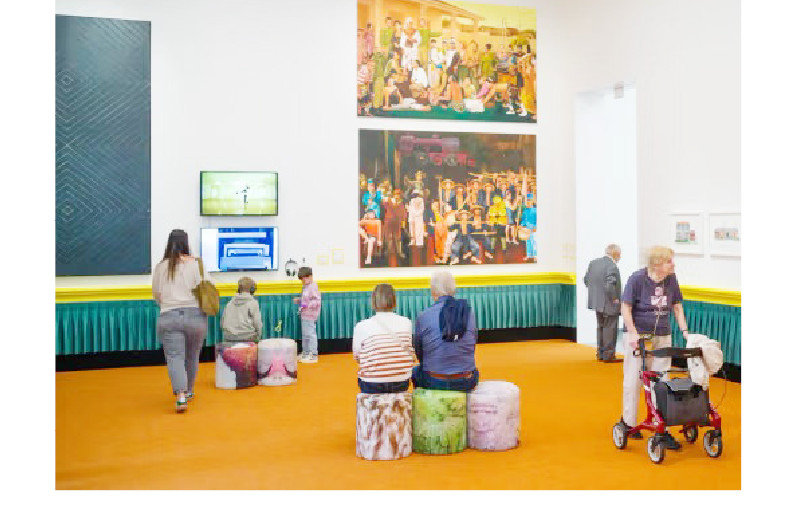
Imagine walking into a museum and, instead of being greeted with the usual “Do Not Touch” signs, you’re handed a fidget toy, shown a map that indicates which rooms are quiet or noisy, and encouraged to experience art with all your senses. That is exactly what the Van Abbemuseum in Eindhoven, the Netherlands, is doing.
The contemporary art museum has redesigned its visitor experience to make art more accessible to everyone, especially people with autism, ADHD and sensory sensitivities. Visitors can now use specially designed “stim tools” to help them stay calm while exploring exhibitions, and sensory maps guide them through spaces with bright lights, loud sounds, or other potential triggers.
But beyond the redesign lies a bigger question for Nigeria:
Do Nigerians truly enjoy art, or have we simply not created spaces that make people want to engage with it?
For many Nigerians, museums are places visited only during school excursions or by foreign tourists. Once the compulsory educational trip is over, many never return. Art galleries often attract collectors, artists and a niche audience, leaving the average Nigerian wondering whether these spaces are really meant for them.
Yet Nigeria is one of Africa’s richest cultural nations.
From the ancient Nok terracotta sculptures and the Benin Bronzes to the colourful Durbar festivals of the North, the Osun-Osogbo Sacred Grove, masquerade traditions in the East and the vibrant contemporary art scene in Lagos, creativity has always been woven into the country’s identity.
The Dutch museum has done exactly that. Rather than arranging artworks chronologically, it encourages visitors to interact with exhibitions differently. Sound, lighting, movement and even silence become part of the storytelling. Visitors are invited to connect emotionally rather than simply observe from a distance.
Imagine similar ideas finding their way into Nigerian museums.
What if the National Museum in Lagos allowed visitors to experience the sounds of ancient Yoruba markets alongside historical artefacts? What if the National Museum in Jos recreated the environment in which the Nok civilisation flourished? What if children visiting museums could participate in interactive storytelling, digital installations, or virtual reality experiences that bring history to life?
Art would suddenly become less about looking and more about feeling.
Today’s generation is growing up in an era of TikTok videos, immersive technology and interactive entertainment. Static displays behind glass may no longer be enough to hold their attention. Museums must compete with smartphones, cinemas and gaming platforms for people’s curiosity.
The Van Abbemuseum recognises that not everyone experiences spaces in the same way. By introducing sensory guides and calming tools, it welcomes visitors who may previously have found museums overwhelming.
In Nigeria, conversations about accessibility in museums remain limited. Beyond wheelchair access, there is little discussion about how museums can accommodate neurodivergent visitors, children with sensory needs or people living with invisible disabilities.
The Dutch experiment reminds us that museums don’t necessarily need bigger collections to attract people. Sometimes they simply need to ask a different question: How do we make people feel welcome enough to fall in love with art?
Perhaps that is the conversation Nigeria’s cultural institutions should begin having.
We’ve got the edge. Get real-time reports, breaking scoops, and exclusive angles delivered straight to your phone. Don’t settle for stale news. Join THISTIMES on WhatsApp for 24/7 updates →
Join Our WhatsApp Channel