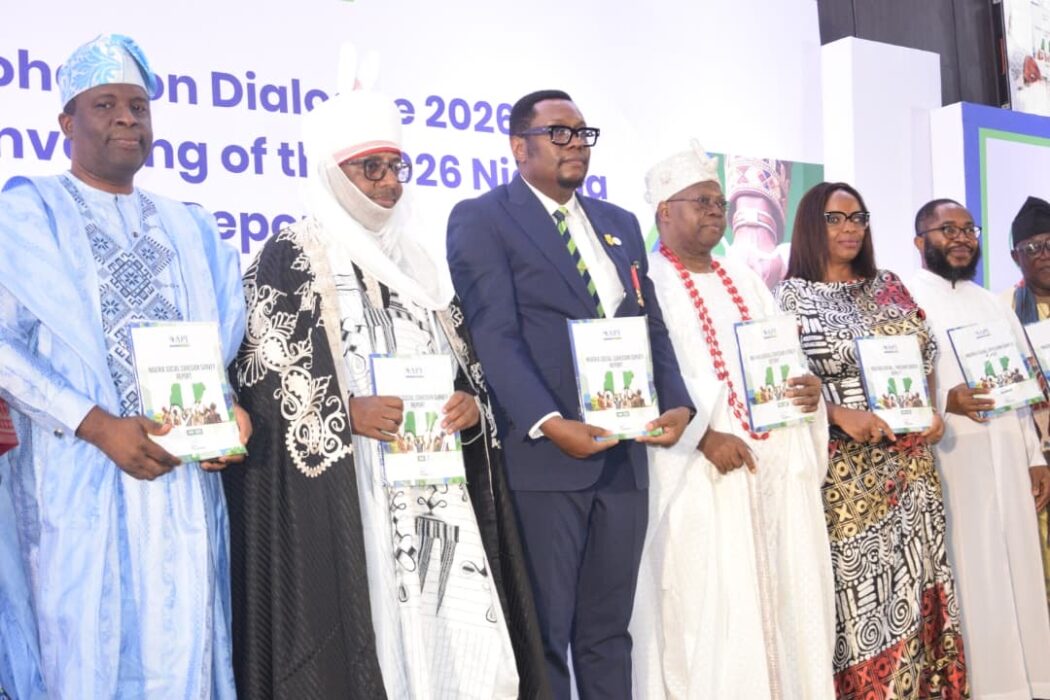
A survey conducted by the Africa Polling Institute (API), an independent and non-partisan opinion research think tank, with support from the Ford Foundation, has shown a growing trust deficit among Nigerians in the government and its institutions.
This is contained in the API 2026 Nigeria Social Cohesion Survey report, released at the National Social Cohesion Dialogue in Abuja, which computed Nigeria’s Social Cohesion Index (NSCI) at 48.8 per cent.
According to the report, presented by the Executive Director of API, Professor Bell Ihua, the index represents a two-percentage-point increase from last year’s figure and is the highest recorded since the study commenced.
The survey findings indicated sustained trust among citizens in religious and traditional leaders, but very little trust in the government and public institutions.
Specifically, 51 per cent and 45 per cent of Nigerians expressed significant trust in religious and traditional leaders, respectively, compared with only 28 per cent who trust the government of President Bola Ahmed Tinubu and 23 per cent who trust the National Assembly.
The assessment ranked the National Assembly as the least trusted institution in the country, a position previously held by the Nigeria Police Force, which recorded a 24 per cent trust rating in the current survey.
The survey also revealed that 46 per cent of Nigerians “feel truly proud of Nigeria,” compared with 41 per cent who feel deeply disappointed in the country, while 11 per cent said they feel indifferent.
It further showed that 44 per cent of Nigerians are equally proud to identify as Nigerians and members of their ethnic groups, while 29 per cent identify more with their ethnic group than with being Nigerian. Only 11 per cent said they identify more as Nigerians than by their ethnicity.
Under the Trust Indicator, the survey reported that 72 per cent of Nigerians expressed little or no trust in the government of President Bola Tinubu, down by 11 percentage points from 83 per cent in 2025.
Similarly, 77 per cent expressed little or no trust in the National Assembly, while 73 per cent expressed little or no trust in the judiciary.
By comparison, 49 per cent expressed little or no trust in religious leaders, while 55 per cent expressed little or no trust in traditional leaders.
The report also found that 71 per cent of citizens are extremely or somewhat willing to sacrifice or give up something of personal interest for the collective good of the nation. In addition, 77 per cent are extremely or somewhat willing to cooperate with fellow citizens from other ethnic groups to make Nigeria more united, while 73 per cent are extremely or somewhat willing to participate in the political process to make Nigeria a better place for all.
It added that 89 per cent expressed willingness to support inter-ethnic marriages, compared with 62 per cent who supported interfaith marriages.
The report further indicated that 48 per cent believe the country is more divided today than it was four years ago, an increase of 17 percentage points from 31 per cent in 2025. Meanwhile, 20 per cent believe the country is more united today than it was four years ago.
On gender equality, the research showed that 69 per cent of Nigerians agree that women should be allowed to lead in all aspects of society, especially in politics and corporate organisations, while 62 per cent agree that women should be entitled to equal shares of family inheritance.
On self-worth, 45 per cent of Nigerians said they are extremely or somewhat dissatisfied with their lives as Nigerians at present, compared with 41 per cent who said they are extremely or somewhat satisfied. The survey also found that 55 per cent would consider relocating abroad with their family members if given the opportunity.
The survey recommended that the government should match citizens’ growing commitment to national cohesion with structural reforms by leveraging the country’s strengthening national identity through inclusive citizenship frameworks that reinforce a shared vision and a sense of belonging across ethnic, religious and regional lines.
“The majority Nigerian-first identification is the country’s most important social capital right now, and it must be protected and nurtured,” the report stated.
API also recommended the establishment of a National Social Cohesion Commission, similar to Kenya’s National Cohesion and Integration Commission, to promote inclusive governance, national identity, unity, peaceful coexistence, trust, civic participation, social justice and positive future expectations, among other components of social cohesion.
It further recommended the establishment of a Social Cohesion Desk in every Ministry, Department and Agency (MDA) to ensure that development plans and public policies are inclusive and socially cohesive.
We’ve got the edge. Get real-time reports, breaking scoops, and exclusive angles delivered straight to your phone. Don’t settle for stale news. Join THISTIMES on WhatsApp for 24/7 updates →
Join Our WhatsApp Channel