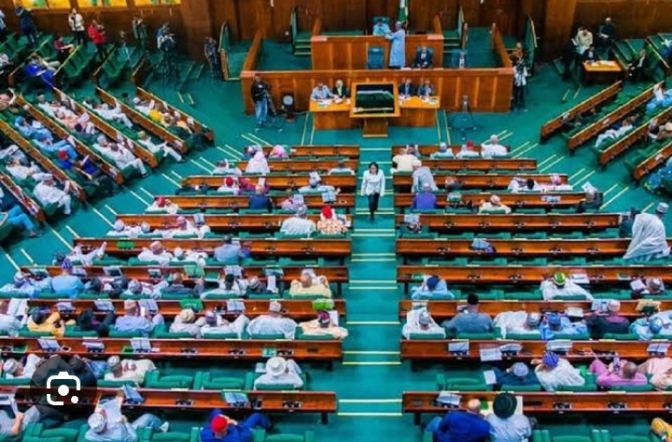
The House of Representatives has called on the federal government to end the rehabilitation and reintegration of repentant terrorists, kidnappers and bandits, while demanding tougher measures to disrupt ransom payments and criminal financing networks.
The resolutions followed the adoption of a motion moved by Hon. Ademorin Ali Kuye during plenary on Wednesday.
The House urged the Executive to discontinue programmes that rehabilitate and reintegrate terrorists and other violent criminals into society, arguing that greater emphasis should be placed on dismantling the financial networks sustaining insecurity.
Lawmakers also called on the Federal Government to strengthen the enforcement of regulations on ransom payments and terrorism financing by promoting greater collaboration among victims, financial institutions and law enforcement agencies.
The House further urged the Federal Ministry of Finance to provide adequate funding for financial intelligence infrastructure, including advanced transaction monitoring and analytical systems.
Presenting the motion, Kuye said the Central Bank of Nigeria (CBN) Act, 2007, and the Banks and Other Financial Institutions Act (BOFIA), 2020, empower the Central Bank of Nigeria to regulate monetary policy, supervise financial institutions and safeguard the integrity of the country’s financial system.
He added that the Money Laundering (Prevention and Prohibition) Act, 2022, and the Terrorism (Prevention and Prohibition) Act, 2022, require financial institutions, designated non-financial businesses and government agencies to detect, report and disrupt illicit financial flows, including ransom payments.
Kuye cited reports by the Nigeria Financial Intelligence Unit (NFIU), the National Bureau of Statistics’ 2024 Crime Experience and Security Perception Survey, and independent security research organisations indicating that Nigerians paid an estimated ₦2.23 trillion in ransom between January 2021 and June 2025.
According to him, the huge payments have continued to fuel kidnapping and other organised criminal activities across the country.
He also cited findings by the National Counter Terrorism Centre under the Office of the National Security Adviser showing that Point-of-Sale (POS) operators and other financial channels have been used to facilitate ransom payments and conceal financial trails, thereby frustrating investigations.
Kuye expressed concern that criminal and terrorist groups continue to exploit formal and informal financial systems, including Bureau de Change operators, hawala networks, cryptocurrency platforms, livestock transactions and trade-based money laundering schemes to launder ransom proceeds.
He warned that weak financial intelligence coordination and inadequate anti-money laundering enforcement expose Nigeria to greater security threats, erode public confidence and increase the risk of international sanctions, including continued grey-listing by the Financial Action Task Force (FATF).
Following the adoption of the motion, the House urged the Central Bank of Nigeria, the Nigeria Financial Intelligence Unit and other regulators to conduct a comprehensive audit of suspicious POS transactions in high-risk areas and sanction operators found to be involved in ransom-related activities.
Lawmakers also called on the CBN to strengthen real-time monitoring and reporting of suspicious transactions linked to kidnapping, banditry, terrorism and organised crime, while tightening oversight of Bureau de Change operators and other financial intermediaries to prevent money laundering and ransom payments.
The House further urged the Attorney-General of the Federation and relevant law enforcement agencies to investigate and prosecute individuals and organisations involved in facilitating ransom transactions in accordance with existing laws.
It also called on the National Security Adviser to convene a stakeholders’ summit on financial intelligence and ransom financing to develop a coordinated national strategy for disrupting criminal financial networks.
In addition, the House urged security agencies to subject all funds and assets recovered during anti-kidnapping and counter-terrorism operations to forensic financial investigations aimed at identifying and dismantling criminal financing networks.
We’ve got the edge. Get real-time reports, breaking scoops, and exclusive angles delivered straight to your phone. Don’t settle for stale news. Join THISTIMES on WhatsApp for 24/7 updates →
Join Our WhatsApp Channel