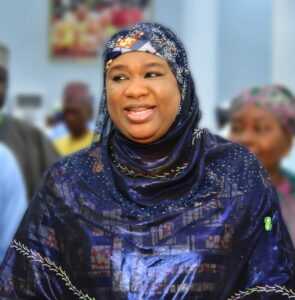
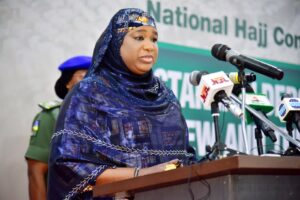
Minister of State for the Federal Capital Territory (FCT), Mariya Mahmoud, has called for far-reaching reforms in Nigeria’s Hajj administration, urging stakeholders to work together in building a transparent, accountable, efficient and pilgrim-centred system that can serve as a model of service excellence.
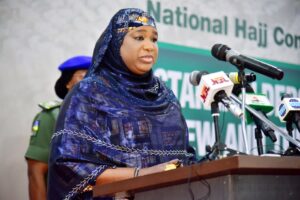
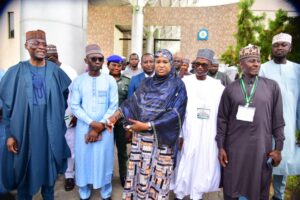
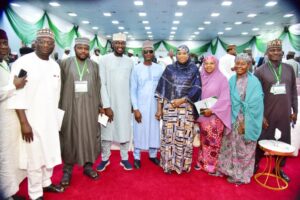
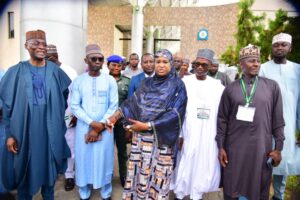
Mahmoud made the call on Wednesday at the Stakeholders’ Summit on the Post-2026 Hajj Review and NAHCON Reforms held at the NAF Conference Centre, Abuja.
Speaking on the theme, “Repositioning Nigeria’s Hajj Industry as a Model of Service Excellence,” the minister described the gathering as timely, saying it reflected the country’s collective determination to improve the quality of services provided to Nigerian pilgrims.
She noted that Hajj is not only a sacred religious obligation but also a complex operation that demands meticulous planning, effective coordination and high standards of service delivery.
“Every pilgrim deserves an experience that reflects dignity, safety, comfort and professionalism. Achieving this requires unwavering commitment, transparency and accountability from all stakeholders,” Mahmoud said.
The minister commended the National Hajj Commission of Nigeria (NAHCON) for convening the summit to critically review the 2026 Hajj operations, stressing that honest assessment of successes and shortcomings is essential to strengthening public confidence and driving meaningful institutional reforms.
She reaffirmed the commitment of the Federal Capital Territory Administration (FCTA) to initiatives that enhance public service delivery, emphasising that stronger collaboration among governments, regulatory agencies, service providers, State Pilgrims’ Welfare Boards and religious leaders is crucial to building a more efficient and sustainable Hajj management system.
Mahmoud urged participants to leverage their practical experiences and global best practices in making recommendations that would shape the future of Hajj administration in Nigeria.
“The recommendations from this summit should provide a clear roadmap for sustainable reforms that will enhance efficiency, accountability, innovation and pilgrims’ satisfaction,” she said.
She also commended President Bola Tinubu for his commitment to institutional reforms under the Renewed Hope Agenda, noting that the administration’s emphasis on transparency, efficiency and people-centred governance has continued to strengthen key national institutions, including those responsible for Hajj administration.
The minister further acknowledged the leadership of the FCT Minister, Barrister Nyesom Wike, for creating an environment that promotes reforms and excellence in public service delivery.
Earlier, the chairman and chief executive officer of the National Hajj Commission of Nigeria (NAHCON), Ambassador Ismail Abba Yusuf, said the summit was convened not merely to review the 2026 Hajj exercise but to reposition Nigeria’s Hajj operations for greater efficiency and improved performance.
He observed that Saudi Arabia’s ongoing Vision 2030 reforms represent the most ambitious transformation of pilgrimage administration in modern history, stressing that Nigeria must align its Hajj operations with emerging global standards.
According to him, the stakeholders’ forum should serve as a platform for accountability, where both achievements and shortcomings are openly examined.
“The modest achievements recorded during the 2026 Hajj operation must be interrogated and institutionalised, while every shortcoming must be identified without embellishment and matched with practical solutions,” Yusuf said.
“There are things we achieved, and there are things we must fix,” he added, urging stakeholders to use the summit to develop practical reforms that would enhance service delivery and strengthen confidence in Nigeria’s Hajj administration.
We’ve got the edge. Get real-time reports, breaking scoops, and exclusive angles delivered straight to your phone. Don’t settle for stale news. Join THISTIMES on WhatsApp for 24/7 updates →
Join Our WhatsApp Channel