The World Bank puts it succinctly: education is foundational infrastructure for job creation. It is not charity. It is not political patronage. It is not merely another campaign promise. It is infrastructure—just like roads, electricity, water, and digital connectivity. It is the engine that moves societies from poverty to prosperity, from dependency to productivity, and from uncertainty to opportunity.
Good jobs remain the surest pathway out of poverty, and no public investment yields broader dividends than a functional education system. Education improves health outcomes, strengthens social cohesion, reduces crime, promotes gender equality, and drives economic growth. It is the bedrock upon which enduring development is built.
The challenge confronting Nigerian states has never been whether education matters. The real test is whether governments can transform lofty policy declarations into classrooms, workshops, laboratories, innovation hubs, and, ultimately, livelihoods.
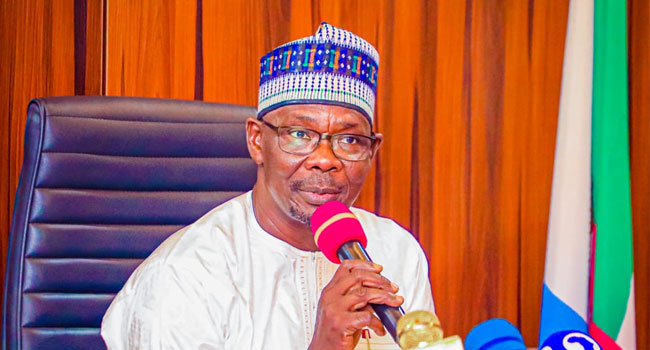
In Nasarawa State, Governor Engr. Abdullahi A. Sule has chosen to answer that question not with rhetoric but with measurable action.
From Stagnation to Transformation
When the Sule administration assumed office in 2019, the state’s basic education sector was weighed down by years of neglect. The problem was not a shortage of ideas; it was the absence of deliberate implementation.
Outstanding counterpart funding owed to the Universal Basic Education Commission (UBEC) for 2016, 2017, and 2018 had prevented Nasarawa State from accessing over N5 billion in matching grants. The consequences were visible everywhere: dilapidated classrooms, inadequate teaching facilities, overstretched teachers, and thousands of children gradually disappearing from school registers. Many administrations would have blamed their predecessors and moved on, but Governor Sule choses another path.
His administration immediately released N2.7 billion to clear the outstanding counterpart obligations, unlocking the federal grants and restoring confidence between Nasarawa State and UBEC. That bold financial commitment became the turning point that revived public basic education across the state.
The impact soon became evident.
Modern classroom blocks complete with administrative offices, sanitation facilities, and solar-powered water systems emerged in communities including Mararaban Gongo in Wamba Local Government Area, Mahanga in Awe, Kokona, Lafia and many other parts of the state.
The renewed partnership attracted national recognition.
When the Executive Secretary of UBEC, Hajiya Aisha Garba, embarked on her maiden official inspection tour of states, Nasarawa featured prominently on her itinerary. After assessing projects executed with UBEC intervention funds, she described the state’s performance as impressive and ranked Nasarawa among the country’s best-performing states in the utilization of education grants.
That endorsement was not ceremonial diplomacy. It was independent validation backed by visible results.
From Classrooms to Careers
Physical infrastructure alone cannot build a prosperous society. Governor Sule understands that education must move beyond certificates to competence. Drawing from his extensive background in technology-driven industrial development, the administration has introduced one of the state’s most significant education reforms—integrating vocational and technical skills into basic education.
The philosophy is refreshingly simple.
Every child should leave Junior Secondary School not only literate but equipped with practical skills capable of generating income.
Whether it is mobile phone repairs, tailoring, solar installation, welding, ICT, carpentry, or other vocational competencies, students are encouraged to acquire skills alongside academic knowledge.
The implications are profound.
A teenager who can repair electrical appliances or sew school uniforms can help support educational expenses, reduce financial pressure on parents, and remain in school rather than dropping out due to poverty.
For vulnerable families, particularly girls, this changes everything.
Education ceases to be a financial burden and becomes an economic opportunity.
Unsurprisingly, other states have begun studying Nasarawa’s evolving curriculum model as a possible template for reform.
Its central lesson is clear: the conversation about employability should not begin after graduation or during the National Youth Service Corps. It should begin in the classroom.
Teachers: The Foundation Beneath the Foundation
Buildings do not educate children. Teachers do. A comprehensive assessment of public educational institutions across the state revealed serious manpower shortages at the primary, secondary, and tertiary levels. The administration responded decisively.
More than 2,250 teachers were regularised, while approval was granted for the recruitment of over 8,000 teaching and non-teaching personnel, including approximately 3,500 for secondary schools alone.
Although administrative processes delayed another batch of 1,000 appointments, the commitment remained unwavering.
Perhaps even more significant was the promotion of over 5,000 teachers across the state.
Promotion is more than an administrative routine.
It is a statement that excellence, dedication, and professional growth are recognised and rewarded. Simultaneously, secondary schools across Nasarawa underwent extensive renovation and expansion. New classroom blocks were constructed, while science and technical schools received modern laboratories and instructional equipment capable of supporting practical learning.
For a government investing heavily in technical education, laboratories are not ornamental facilities.They are production centres for the workforce of tomorrow.
Strengthening Higher Education and Skills Development
Governor Sule’s educational philosophy views tertiary institutions, vocational centres, and technical colleges as interconnected parts of one development ecosystem.
Accordingly, Nasarawa State University, Keffi, has expanded significantly with the establishment of a fully operational Faculty of Engineering in Gudi, Akwanga Local Government Area, alongside a new Faculty of Medicine designed to strengthen professional manpower development.
Similarly, the former College of Agriculture in Lafia has been upgraded into the College of Agriculture, Science and Technology, positioning the institution to respond more effectively to emerging demands in agriculture, science, technology and innovation.
Equally remarkable is the transformation of the Wing Commander Abdullahi Ibrahim Vocational Institute, Lafia. Today, the institute stands as practical evidence that marketable skills create economic opportunities.
Young graduates, unemployed youths, and even retired civil servants have acquired employable skills through its programmes. Many have become self-employed entrepreneurs. Others have gone further to establish businesses that now employ additional workers.
Existing vocational centres, technical colleges, and ICT hubs have equally benefited from substantial upgrades because yesterday’s training cannot prepare today’s workforce for tomorrow’s economy.
Ensuring No Student Is Left Behind
It is said that access without affordability remains incomplete. Recognising this reality, Governor Sule’s administration has consistently expanded financial support for students.
We’ve got the edge. Get real-time reports, breaking scoops, and exclusive angles delivered straight to your phone. Don’t settle for stale news. Join THISTIMES on WhatsApp for 24/7 updates →
Join Our WhatsApp Channel