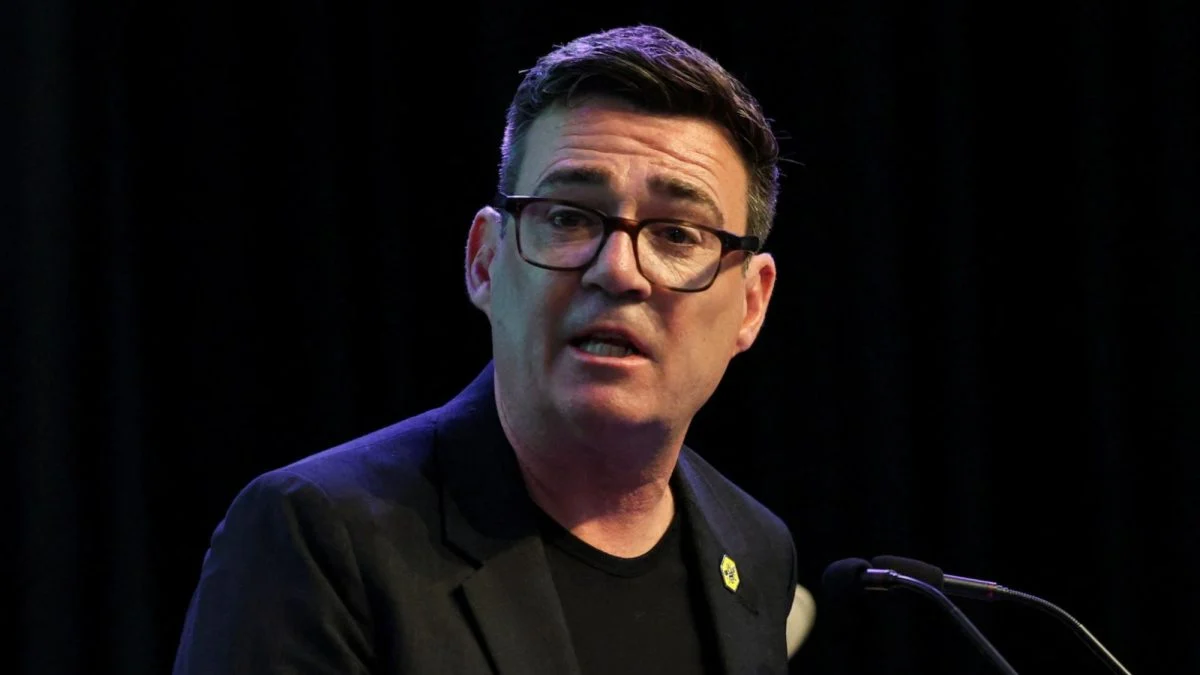
Andy Burnham has emerged as the Prime Minister of the United Kingdom after meeting King Charles III at Buckingham Palace.
His emergence follows the resignation of Keir Starmer.
The 56-year-old member of the Labour Party became Britain’s new leader after emerging unopposed as leader of the party, replacing Starmer, who stepped down following declining opinion poll ratings, disappointing local election results and controversy surrounding former United States ambassador Peter Mandelson.
Starmer delivered his farewell speech on Monday morning before travelling to Buckingham Palace to formally tender his resignation to the King.
Shortly afterwards, Burnham arrived at the palace for an audience with King Charles III, who invited him to form a new government, making him the United Kingdom’s seventh prime minister in just 10 years.
Burnham is expected to begin work immediately by appointing a new Cabinet and setting out his government’s agenda as he takes charge at a time of economic challenges, pressure on public services and growing calls for political stability.
Shortly after assuming office, the new prime minister announced that ending rough sleeping across the country would be his first official instruction.
“I will issue my first instruction to end rough sleeping in our country,” Burnham declared.
Before becoming prime minister, Burnham visited The Passage homeless shelter in Victoria, central London, where he signalled that tackling homelessness would be among the defining priorities of his administration.
Speaking with reporters during the visit, he said ending rough sleeping would require cooperation from government agencies, local authorities and communities.
“We did it then, we can do it now,” he said, referring to the “Everyone In” scheme introduced during the COVID-19 pandemic, which successfully provided emergency accommodation for thousands of homeless people across the country.
Burnham also outlined plans to ease the pressure on families struggling with the rising cost of living, saying his government would begin introducing measures to give people more “breathing space.”
He said reforms to the education system would help more young people secure employment while expanding access to mental health services and other forms of support.
The Labour leader also pledged to increase the construction of council homes, describing affordable housing as “the fair and sustainable way” to reduce the country’s welfare bill while improving living standards.
On foreign affairs, Burnham said his first telephone conversations as prime minister would be with United States President Donald Trump and Ukrainian President Volodymyr Zelensky, reaffirming Britain’s commitment to Ukraine.
He said the UK’s support for Ukraine would remain “steadfast and resolute,” signalling that there would be no immediate change in Britain’s foreign policy despite the change in leadership.
Burnham also commented on the frequent leadership changes in recent years. He acknowledged that becoming Britain’s seventh prime minister within a decade indicated the need for greater political stability.
“That isn’t good enough – we need to be better and we will be better,” he said.
Burnham previously served as Culture Secretary and Health Secretary and twice contested the Labour Party leadership before eventually securing the position following Starmer’s resignation.
His appointment marks another turn in British politics after years of leadership changes that have seen Boris Johnson, Liz Truss, Rishi Sunak, Keir Starmer and others occupy 10 Downing Street in quick succession.