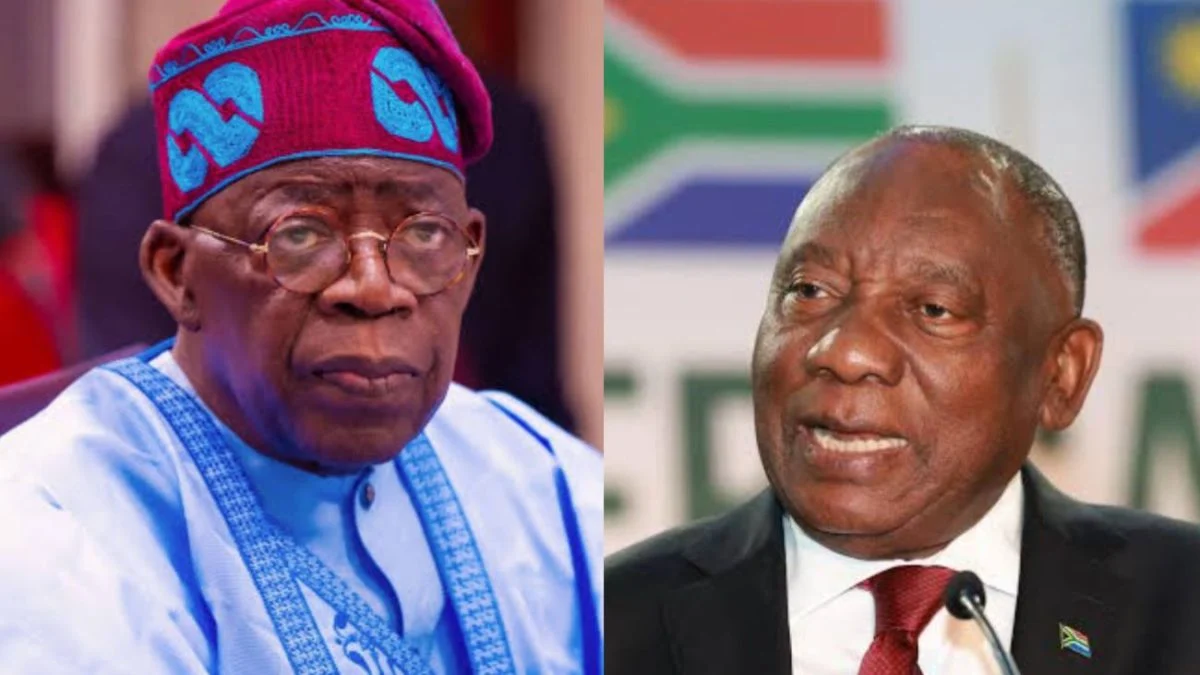
President Bola Tinubu has called for stronger continental action against recurring xenophobic attacks in South Africa, urging the Economic Community of West African States (ECOWAS) to escalate the matter to the African Union (AU).
The President made the call during the 69th Ordinary Session of the ECOWAS Authority of Heads of State and Government held in Lungi, Sierra Leone.
He said attacks targeting Nigerians and other African nationals in South Africa should not be ignored and require a united response from African leaders.
Represented at the summit by Vice President Kashim Shettima, Tinubu condemned the attacks and described them as unacceptable.
He stressed that African countries must collectively reject any form of violence directed at fellow Africans living and working in another African nation.
“Nigeria condemns in strong terms the recent Afrophobic attack on its citizens and other fellow Africans in the Republic of South Africa.
“As already mentioned by His Excellency, the President of Ghana, ECOWAS should present this matter before the next meeting of the Authority of the African Union to send a clear message that this type of behaviour is unacceptable.
“South Africa should be reminded that the freedom the country currently enjoys is due to the liberation efforts of African countries such as Nigeria.
“The Nigerian Government has evacuated one thousand, four hundred and ninety of its citizens in seven batches and is prepared to engage on this matter,” the President said.
The latest position by the Nigerian government comes amid renewed concerns over attacks on foreign nationals in South Africa.
Nigerians have repeatedly been among the victims of violence, looting and destruction of businesses during previous outbreaks of xenophobic unrest in the country.
Over the years, several Nigerians have reportedly lost their lives, sustained injuries or seen their businesses destroyed during such incidents. Many were forced to return home after losing their means of livelihood.
Citizens from other African countries, including Ghana, Zimbabwe, Malawi, Lesotho and Botswana, have also been affected by similar attacks.
Tinubu’s remarks signal a stronger diplomatic push by Nigeria on the issue. The President’s intervention follows recent comments by the Minister of Foreign Affairs, Ambassador Bianca Odumegwu-Ojukwu, who indicated that Nigeria was considering measures in response to the treatment of its citizens in South Africa.
The minister had disclosed that discussions were ongoing and that the National Assembly would also be involved in reviewing the situation and recommending possible actions.
Lawmakers in Nigeria have already condemned the attacks and are examining developments surrounding the issue.
Senior Advocate of Nigeria, Femi Falana, also recently urged the Federal Government to seek legal redress before the African Court, arguing that stronger measures were needed to protect the rights of African citizens living within the continent.
Beyond the xenophobia issue, Tinubu used the summit to reaffirm Nigeria’s commitment to regional integration and cooperation. He expressed support for the newly adopted ECOWAS Compact for the Future of Regional Integration, describing it as an important framework for promoting economic growth, democratic governance and long-term development across West Africa.
The President said Nigeria remained committed to working with member states to implement the compact and achieve its objectives.
According to him, the initiative aligns with the goals of ECOWAS Vision 2050 while extending the region’s developmental aspirations further into the future.
Tinubu noted that Nigeria would continue to champion regional unity and economic integration as one of the bloc’s founding members and largest economies.
He also pledged support for efforts aimed at removing trade barriers, improving infrastructure across borders and facilitating the movement of people, goods and services within the region.
Addressing governance challenges, the President warned that insecurity and political instability continue to threaten development across West Africa. He reiterated Nigeria’s support for constitutional governance, respect for human rights and the rule of law.
Tinubu argued that poor governance and attempts to manipulate constitutional provisions often contribute to political crises and social unrest.
“I am to add that beyond adventurism, the most effective tool against unconstitutional changes of government and mass protests capable of undermining public order is for us to enthrone good governance that delivers more tangible benefits to our citizens.
“We must also avoid the temptation to tamper with constitutional term limits or exploit constitutional processes,” he said.
The President further reaffirmed Nigeria’s support for the proposed ECOWAS Counter-Terrorism Force and called for stronger regional collaboration in tackling terrorism, violent extremism and other security threats confronting the sub-region.
He also highlighted the need for greater investment in women and young people through education, entrepreneurship and leadership opportunities.
On relations with the Alliance of Sahel States (AES), Tinubu maintained that dialogue and engagement remain crucial to preserving regional unity and ensuring the continued relevance of ECOWAS.
The summit also featured remarks from Sierra Leonean President Julius Maada Bio and ECOWAS Commission President Omar Alieu Touray, both of whom emphasized the need for stronger cooperation, improved governance and deeper economic integration across West Africa.