No need for conference committee, Senate, House passed identical versions – Reps’ Spokesman
By JAMES KWEN and SAMSON ELIJAH, Abuja
With the passage of the State Police Bill by both chambers of the National Assembly – the Senate and the House of Representatives – attention has shifted to the 36 State Houses of Assembly, which must approve the constitutional amendment to complete the process.
The bill is being finalised for transmission to the state legislatures in line with the constitutional amendment procedure.
As a constitutional amendment bill, it must be approved by resolutions of at least two-thirds (at least 24) of the State Houses of Assembly before it can become law.
Section 9 of the Constitution provides that an amendment can be enacted only after securing the support of two-thirds of the members of each chamber of the National Assembly – 73 senators and 240 members of the House of Representatives – and the approval of at least 24 state assemblies.
The Senate passed the executive bill on 24 June 2026 after considering the report of the Committee on the Review of the Constitution, chaired by Deputy Senate President Barau Jibrin.
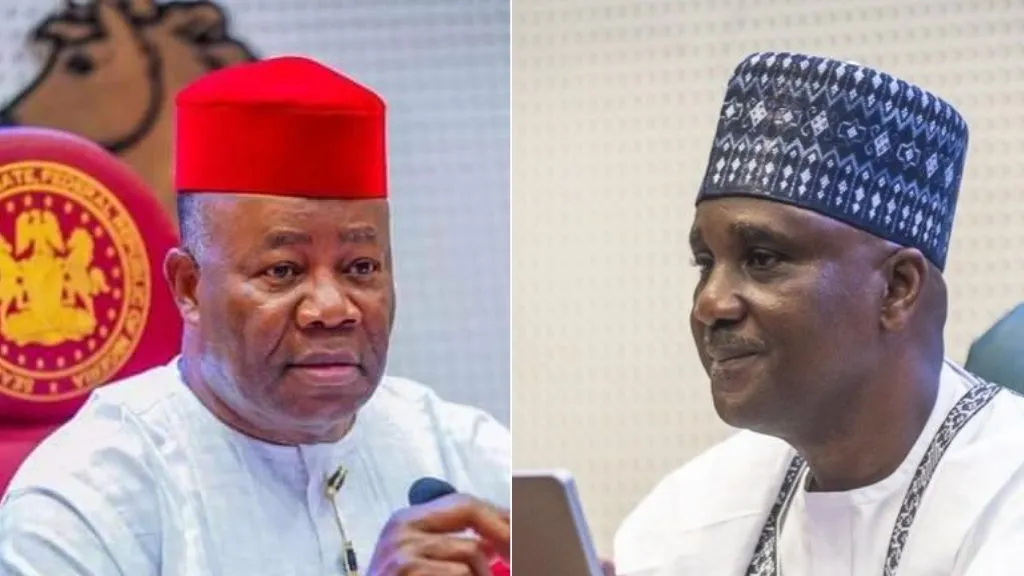
The clauses were considered at the Committee of the Whole before Senate President Godswill Akpabio announced the bill’s passage following a manual vote in which more than two-thirds of senators voted in support.
A total of 87 senators were present for the vote, exceeding the constitutional requirement. The bill seeks to establish a state police force to operate alongside the existing Federal Police Service.
Appointment and Control of State Police
Clause 17 provides that the Inspector-General of Police shall head the Federal Police Service. At the same time, each State Police Service shall be led by a Commissioner of Police appointed by the governor and confirmed by the State House of Assembly.
Under Section 17(6), a governor may issue lawful written directives of a general policy nature to the state Commissioner of Police on matters relating to public safety and public order.
To guard against political abuse, Section 17(7) prohibits a state Commissioner of Police from arresting, detaining, investigating, or using force against any person, political party, or group for criticising the government, except as authorised by law.
Section 17(8) empowers the Inspector-General of Police or a state Commissioner of Police to seek a review by the appropriate Police Service Commission if a directive is deemed unlawful or inconsistent with national minimum standards, while preserving the courts’ jurisdiction.
Section 17(10) provides that a state Commissioner of Police may be suspended or removed only for a stated cause, following due process, on the recommendation of the National Police Council and with the approval of at least two-thirds of the State House of Assembly.
Existing Security Outfits
The bill clarifies the status of existing regional and community security organisations.
Section 25(5) provides that no existing local security outfit shall automatically become a State Police Service or exercise police powers. It also prohibits such outfits from bearing firearms unless authorised under the Constitution and an Act of the National Assembly.
The provision means that organisations such as Amotekun, Ebube Agu and Hisbah cannot automatically become state police agencies or bear arms under the proposed constitutional framework.
Federal Intervention
The proposed amendment also sets out the circumstances in which the Federal Police Service may intervene in state policing operations.
Section 15(10) permits temporary federal intervention where there is an actual or imminent breakdown of public order or safety that a State Police Service is unable or unwilling to contain.
Intervention may also occur where a governor requests assistance; where a State Police Service is unable to function due to serious administrative, financial or operational challenges; where there is evidence of systematic abuse of fundamental rights or partisan misuse of the police; or where the situation threatens national security or public safety beyond state borders.
Section 15(11) provides that such intervention must be temporary, necessary and proportionate.
Under Section 15(12), any intervention must be authorised by the President, who must specify its grounds, territorial scope, functions and duration, and notify the affected governor, the Speaker of the State House of Assembly, the National Police Council and the National Assembly within 48 hours.
Section 15(14) further provides that the legality, scope, and duration of any intervention shall be subject to judicial review and prohibits the dissolution of a State Police Service or the suspension of elected state institutions, except in accordance with the Constitution.
State Police Service Commission
The bill also proposes establishing a State Police Service Commission in every state.
The commission, headed by a chairman, would recommend qualified persons to the National Police Council for appointment as Commissioner of Police.
It would also appoint, promote, transfer, discipline and dismiss officers of the State Police Service, except the Commissioner of Police, while performing oversight, complaints and accountability functions in accordance with the Constitution and other applicable laws.
On 23 July 2026, no fewer than 311 members of the House of Representatives voted in support of the executive bill.
According to Speaker Abbas Tajudeen, 35 lawmakers voted virtually, while 276 voted in person, comfortably exceeding the constitutional threshold of 240 members required for a constitutional amendment.
The vote followed the adoption of the report of the House Committee on the Review of the 1999 Constitution, chaired by Deputy Speaker Benjamin Kalu. The House subsequently passed the bill for third reading and adopted the votes and proceedings.
The legislation is titled: A Bill for an Act to Alter the Constitution of the Federal Republic of Nigeria 1999 to provide for the Establishment of State Police Services and for Related Matters (HB. 2797).
LEADERSHIP Weekend reports that President Bola Tinubu transmitted the executive bill to the House on 14 July 2026, stating that it built on previous legislative work and introduced additional safeguards for a dual policing structure.
According to the President, the proposed legislation is a key element of his administration’s strategy to reorganise Nigeria’s security architecture to protect citizens better.
Following receipt of the executive bill, the House rescinded its earlier resolution of 11 June 2026 and dissolved the 12-member Conference Committee constituted on 9 July 2026.
Ordinarily, where the Senate and the House pass different versions of a constitutional amendment bill, a Conference Committee is constituted to harmonise the differences before both chambers vote again on an identical text.
However, where both chambers pass identical versions without amendment, no conference committee is required, and the bill proceeds directly to the State Houses of Assembly through the Clerk of the National Assembly.
This was confirmed by the House of Representatives spokesman, Hon. Akin Rotimi, in a chat with LEADERSHIP Weekend.
He said: “There will be no Conference Committee, as both the Senate and the House passed identical versions of the State Police Executive Bill. The Bill is being finalised for transmission to the State Houses of Assembly in line with the constitutional amendment process.”
The bill will now be transmitted to the 36 State Houses of Assembly for concurrence.
The proposal is expected to receive favourable consideration, following the endorsement of the Conference of Speakers of State Legislatures in Nigeria.
The Conference had described the bill as a major milestone in the country’s constitutional amendment process and the quest for improved security and true federalism.
In a statement signed by its Chairman and Speaker of the Delta State House of Assembly, Hon. Emomotimi Dennis Guwor, the Conference said it had consistently supported state police, maintaining that community-based policing would strengthen security, intelligence gathering and rapid response to crime.
The Speakers argued that security challenges differ across communities and that policing should reflect local realities, with officers familiar with the language, culture and terrain better equipped to combat insecurity.
They said the bill represented an important step towards strengthening Nigeria’s policing architecture and deepening federalism.
The Conference assured Nigerians that once the bill reaches the State Houses of Assembly, it would undergo thorough scrutiny through stakeholder engagements, public hearings where necessary, and objective deliberations.
While commending the National Assembly for the milestone, the Speakers urged political leaders, civil society organisations, security experts and other Nigerians to sustain constructive engagement on the proposed state police framework.
They also reaffirmed their commitment to working with the National Assembly, the Executive and other relevant institutions to ensure the successful passage of constitutional amendments aimed at strengthening democracy, improving security and promoting effective service delivery across the country.
EXPLAINER
State Assemblies Hold the Key
The State Police Bill now needs approval from at least 24 State Houses of Assembly before it can become part of Nigeria’s Constitution.
How State Police Will Work
The bill creates state police to complement the Federal Police, with governors appointing commissioners subject to legislative confirmation.
Safeguards Against Abuse
The proposal bars state police from targeting critics unlawfully and provides oversight, due process and judicial review to prevent political misuse.
What Happens to Amotekun?
Existing outfits like Amotekun, Ebube Agu and Hisbah will not automatically become state police or gain constitutional policing powers.
Federal Role in Emergencies
The Federal Police may temporarily intervene when state policing fails, rights are abused, or threats extend beyond a state’s capacity or borders.
We’ve got the edge. Get real-time reports, breaking scoops, and exclusive angles delivered straight to your phone. Don’t settle for stale news. Join THISTIMES on WhatsApp for 24/7 updates →
Join Our WhatsApp Channel