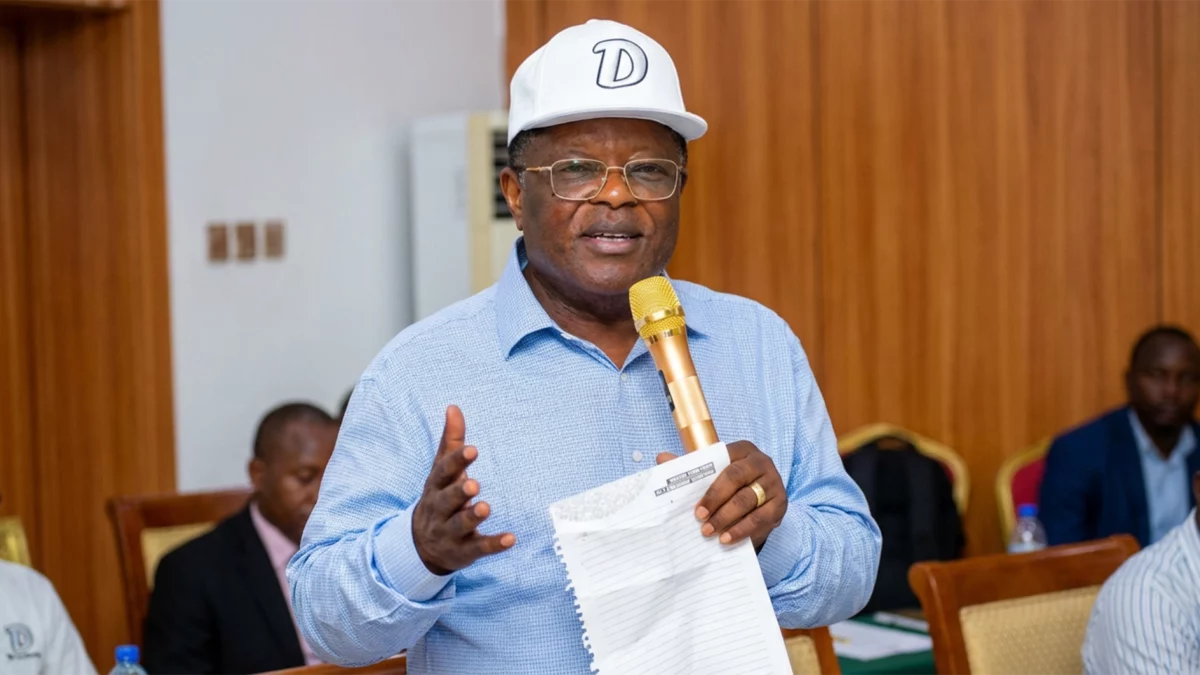
House of Representatives Committee on South-South Development Commission has called for urgent and concrete action to end the protracted gas seepage in Bille Community, Rivers State, and the oil spill in Odidi Federated Community of Delta State.
The committee’s chairman, Hon. Julius Gbabojor Pondi, made the demand yesterday at a stakeholders’ engagement on the Bille gas seepage and a legislative hearing on the Odidi oil spill in Abuja.
Pondi said the two incidents had exposed the host communities to prolonged environmental hazards without satisfactory and timely resolution.
According to him, the committee’s concern over the Bille incident was heightened following its engagement with the Nigerian Upstream Petroleum Regulatory Commission (NUPRC) and the National Oil Spill Detection and Response Agency (NOSDRA) on 30th July, 2026.
He said the committee was deeply concerned to learn that the gas seepage had continued for approximately nine months, with no clear end in sight.
“The implications are serious. Beyond the potential risks to health, safety and the environment, the incident has imposed severe economic hardship on the people of Bille,” Pondi said.
He noted that Bille, being predominantly a fishing community, had suffered consequences that affected livelihoods, food security, household income, education and the general well-being of families.
“It is unacceptable for an incident of this magnitude to persist for so long without a clear, time-bound and effective resolution strategy,” he stated.
Pondi said the stakeholders’ engagement was expected to establish the facts surrounding the incident, assess the response so far, identify obstacles and agree on practical, measurable and time-bound actions.
He said the Committee expected comprehensive briefings from the operating company, NUPRC, NOSDRA and other relevant agencies on the cause, extent and current status of the seepage.
The lawmaker also said representatives of the Bille Community would be allowed to present their challenges and the relief and interventions required.
“Most importantly, we want to move from prolonged discussion to concrete action and lasting resolution,” he said.
On the Odidi oil spill, Pondi said the Committee would proceed with a legislative hearing to investigate the incident, which he said had reportedly continued for more than five months.
He said the hearing would seek to establish when the spill occurred and was reported, its cause, containment measures undertaken, the extent of the affected environment, the status of remediation and the reasons for its continued persistence.
The Committee chairman said the affected community would have the opportunity to present its concerns. At the same time, the operating company, regulatory agencies, and relevant government institutions would explain the actions taken to date.
“Our approach will be fair, objective and evidence-based. “We are not here to prejudge any party, but to establish the facts, promote accountability and facilitate solutions,” he said.
Pondi described the situations in Bille and Odidi as manifestations of a broader environmental and developmental challenge confronting the South-South region.
He said despite the region’s immense contribution to Nigeria’s oil and gas economy, communities hosting the resources continued to bear a disproportionate burden of environmental degradation.
“This contradiction must be addressed,” he said.
“The wealth derived from the natural resources of the Niger Delta must not come at the unacceptable cost of the health, livelihoods and future of its people.”
He stressed that the House of Representatives had a constitutional responsibility to provide effective oversight, promote accountability, and ensure that institutions charged with environmental protection and resource management discharged their responsibilities.
Pondi said the Committee would continue to promote sustainable development, economic empowerment, environmental justice and improved living conditions across the South-South region.
He warned that the day’s proceedings must not end with expressions of concern and commitments without implementation.
“We expect clear resolutions, firm commitments, defined responsibilities and measurable timelines,” he said, adding that immediate interventions must commence without delay, technical assessments undertaken promptly and remediation, where required, properly planned, adequately resourced and effectively monitored.
The lawmaker urged oil and gas companies, regulatory agencies, relevant ministries, government institutions and community representatives to approach the proceedings with openness and a genuine commitment to finding solutions.
He assured the people of Bille and Odidi that the House had heard their concerns and stressed that they deserved more than assurances.
“You deserve prompt intervention, effective remediation, meaningful relief and a clear pathway towards restoring your environment and livelihoods,” Pondi said.
He further assured that the Committee would continue to exercise its oversight responsibilities diligently and work with relevant institutions to ensure that appropriate actions were taken.
The National Oil Spill Detection and Response Agency (NOSDRA) confirmed the presence of multiple gases, including hydrogen sulphide, methane, volatile organic compounds and carbon dioxide, in Bille Community, Degema Local Government Area of Rivers State, where gas seepage has persisted for months.
A Director at NOSDRA, Dr Yusuf Rigasa, presenting the agency’s key technical findings, said investigations established what he described as “multi-point subsurface gas bubbling” at several locations in Bille, including the Government Primary and Secondary School premises.
He said the school had subsequently been abandoned, adding that the agency also confirmed gas bubbling at waterways and certain mangrove areas.
According to him, NOSDRA conducted an air-quality assessment on 6 December 2025, across 19 stations and recorded elevated levels of hydrogen sulphide, methane, volatile organic compounds and carbon dioxide.
Rigasa explained that hydrogen sulphide has a characteristic rotten-egg smell, while methane is highly flammable and potentially explosive.
The Director said the concentrations of the gases recorded during the assessment exceeded applicable regulatory thresholds.
He added that the NOSDRA reference laboratory also analysed samples collected on 16 December 2025, and found elevated levels of total petroleum hydrocarbons (TPH) in groundwater, surface water and sediment samples.
The findings, he said, indicated that the soil, surface water, and groundwater in parts of Bille had been polluted.
The NOSDRA official further disclosed that, during an engagement with the Minister of Petroleum Resources on the incident, the agency’s technical presentation indicated that the source of the gas seepage was probably biogenic, resulting from the degradation of organic matter.
Rigasa said the agency had not established that the gas was of hydrocarbon origin.
The official said the technical team had compared the Bille incident with the 1986 Lake Nyos gas disaster in Cameroon, stressing the need to treat the situation in Bille with the utmost seriousness.
The Lake Nyos disaster occurred when a large quantity of carbon dioxide was suddenly released from the lake, killing about 1,700 people and large numbers of animals in surrounding communities.
However, the NOSDRA official stressed that the agency had so far been unable to identify any oil and gas operator as the source of the gas seepage in Bille.
He said the agency had worked with operators including Renaissance, Eroton and New Cross, as well as the Nigerian National Petroleum Company (NNPC), during its preliminary investigation.
He added that the Nigerian Upstream Petroleum Regulatory Commission (NUPRC) had stated that it had no record of pipelines in the immediate area where the seepage was occurring.
“That also tells us our findings, because we searched for oil and gas assets at the locations. There were none. “That is why we are not able to actually pin a certain operator to what is actually happening,” he said.
According to him, NOSDRA’s findings were corroborated by the NUPRC, while a reservoir survey was underway to determine whether there was any link to an underground hydrocarbon reservoir.
He explained that NUPRC was responsible for the reservoir investigation, while NOSDRA’s mandate was primarily environmental.
“What we can confirm for the House is that the air, the groundwater, the surface water and the sediment in the swampy areas in that village are all polluted,” he said.
The Bille Kingdom Chiefs Council in Degema Local Government Area of Rivers State raised fresh alarm over the protracted gas seepage in the community, saying the incident has contaminated water sources, affected fishing activities and forced the relocation of pupils from a primary school.
Secretary General of the Bille Kingdom Chiefs Council, Chief Luckyman Egbila, Opu Gbolo III of the Ancient Bille Kingdom, said the incident began on 6 November 2025, in the community’s mangroves, where women had gone to harvest periwinkle.
He explained that Bille was predominantly a fishing community located on a riverine island and could only be accessed by water.
According to him, the community immediately notified the relevant regulatory authorities upon discovering the incident, resulting in an initial visit by the National Oil Spill Detection and Response Agency (NOSDRA) and subsequent assessments.
He said the initial NOSDRA assessment produced recommendations, including the excavation of certain areas, but the community was not subsequently provided with the full details of the investigation.
Egbila said the community was eventually compelled to travel to Abuja and submit letters to the relevant agencies after it failed to receive a response from the regulators.
He said this later led to further engagements with operators in the area, during which air, soil, and water tests were conducted.
However, he said the community again received no report on the test results, adding that the situation prompted the community to write additional letters to federal agencies and seek their intervention.
According to Egbila, during a meeting convened in February by the Federal Ministry of Petroleum Resources, Gas, the community was informed about the nature of the gas emission.
He alleged that officials of NOSDRA likened the gas emission in Bille to the incident at Lake Nyos in Cameroon, where a sudden release of carbon dioxide in 1986 killed about 1,700 people and large numbers of animals.
Egbila expressed concern that, despite the seriousness of the situation, the community had not been provided with the regulatory agencies’ investigation reports.
He said the Nigerian Upstream Petroleum Regulatory Commission (NUPRC) subsequently took the lead in further investigations and conducted additional tests in the community.
However, according to him, the community continued to receive no clear explanation about the cause of the seepage or a permanent solution.
He said the community was informed at a meeting with the Rivers State Government that NUPRC had not been able to determine the possible cause of the gas emission, which, he said, was the reason no intervention had yet been undertaken.
Egbila Commission informed the community that it was engaging foreign experts who were expected to come to Nigeria to conduct further tests and determine the root cause of the incident.
“Up till now, we have yet to see anything. Just as it happened the first time, they have gone back to sleep.
“Our people cannot go fishing. Most of the mangroves are bubbling. particularly, we don’t have water to drink. “We don’t have water to eat with,” he said.
Egbila also alleged that the community’s dugout wells had become contaminated, saying the wells were bubbling and the air quality had deteriorated.
The Rivers State Government, he acknowledged, had provided N100 million for palliative purposes, part of which was used to purchase food and conduct a medical outreach.
He also disclosed that NUPRC had subsequently brought food items to the community, with contributions reportedly coming from operators and other oil and gas companies.
According to him, the supplies lasted only a few days, after which residents were again left without adequate support.
Egbila called for the provision of potable water to Bille, describing it as an immediate necessity.
“Water is life. “We can’t exist without potable drinking water,” he said.
He further appealed for the permanent resolution of the gas seepage, stressing that the community needed to return to its normal economic activities.
Bille, he said, hosts two major oil mining leases, OML 18 and OML 24, as well as gas infrastructure, adding that the community contributes significantly to Nigeria’s economy.
The community representative also raised concerns about the incident’s impact on education.
He said pupils had been moved out of the primary school in Bille because of concerns over exposure to the emissions.
He added that the secondary school was considering reducing lecture hours to limit the period students spend inhaling the affected air.
Egbila also appealed for the upgrading of the community’s primary health centre and the provision of resident doctors to enable residents to receive medical attention without having to travel to Port Harcourt.
He explained that transporting sick residents from Bille to Port Harcourt was difficult and expensive because the community could only be accessed by water.
“Most times when people fall sick, by the time you rush them, get the boats and get to Port Harcourt, we keep losing these souls and lives,” he said.
Egbila appealed to the Federal Government, regulatory agencies and oil and gas operators to urgently intervene, provide safe drinking water, address the health and livelihood consequences and find a permanent solution to the gas seepage.
We’ve got the edge. Get real-time reports, breaking scoops, and exclusive angles delivered straight to your phone. Don’t settle for stale news. Join THISTIMES on WhatsApp for 24/7 updates →
Join Our WhatsApp Channel