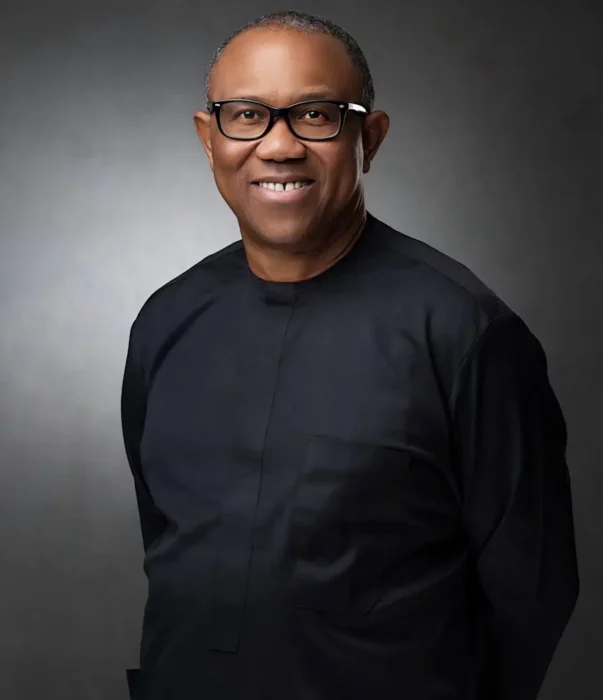
Comrade Auwal Musa Rafsanjani is the Executive Director, Civil Society Legislative Advocacy Centre (CISLAC)/Transparency International Nigeria, as well as Chairman, Transition Monitoring Group (TMG). In this interview with JAMES KWEN, Rafsanjani speaks about lessons from the Osun governorship election and why Nigeria must treat every election leading up to the 2027 general election as an opportunity to test institutions, identify weaknesses, and rebuild citizens’ confidence in the electoral process.
What are the major lessons INEC should learn from the 2023 general election and the recent Osun governorship election as it prepares for 2027?
The first lesson is that public confidence is as important as technical preparedness. One of the major problems associated with the 2023 elections was the gap between what citizens expected from election technology and what occurred during critical stages of the process, particularly the uploading and public viewing of presidential polling-unit results. INEC subsequently explained the technical difficulties associated with IReV during the presidential election, but by then, considerable public confidence had already been damaged. Osun election demonstrated that when logistics are properly coordinated, officials arrive on time, technology functions, and polling-unit results become publicly accessible quickly, thereby reducing disputes and suspicions.
INEC should therefore learn that technology must be tested under election-scale conditions, not merely demonstrated; sensitive materials and personnel must arrive early; BVAS devices must have adequate backups and technical support; polling-unit results should be uploaded transparently and promptly; contingency arrangements should be publicly communicated before election day; collation must be transparent from polling units through wards, local governments and the final collation centre; and communication during technical difficulties must be immediate, factual and transparent. We observed that voting commenced at the regular 8:30 a.m. time in 87 per cent of the Osun polling units, indicating an encouraging improvement in operational deployment.
To what extent has INEC addressed concerns about result transmission, technology, logistics and credibility since 2023?
There has been measurable progress, but the job is not finished. The Osun election demonstrated that INEC can deploy BVAS and IReV more effectively when adequate preparation, logistics and technical support are provided. TMG observed relatively seamless operations and real-time uploading of polling-unit results, while Yiaga Africa reported that the official results fell within its independently projected statistical range. These are positive signs.
However, a single successful or relatively successful off-cycle election cannot automatically guarantee success in a nationwide general election with tens of thousands of polling locations operating simultaneously. The real test will be whether INEC can reproduce the Osun standard across all states and the Federal Capital Territory on the same day. INEC must therefore undertake nationwide stress testing of its technological infrastructure, servers, connectivity systems, technical support arrangements, and result-management systems well before 2027. We also welcome efforts to align INEC regulations and guidelines with the Electoral Act 2026. But regulations alone will not build confidence; consistent implementation will.
What lessons should political parties and politicians learn about violence, vote-buying, hate speech, misinformation and manipulation of voters?
Political parties must understand that elections are supposed to be competitions of ideas, programmes and leadership, not contests of intimidation, financial inducement or violence. Vote-buying is gradually becoming one of the most dangerous threats to Nigerian democracy. It converts elections into commercial transactions and encourages politicians to regard public office as an investment from which they must recover campaign expenditure.
Reports surrounding the Osun election again raised concerns about voter inducement and vote trading. Political actors should learn that: violence ultimately delegitimises whoever benefits from it; vote-buying exploits poverty instead of addressing poverty; hate speech can create divisions lasting far beyond election day; misinformation undermines informed political choice; ethnic and religious mobilisation weakens national unity; and manipulating citizens may produce temporary electoral advantages but damages democratic legitimacy. Parties must discipline their candidates, agents, and supporters, and demonstrate zero tolerance for electoral violence and inducements.
What should politicians do differently in 2027 to convince Nigerians they are genuinely committed to free, fair and credible elections?
Politicians must move beyond verbal commitments. They should publicly commit themselves to peaceful and issue-based campaigns; disclose campaign funding and major sources of political finance as required by law; reject vote-buying; instruct supporters not to attack opponents; accept legitimate electoral outcomes; challenge disputed outcomes only through lawful and peaceful means; avoid attacking INEC officials, observers, journalists and security personnel; discourage ethnic and religious campaigning; participate transparently in party primaries; and allow citizens to vote according to conscience.
What lessons should Nigerian voters learn, particularly regarding vote-buying and choice of candidates?
Nigerians must realise that selling a vote is surrendering political power. The money distributed during an election lasts perhaps a day, but the consequences of electing incompetent or corrupt leadership may endure for four years or longer. Citizens should assess candidates on integrity, competence, track record, policy proposals, respect for democratic institutions, commitment to accountability, and capacity to improve citizens’ welfare. Voters should resist the politics of ethnicity, religion, misinformation, and financial inducement. Citizens should also understand that elections do not belong to politicians; they belong to the electorate.
How can voters be better protected from intimidation, inducement and other forms of electoral manipulation? What should the Federal Government and security agencies learn?
The Federal Government must guarantee the neutrality of the state. Security agencies must recognise that their constitutional responsibility is to protect the electoral process and citizens, not particular candidates or political parties. Election-security deployment should therefore be intelligence-led, proportionate, professional, geographically risk-based and strictly politically neutral.
How can security agencies ensure that their presence at polling units does not intimidate voters?
Security personnel should maintain a protective rather than domineering presence. They should receive specific election-duty training covering neutrality, human rights, crowd management, proportional use of force, protection of journalists and observers, treatment of women, persons with disabilities and vulnerable voters and the limits of security agencies’ involvement in electoral administration.
What lessons should the judiciary learn from the handling of election petitions, particularly concerning delays, technicalities and public confidence in electoral dispute resolution?
The judiciary remains one of the most important institutions protecting electoral democracy. However, electoral justice must not only be legally correct; citizens must also perceive it as independent, timely, consistent, and fair. Courts should avoid situations in which substantive electoral grievances appear to be defeated primarily by excessive technicalities, without adequate examination of the fundamental issues raised.
Election petitions should be resolved expeditiously. There should also be greater consistency in judicial interpretation of electoral laws. Where similar facts appear to produce conflicting judgments, public confidence suffers. Most importantly, Nigeria should strive towards a system in which elections are determined at polling units by voters, rather than subsequently decided in courtrooms.
What role should civil society organisations play between now and 2027 in monitoring political parties, voter registration, campaigns, election financing and the conduct of the polls?
Civil societies cannot wait until election day. CSOs should immediately intensify: voter education -educate citizens on registration, PVC collection, BVAS, voting procedures and electoral offences. Party monitoring – monitor political party primaries, candidate selection, and internal democracy. Campaign monitoring -document hate speech, violence, misinformation and misuse of state resources.
Campaign finance monitoring: track spending, suspicious financing, and possible abuse of public resources. Election observation- deploy trained independent observers across Nigeria. Technology monitoring- BVAS deployment, IReV uploads and result collation. Electoral-offences documentation -create credible evidence trails capable of supporting investigations and prosecutions. Inclusion promotes meaningful participation by women, young people, persons with disabilities and historically marginalised communities. Civil society must remain independent of political parties and candidates. Its credibility comes from impartiality.
How can INEC, political parties, civil society groups, the media, and security agencies work together to prevent the problems witnessed in previous elections from recurring in 2027?
Nigeria needs an integrated Election Integrity Framework for 2027. INEC should regularly convene stakeholders at the national and state levels. There should be joint early-warning mechanisms for electoral violence; rapid information-sharing arrangements; coordinated responses to misinformation; transparent election-security plans; continuous dialogue with political parties; observer access to relevant electoral processes; media briefings based on verified information;
transparent procedures for result management; and post-election accountability meetings. Each institution must maintain its independence while cooperating in areas where coordination is necessary.
If you could identify three urgent reforms that must be implemented before the 2027 general election, what would they be?
First, strengthen electronic result transmission and result transparency. Polling-unit results should be uploaded promptly to IReV and protected through a secure, auditable system with credible backup arrangements. The entire result-management chain—from polling units through collation centres—should provide adequate transparency and traceability. The 2026 debate around real-time electronic transmission demonstrated how central this issue has become to public confidence in Nigerian elections.
Second, establish effective enforcement against electoral offences, especially vote-buying and violence. Nigeria cannot continue documenting the same violations after every election without consequences. Electoral offenders, including politicians, party officials, financiers and collaborators, must face timely investigation and prosecution.
Third, strengthen INEC’s operational and institutional independence. INEC must have predictable funding, professional staffing, secure technology, transparent procurement and sufficient autonomy to perform its functions without political interference. The Commission should conduct comprehensive nationwide simulations and stress tests before the 2027 elections.
Why are these reforms important?
The greatest challenge facing Nigeria’s electoral system is the loss of public trust. When citizens believe votes will not count, participation declines. When politicians believe electoral offences will not be punished, violations increase.
What are the thoughts of TMG and CISLAC concerning 2027?
CISLAC and TMG believe that Nigeria has an opportunity to make the 2027 general election a turning point for the country’s democracy. The Osun governorship election has demonstrated that improvements are possible. We therefore urge INEC not to become complacent about improvements recorded in an off-cycle election. Conducting an election in one state is fundamentally different from managing a nationwide general election.
We’ve got the edge. Get real-time reports, breaking scoops, and exclusive angles delivered straight to your phone. Don’t settle for stale news. Join THISTIMES on WhatsApp for 24/7 updates →
Join Our WhatsApp Channel