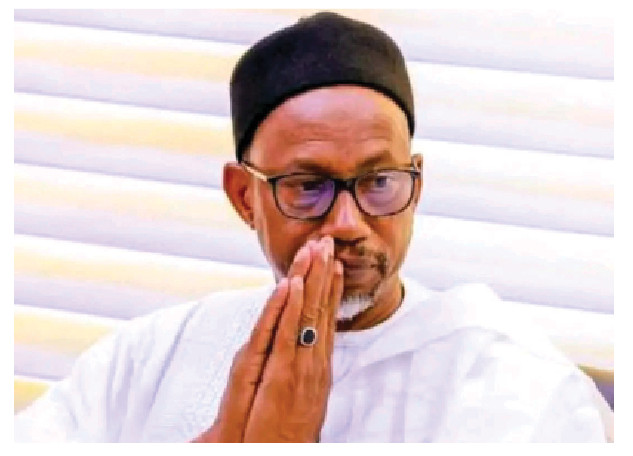
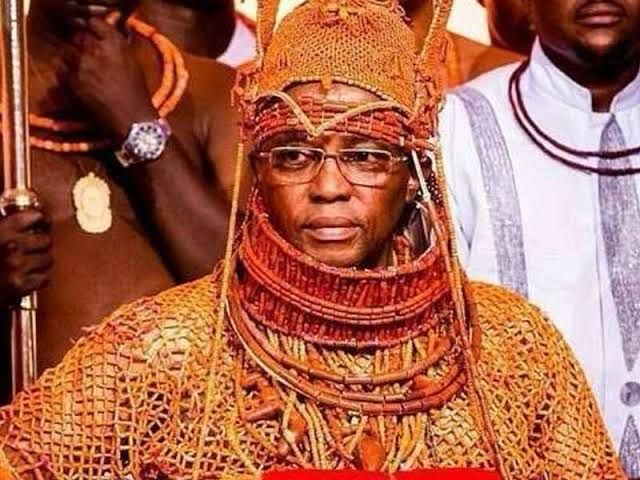
Former Vice President and presidential candidate of the African Democratic Congress (ADC), Atiku Abubakar, has claimed that President Bola Tinubu is 90 years old.
Atiku said he has evidence to support the claim and would be prepared to present it before a court if the matter becomes necessary.
The ADC candidate made the allegation in an interview with BBC Hausa published on Friday, August 28, 2026, during a discussion about his age and his ambition to contest the 2027 presidential election.
The former vice president was responding to questions about whether his age could affect his ability to govern Nigeria if elected.
Atiku, who would be approaching 80 by the time Nigerians vote in 2027, rejected concerns about his age.
He instead turned the discussion towards Tinubu and questioned why Nigerians should consider his age a problem when they previously elected the incumbent president.
“You went and voted for someone who is 80, I mean 90 years old. How old is President Bola, 90?” Atiku said.
He went further to insist that his claim about Tinubu’s age was not without evidence.
“You have a President who is 90 years old now and sick and I am healthy and strong. So why won’t I make myself available to serve my country?
“You went and voted for someone who is 90 years old. I have evidence that President Tinubu is 90 years old and I will present it in court,” he said.
Atiku has repeatedly presented himself as an experienced politician who remains physically and mentally capable of leading the country.
He has also defended his decision to seek the presidency again despite his previous attempts.
According to the former vice president, his repeated presidential bids should not be viewed simply as a personal ambition.
He argued that his political history, opposition to military rule and previous experiences in government have strengthened his determination to continue seeking the opportunity to lead Nigeria.
Atiku served as vice president between 1999 and 2007 under former President Olusegun Obasanjo.
He has contested the presidency several times, including under the Peoples Democratic Party (PDP) in 2019 and 2023.
He is now seeking to return to the ballot under the ADC after emerging as the party’s presidential candidate for the 2027 election.
The former vice president also spoke about insecurity, one of the major issues expected to shape the next presidential contest.
Atiku blamed the worsening security situation on what he described as government irresponsibility, particularly in the areas of defence and policing.
He promised that his administration would take action against insecurity within one year if elected president.
The former vice president has made security and economic hardship major parts of his campaign message as he prepares to challenge Tinubu and the All Progressives Congress (APC) in 2027.
In a related development, Atiku had a week ago, criticised President Tinubu over the issue of fuel subsidy and the direction of Nigeria’s economy.
On August 20, President Tinubu criticised Atiku’s proposal to restore petrol subsidy if elected president in 2027.
Tinubu made the comment while receiving Osun State Governor Ademola Adeleke at the State House in Abuja, following Adeleke’s victory in the August 15 governorship election.
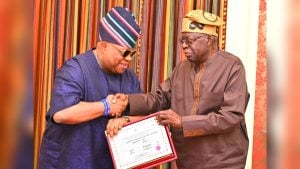
Although Tinubu did not mention Atiku by name, the President was clearly responding to the ADC candidate’s promise to introduce a new form of intervention in the petroleum sector.
“I saw one of my opponents now say he will go back to subsidy. I read it. That is a demonstration of serious ignorance on governance and the economy,” Tinubu said.
The President defended the decision to remove the petrol subsidy, arguing that the policy had placed a heavy burden on government finances.
Tinubu recalled the financial difficulties experienced by several states before the subsidy was removed.
He said many state governments struggled to pay workers’ salaries and pensions.
“Before I came here, 27 states were unable to pay salaries, not to even talk of pensioners, salary of workers,” he said.
The President maintained that government funds should instead be channelled into infrastructure and essential services.
He mentioned roads, housing, education and healthcare among areas that should receive greater attention.
Atiku later responded to Tinubu’s criticism through his Senior Special Assistant on Public Communication, Phrank Shaibu.
The former vice president argued that the government should not present Nigerians’ ability to survive the rising cost of living as proof that its economic reforms were working.
Atiku maintained that the removal of the subsidy had increased pressure on households through higher petrol prices, transport costs and general living expenses.