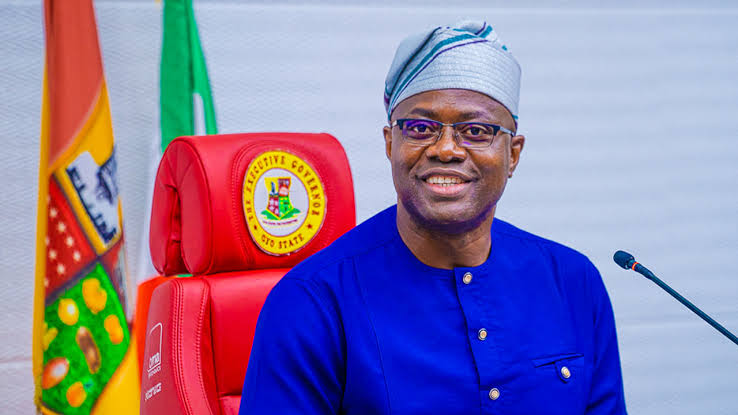
Oyo State governor and presidential candidate of the Allied People’s Movement(APM), Seyi Makinde, has said Nigerians should not be made to pay higher prices for petroleum products because of the federal government’s inability to secure the country’s borders against smuggling.
Makinde stated this in his newsletter while weighing in on the renewed debate over fuel subsidy ahead of the 2027 general elections.
He questioned the way the petroleum pricing debate had been framed over the years, arguing that the focus should be on establishing a pricing system that is fair to Nigerians as citizens of an oil-producing country.
“We should also reject the argument that Nigerians must pay more for petroleum products simply to eliminate the price difference that makes smuggling into neighbouring countries profitable,” Makinde said.
“Nigerians should not be made to bear the cost of government’s inability to secure its borders,” he added.
The governor said the debate should go beyond the question of whether fuel subsidy should be restored or remain removed.
“For years, the debate in Nigeria has largely been presented as a choice between subsidising petroleum products or allowing Nigerians to pay the full market price. I believe we are asking the wrong question.
“The more important question is: what is the right pricing framework for an oil-producing country like Nigeria?”
Makinde also called for greater transparency in the factors used to determine the price of petrol at filling stations.
According to him, Nigerians should have access to information on the crude oil price benchmark, refining costs and margins, exchange rate assumptions, logistics and distribution costs, taxes, levies and other variables used in calculating the pump price.
“What Nigerians deserve to know is the current pricing framework and the assumptions that determine what we pay at the pump,” he said.
He added that the information should be publicly available and clear enough for Nigerians to scrutinise the basis for the prices they pay and compare them with available alternatives.
Makinde said the fuel pricing controversy was part of a broader problem requiring reforms to the systems and institutions responsible for Nigeria’s persistent economic challenges.
“Over the years, we have changed governments, introduced new policies and promised ourselves new beginnings. Yet, for millions of Nigerians, the fundamental outcomes have remained largely the same,” he said.
“Too many of our people are still trapped in poverty. Too many families work hard without experiencing real progress. Too many young Nigerians are unable to see a clear path from education to opportunity.”
He also noted that insecurity continued to disrupt livelihoods, while some public institutions were not functioning as effectively as they should.
“This tells us that Nigeria’s challenge is bigger than the individuals occupying public office at any particular time. We must address the systems, institutions and structures that continue to reproduce outcomes that do not serve the majority of our people,” he said.
Makinde said his proposed “Reset Nigeria” movement would seek to tackle these structural challenges, stressing that the initiative would involve questioning existing systems and developing alternatives.
“Reset Nigeria means being willing to interrogate the system itself,” he said.
He argued that the petroleum pricing question should therefore not be reduced to whether subsidy should return or remain removed.
“It should be whether the pricing system we are using is the right one for Nigeria and whether it allows Nigerians to derive a fair benefit from the natural resources they own,” he said.
The governor said details of his proposed alternative would be unveiled in the coming weeks, adding that Nigerians would ultimately determine whether the proposal was acceptable.
“In the coming weeks, we will put forward our alternative and allow Nigerians to judge it for themselves,” Makinde said.
Makinde is the latest presidential hopeful to weigh in on the contentious subsidy debate ahead of the 2027 elections.
Former Vice President and presidential candidate of the African Democratic Congress, Atiku Abubakar, had in an August 25 post on X reiterated his commitment to restoring fuel subsidy if elected.
Former presidential candidate Peter Obi, meanwhile, has backed the removal of the subsidy while criticising the management of the savings from its removal.
We’ve got the edge. Get real-time reports, breaking scoops, and exclusive angles delivered straight to your phone. Don’t settle for stale news. Join THISTIMES on WhatsApp for 24/7 updates →
Join Our WhatsApp Channel