The emerging opposition coalition ahead of the 2027 general elections may have taken another step towards forming a united front against President Bola Tinubu and the ruling All Progressives Congress (APC).
However, the absence of three of its most prominent figures — former Vice President Atiku Abubakar, former Anambra State Governor Peter Obi and Oyo State Governor Seyi Makinde — from the latest summit has raised questions about the alliance’s strength, direction and leadership.
The G100 opposition summit, held at the Shehu Musa Yar’Adua Centre in Abuja, brought together representatives of major opposition parties to discuss a framework for cooperation ahead of the 2027 elections.
The meeting was attended by representatives of the African Democratic Congress (ADC), Allied Peoples Movement (APM), National Democratic Congress (NDC), Peoples Democratic Party (PDP), Peoples Redemption Party (PRP) and Social Democratic Party (SDP).
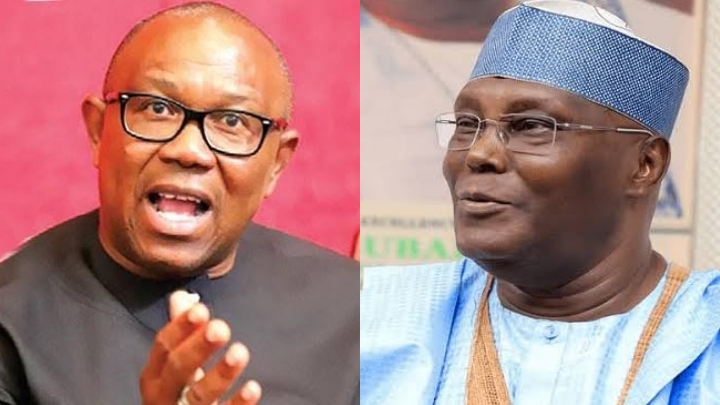
However, Atiku, the presidential candidate of the ADC; Obi, the presidential candidate of the NDC; and Makinde, the APM presidential candidate, were not physically present.
Their absence immediately raised questions about whether the three opposition heavyweights were hesitant about the coalition or whether their parties were proceeding with negotiations on their behalf.
Reactions from their respective camps, however, suggest that their absence should not automatically be interpreted as rejection of the coalition.
Atiku, Obi and Makinde occupy different but strategically important positions in Nigeria’s opposition politics.
Atiku brings decades of political experience, a nationwide political network and significant influence within the northern political establishment.
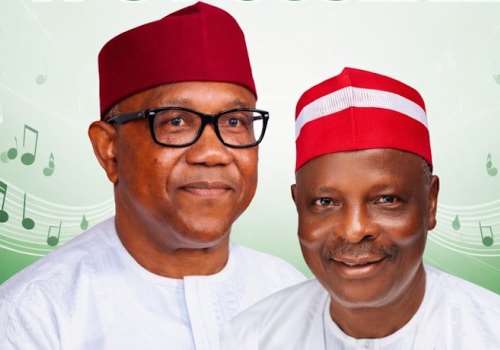
Obi, who came third in the 2023 presidential election, has retained a strong following among younger voters and among supporters of the Obidient movement that emerged during his 2023 campaign. His camp has also been bolstered by the emergence of the Kwankwasiya movement following Senator Rabiu Kwankwaso’s selection as his running mate.
Makinde, as a serving governor and prominent opposition figure, brings executive experience and influence in the South-West.
The question is whether the coalition can successfully combine these political strengths into a single electoral force capable of challenging Tinubu in 2027.
NDC: Obi away on official engagement, but committed
For the NDC, Peter Obi’s absence was due to an official engagement and not a decision to stay away from the summit.
The party’s national publicity secretary, Osa Director, told LEADERSHIP Weekend that Obi was away on an official engagement when the meeting took place.
He said the NDC was nevertheless fully represented at the summit by its national chairman, Moses Cleopas, and the party’s entire leadership.
Osa Director dismissed insinuations that Obi had deliberately refused to attend the summit, stressing that the party’s leadership’s presence demonstrated the NDC’s participation in the process.
The explanation is significant because Obi remains one of the most recognisable figures in Nigeria’s opposition politics. His 2023 presidential campaign generated a formidable political movement, particularly among younger voters, making his support base an important constituency for any attempt to build a broad opposition alliance.
The NDC’s position, therefore, suggests that Obi’s absence should not be interpreted as disengagement from the coalition talks. Rather, the party appears to be participating in the negotiations while its presidential candidate attends to other political engagements.
ADC: Atiku’s absence inconsequential, he’s ready
The ADC has similarly played down the significance of Atiku’s absence.
The party’s national publicity secretary, Bolaji Abdullahi, said the summit was primarily a conversation among political parties rather than individual presidential candidates.
According to him, the ADC was adequately represented, making Atiku’s physical presence unnecessary.
Abdullahi said he attended the meeting alongside about four vice chairmen of the party, affirming that the ADC participated fully in the proceedings.
“The summit, the way we understand it, is more about conversation between political parties rather than conversation among candidates,” Abdullahi said. “So it’s not consequential that Alhaji Atiku Abubakar was not present. He is fully committed to the project.”
Abdullahi also maintained that the ADC does not consider a coalition indispensable to defeating Tinubu in 2027.
He said the party was confident it could defeat the incumbent on its own, though cooperation with other opposition forces would make the task easier.
APM: Makinde’s absence is not withdrawal
The position of the Allied Peoples Movement is perhaps the most revealing of the three.
Like Atiku and Obi, Governor Seyi Makinde was absent from the summit, but the APM was represented.
APM national publicity secretary, Abubakar Yusuf, said the party favoured Governor Makinde emerging as the opposition’s consensus presidential candidate. ‘‘That notwithstanding, the governor is ready for the decision of the group,’’ he said.
Yusuf said consultations among opposition parties on a single candidate were progressing and argued that Makinde was best positioned to lead the opposition into the 2027 presidential election.
Personal ambitions may frustrate opposition unity, say analysts
Professor of Political Economy and immediate past dean of the Faculty of Social Sciences at Osun State University, Osogbo, Prof. Elijah Agbaje, said the absence of Atiku, Obi, and Makinde could indicate unresolved differences within the opposition coalition.
Agbaje told our correspondent that, except in established democracies with an advanced political culture, politicians rarely sacrifice their personal interests and ambitions for the collective good.
He said the non-attendance of the three politicians suggested that they were “not conveniently in accord with the rest”, although he noted that the reasons could differ from one politician to another.
According to him, Makinde’s situation may be different because he is still a serving governor, whereas Atiku and Obi face the more fundamental challenge of reconciling their presidential ambitions with the demands of a coalition.
“Each of the major contenders that view their chances as bright will rarely concede or forgo their individual ambition for the goal of a coalition,” Agbaje said.
Adeyi: Absence signals mistrust among opposition leaders
A professor at the University of Jos, Prof. Major Adeyi, believes the absence of Atiku, Obi and Makinde is not unusual in the history of opposition politics in Nigeria.
In an interview with LEADERSHIP Weekend, Adeyi said the organisers may have presented the summit as an effort to strengthen democracy and deepen consultations among opposition parties, but the failure of some leading opposition figures to attend points to unresolved disagreements within the opposition camp.
Reflecting on political alliances during Nigeria’s First and Second Republics, he said opposition parties did not always agree to cooperate despite having a common interest in challenging the party in government.
He argued that the current situation was therefore not surprising, particularly given what he described as the strained relationship between Atiku and Obi.
“It is common knowledge that both Atiku Abubakar and Peter Obi have reached a point of not working in harmony, so it is not strange for them not to attend,” he said.
Adeyi also suggested that the involvement of former President Olusegun Obasanjo could have influenced Atiku’s disposition towards the summit, although he said Obi would be more comfortable with Obasanjo’s presence.
“The opposition parties know very well that to wrestle power from the party in government will require joint operations,” Adeyi said.
“But for three principal opposition figures to neglect such a platform means they are not likely to bend, or they have their own joker, a kind of magic or miracle they want to conjure to get power.”
Adeyi said the three politicians could also be operating from a position of confidence that they could challenge the APC through their individual political strategies rather than through a broad coalition.
He warned that the opposition’s continued disunity could seriously undermine its prospects in 2027.
“We can say that the opposition is not united; it is not ready to give a good fight,” he said, adding that the three presidential contenders could be pursuing individual strategies because of a lack of trust and fears of betrayal.
“What I know is that these three gladiators are not the best of political friends, so they cannot form an alliance of the three,” Adeyi said.
More than opposition to Tinubu
Another issue that could test the coalition is whether its members share a sufficiently coherent political programme.
The ADC has already identified fuel subsidies as one area where differences could become problematic.
Abdullahi pointed to the divergent positions of the ADC and Obi on the subsidy question, arguing that such policy differences could complicate any attempt at a deeper merger.
The question, therefore, is whether the emerging alliance is united primarily by opposition to Tinubu or by a common programme for governing Nigeria.
Can 2023’s votes be combined?
The coalition’s strongest argument is arguably the arithmetic of the 2023 presidential election.
Tinubu polled 8,794,726 votes, while Atiku received 6,984,520 and Obi scored 6,101,533.
On the surface, the combined votes of the two major opposition candidates were significantly higher than Tinubu’s total. But simply adding the figures together would be misleading.
The votes represented different candidates, parties, regions and political movements. There is no automatic guarantee that voters who supported Atiku would vote for Obi, or that Obi’s supporters would transfer their allegiance to Atiku, Makinde or another candidate.
The coalition therefore has to create a political structure capable of retaining these separate constituencies under one umbrella.
That will require more than a common opponent. It will require trust among the leaders, agreement on policy, regional balancing and, most importantly, acceptance of whoever eventually emerges as the consensus candidate.
We’ve got the edge. Get real-time reports, breaking scoops, and exclusive angles delivered straight to your phone. Don’t settle for stale news. Join THISTIMES on WhatsApp for 24/7 updates →
Join Our WhatsApp Channel