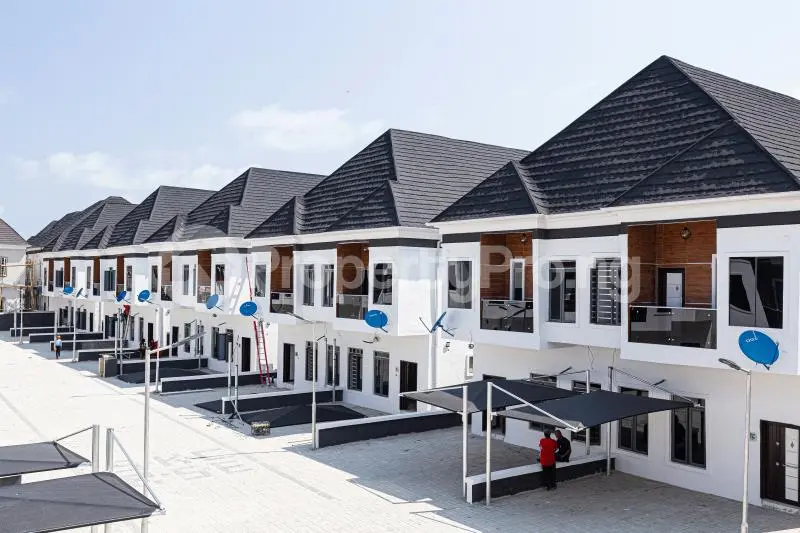
Real estate developers, investment analysts and a quantity surveyor have said that rising land prices, construction materials, labour and infrastructure costs are putting significant pressure on the cost of developing residential properties in Lagos, with developers increasingly passing the higher costs on to buyers and tenants.
The experts told Nairametrics that while high interest rates and exchange rate pressures are affecting the sector, financing costs are not the only or necessarily the biggest drivers of rising development costs.
They also pointed to land acquisition, cement, steel, finishing, site conditions, regulatory charges and infrastructure as major costs developers have to contend with.
Their comments follow Nairametrics’ examination of the rising cost of delivering residential properties in Lagos and how developers are responding to higher costs while trying to keep projects viable and within the reach of buyers and tenants.
The cost of developing residential property in Lagos has risen significantly in recent years, but the professionals interviewed by Nairametrics do not point to a single factor behind the increase.
Land and construction materials emerged repeatedly as major pressures, while labour, infrastructure, regulatory costs, financing and site conditions also add to the cost of delivering a project.
Real estate investment analyst Olabisi Odusanya places land and materials at the top of the list, saying land values have more than doubled in several parts of Lagos in recent years, while material costs have moved in line with inflation since 2020.
Bright Okereke, co-founder and president of Flinx Holding Co., also pointed to materials, particularly cement, alongside finishing works and land. He said the increase in these costs has had a direct effect on the prices at which his company sells its properties.
Magbo Henry Ikechukwu, a registered quantity surveyor, member of the Nigerian Institute of Quantity Surveyors (NIQS) and member of the Royal Institution of Chartered Surveyors (RICS), takes a broader view, saying developers need to account for the full cost of a project before deciding whether it is viable.
He said this includes pre-development expenses, infrastructure, professional and project management fees, marketing, sales commissions, taxes and the cost of funds.
Olabisi said interest rates should not be treated as the main driver where developers are not heavily dependent on bank loans. She said many residential projects are financed through equity, personal capital, private investors and joint ventures.
Okereke said his company also relies mainly on off-plan sales rather than bank loans because of the financing conditions attached to property development.
Engr. Habeeb Odusanya, HOD of Fort Construction Ltd., however, said financing remains a major cost where projects are funded substantially through debt.
Ikechukwu also included the cost of funds in a project’s viability assessment, noting that some banks charge interest rates of 23% and above, depending on the bank and terms negotiated.
Exchange rate pressures featured more prominently in discussions around construction inputs. Engr. Odusanya said fluctuations in the exchange rate, alongside inflation, have contributed to increases in imported construction components, including reinforcement steel, aluminium, electrical and plumbing materials.
This leaves financing as one of several pressures developers manage alongside land, materials, labour, infrastructure and site conditions.
Land has become one of the biggest expenses developers face, particularly in locations where demand for residential property remains strong.
Olabisi said land values have more than doubled across several parts of Lagos in recent years, making acquisition one of the biggest pressures on developers.
Okereke said land can account for about 20% of total expected revenue on some of his company’s projects.
Okereke identified cement and iron among the materials that have recorded significant increases, while Ikechukwu singled out cement and reinforcement steel as two of the most important components of construction.
Engr. Odusanya said the increases extend beyond cement and steel to aluminium, electrical and plumbing materials. He also identified labour as a significant cost, particularly as skilled artisans now demand higher rates.
The cost can also vary significantly between buildings of similar size.
Ikechukwu said finishing is one reason for this difference. A developer using standard tiles, fittings, wardrobes and kitchen cabinets could spend considerably less than another using imported or high-end alternatives.
He estimated current construction costs at about N350,000 to N400,000 per square metre, although some projects could reach N450,000 depending on specifications and other conditions.
The land itself can also determine how much a developer spends before construction begins.
Ikechukwu said soil strength determines the type of foundation required. Developers working on weak soil may need piling or raft foundations, while firmer soil may allow for less expensive options.
Infrastructure adds another layer. Where roads, drainage, electricity, water or sewage systems are unavailable, developers may have to provide some or all of these themselves.
The cost of developing a residential property does not end with buying land and putting up the building. Developers also incur expenses on approvals, professional services, documentation, marketing, sales and infrastructure.
Ikechukwu said these costs should be included from the beginning when a developer carries out a viability appraisal.
He identified pre-development costs, including architectural, structural, mechanical and electrical designs and site layouts, alongside professional fees for architects, quantity surveyors, engineers and other consultants.
There are also project management costs, marketing expenses and commissions paid to agents when properties are sold.
Statutory charges add another layer. Ikechukwu said developers may have to pay fees to agencies including the Lagos State Physical Planning Permit Authority (LASPPPA), Lagos State Building Control Agency (LASBCA), material testing authorities and the Lagos State Safety Commission, depending on the project.
Okereke said approval costs have also been increasing as developers deal with more agencies and additional requirements.
Engr. Odusanya said delays in documentation and approvals can have a bigger effect on project costs than the fees themselves.
A developer may have funds ready but still be unable to proceed while waiting for approvals or title processing. During that period, construction materials can become more expensive, financing costs can accumulate and potential rental or sales income is lost.