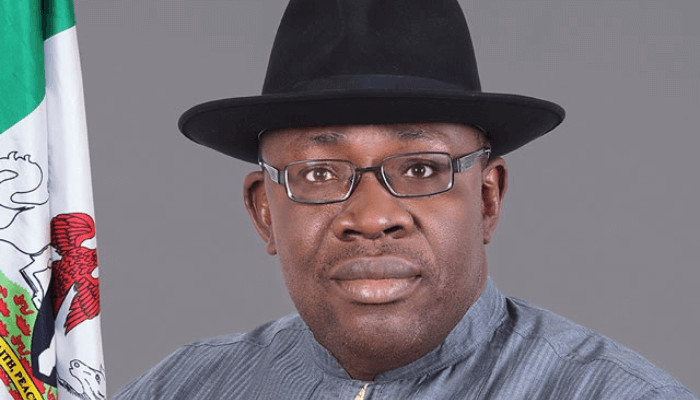
Peter Obi, presidential candidate of the Nigeria Democratic Congress (NDC) in the 2027 election, has disclosed plans by his political team to independently transmit polling unit results to its own situation room during the election.
Obi said the arrangement would operate alongside the official result transmission system of the Independent National Electoral Commission (INEC).
The former Anambra State governor made the disclosure during an interview on Arise TV, where he spoke about his preparations for the 2027 presidential election and the need to ensure that votes cast by Nigerians are properly recorded and protected.
According to Obi, his team does not intend to depend entirely on the electoral commission’s system to monitor the results coming from polling units.
He said a separate channel would allow his team to receive results directly from its agents on the field while the same results are being transmitted through the official INEC platform.
“We must make sure that at every polling unit, the votes are counted, the votes are recorded properly, the votes are transmitted properly.
“And we will have even a dual transmission so that as it’s going to the proper designated INEC portal, it’s also being transmitted where the people can see it,” he said.
Obi explained that the proposed arrangement is intended to create a room for monitoring during the election.
Under the plan, results recorded at individual polling units would be sent to the NDC’s situation room, where they could be collated and compared with results eventually published through INEC’s official channels.
He said the purpose was not to establish another electoral commission or replace the statutory role of INEC.
Rather, the NDC candidate said his team wanted to have its own independent record of what happened at polling units across the country.
When asked whether the proposal amounted to creating a parallel IReV system, Obi rejected the description.
He said political parties and other organisations were entitled to monitor elections and keep their own records of results obtained from their agents.
“All we are saying is that this time around, we will make sure that in every polling unit, we must have a system that transmits to our own situation room the correct results,” he stated.
Obi said other groups could also develop similar systems ahead of the election.
He maintained that the more independent records available, the more difficult it would be for anyone to announce results that could not be traced to what happened at the polling units.
“And I’m sure there are so many other agencies that intend to do the same thing. So we’re not going to have a situation where somebody pronounces something that didn’t emanate from the polling unit. Our task is to make sure that the right things are done,” Obi said.
The issue of electronic transmission of results has remained one of the major electoral questions in Nigeria since the 2023 presidential election.
The controversy has centred largely on the use of INEC’s Result Viewing Portal, IReV, which was introduced to allow election results from polling units to be uploaded for public viewing.
During the 2023 presidential election, delays in the uploading of results to the platform generated widespread criticism from opposition parties and supporters.
Obi, who contested the 2023 presidential election on the platform of the Labour Party, was one of the leading politicians who questioned the process after the election.
He and other opposition candidates challenged the presidential election result in court, although the Supreme Court eventually affirmed President Bola Tinubu’s victory.
Earlier in 2026, Politics Nigeria reports that lawmakers considered changes to the Electoral Act dealing with the transmission and collation of results.
The Senate eventually adopted provisions allowing electronic and manual transmission arrangements, with electronic transmission expected to be used while manual result sheets could serve as a fallback where electronic transmission fails.
For Obi, however, the issue goes beyond the technology used by INEC.
He has argued that voters and political parties must also take responsibility for protecting the results generated at polling units.
In a separate appearance, he said his supporters would be prepared to respond to technical problems affecting IReV and suggested that his movement would have alternative arrangements to ensure that results are not lost because of network failures.
“There will be so many IReVs this time. This time around, if there is a network glitch, we will give them another one that has no glitch,” he said.
“I am not worried about what the outcome of the 2027 general election will be. What worries me is the people and how they will protect their votes on election day,” he stated.
The former governor has urged voters to remain at polling units after casting their ballots and ensure that the results are properly recorded.
The proposed situation room would potentially serve as a central point where results submitted by agents from different parts of the country could be received, verified and collated.
Such a system could also give the party its own database of polling unit results which could be used to compare against figures eventually released through official channels.
Obi said the ultimate objective was to ensure that the result declared at the end of the process reflected the votes recorded at the polling units.
The NDC presidential candidate has also framed the 2027 election as a broader contest between Nigerians and the government in power.
He has repeatedly said the electorate, rather than political parties alone, will determine the direction of the country.
“You know that I won that election and it was rigged but that is not a problem. It’s my believe that the next election is between Nigerians and the government in office because the public has had enough and they are determined that things have to change,” Obi previously said.