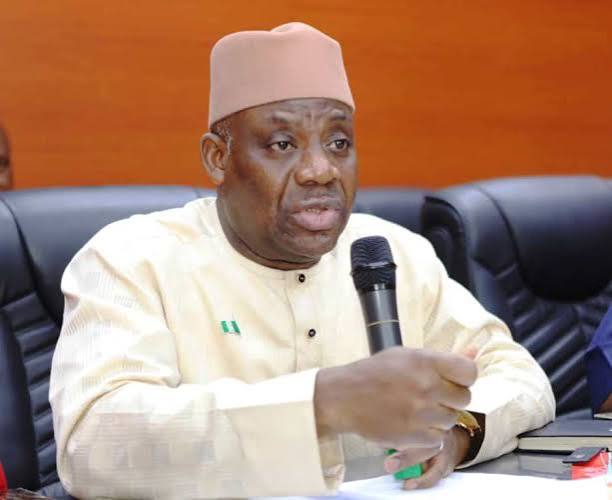
The federal government has raised the alarm over massive illegal admissions into Nigerian tertiary institutions, disclosing that more than 258,000 students were admitted outside approved processes by universities and colleges of education.
The Minister of Education, Dr Olatunji Alausa, disclosed this in Abuja at the inauguration of the Ministerial Committee on Strengthening the Accreditation and Quality Assurance System for Tertiary Institutions, chaired by the immediate past Registrar of the Joint Admissions and Matriculation Board, Professor Is-haq Oloyede.
Alausa said about 58,000 students were illegally admitted to colleges of education, while the number in universities was estimated at no fewer than 200,000.
He described the scale of illegal admissions as a “shame,” warning that the federal government would no longer legitimise such irregularities through repeated amnesty or “condonement.”
The minister said the government initially expected a proposed one-off amnesty for illegally admitted students in colleges of education to cover about 5,600 beneficiaries. However, the exercise revealed that about 58,000 students were affected nationwide.
He said the situation was even more alarming in some institutions, citing one in which 8,593 students were legally admitted, while another had 9,872 admitted illegally.
Alausa said the development reflected a deeper crisis in the tertiary education system, particularly the practice of admitting students beyond approved institutional capacities and programmes.
He warned that the consequences extend to the labour market, where employers increasingly struggle to find suitably qualified graduates despite receiving hundreds of applications for advertised positions.
The minister also warned heads of tertiary institutions and officials involved in manipulating accreditation exercises that they could lose their jobs, while private institutions risk having their licences withdrawn.
He said institutions would no longer be allowed to create a temporary picture of adequate capacity only when accreditation teams visit.
According to him, universities and other tertiary institutions would also no longer be permitted to borrow academic staff, laboratory equipment, workshop resources or library materials from other institutions simply to meet accreditation requirements.
Alausa stressed that whatever an accreditation team sees and verifies must represent an institution’s genuine and sustainable capacity throughout the year.
His warning comes amid concerns over accreditation of programmes in some institutions, including the Law programme at Atiba University in Oyo State.
In August, the Council of Legal Education imposed a 10-year moratorium on the university’s Law programme due to inadequate facilities and the admission and graduation of students without requisite approval, leaving affected students and parents seeking government intervention and possible transfers to accredited institutions.
Alausa announced that the federal government would transform accreditation from a largely manual, periodic exercise into a digital, data-driven, and continuously verifiable process.
He said the National Universities Commission, the National Board for Technical Education, and the National Commission for Colleges of Education would strengthen mechanisms for verifying institutional staff, facilities, and equipment.
The minister said physical accreditation visits would remain necessary but would increasingly be used to validate already verified data rather than begin the verification process from scratch.
He directed the committee to develop systems to verify the authenticity and continuous availability of academic and non-academic staff presented for accreditation, as well as the ownership, functionality, adequacy, accessibility, and sustained availability of facilities and equipment.
Alausa also advocated geospatial mapping, geotagging and other digital identification technologies to track laboratories, workshops, infrastructure and major equipment.
He called for a comprehensive digital identity and staff verification framework to establish the presence and institutional affiliation of personnel presented during accreditation.
The minister said that subject to data protection laws, the framework could leverage national identity infrastructure and interoperable government databases, including collaboration with the National Identity Management Commission to utilise the National Identification Number, alongside the appropriate use of the Bank Verification Number infrastructure and other secure technologies.
He said the principle would be “one individual, one verifiable identity and an accurately declared institutional affiliation,” helping to detect cases where an individual is improperly presented as full-time staff in multiple institutions.
Responding, committee chairman and former JAMB Registrar, Professor Is-haq Oloyede, pledged the panel’s commitment to addressing abuses in the accreditation system.
Oloyede said accreditation should not be treated as an exercise that institutions prepare for only temporarily, stressing that continuous monitoring is necessary to ensure that approved standards are maintained throughout the year.
He said the committee would also examine how regulatory and professional bodies could better integrate their accreditation processes and harmonise relevant criteria.
According to him, this would prevent situations in which students complete academic programmes but are unable to proceed to professional training or obtain registration due to accreditation-related problems.
Earlier, the Director of Polytechnic Education in the Ministry of Education, Mrs Kalau Igwe, said the committee’s inauguration demonstrated the Federal Government’s commitment to building a more transparent and integrity-driven accreditation system.
Igwe noted that borrowing or temporarily moving resources, staff and facilities for accreditation was not limited to universities but also occurred in other tertiary institutions.
The committee’s terms of reference include reviewing existing accreditation policies, standards, guidelines, procedures and operational practices across Nigeria’s tertiary education regulatory framework.
We’ve got the edge. Get real-time reports, breaking scoops, and exclusive angles delivered straight to your phone. Don’t settle for stale news. Join THISTIMES on WhatsApp for 24/7 updates →
Join Our WhatsApp Channel