Nigeria’s headline inflation rate is expected to remain elevated in August despite recording two consecutive months of disinflation, with analysts projecting the rate between 15.3% and 15.94%.
The analysts’ forecasts put August headline inflation between 15.3% and 15.94%, compared with 15.43% recorded in July.
While the harvest season could provide some relief to food prices, analysts expect elevated petrol and diesel prices, base effects and other cost pressures to limit the pace of disinflation.
The expected increase would also come despite a moderation in the monthly pace of price increases, suggesting that the annual inflation rate could be affected more by the base effect than by a renewed acceleration in underlying price pressures.
Analysts therefore expect food inflation to remain the major pressure point in August, even as core inflation continues to moderate.
Dr Ayodeji Ebo, Chief Executive Officer at MDU Capital Limited, expects headline inflation to remain elevated at around 15.6% year-on-year (YoY) in August, compared with 15.43% in July.
Although he stated that the harvest season could help ease food prices, the impact may be limited by high petrol and diesel prices.
These continue to raise the cost of transportation, production and distribution.
Damilare Asimiyu, Head of Research at FSDH Group, expects headline inflation to rise to 15.94% YoY in August, ending the two-month decline.
He attributed the expected increase largely to the base-year effect.
Despite that, FSDH expects the month-on-month (MoM) headline inflation rate to slow to 1.57% from 1.66% in July, indicating that prices could rise at a slower pace during the month.
The increase in headline inflation is expected to be driven primarily by the food inflation component, which FSDH projects to rise marginally to 20.49% YoY from 20.31%.
He explained that on a monthly basis, food inflation is expected to slow to 1.80%, reflecting early gains from the main harvest season, particularly for tubers and vegetables.
The 5.56% MoM increase in food inflation recorded in July also provides a high statistical base, contributing to the expected moderation in monthly food price pressures in August.
He added that FSDH projects a further moderation to 14.68% YoY for core inflation, while the MoM rate is expected to print at approximately 1.17%.
Kehinde Jones, Head of Research and Strategy at Anchoria Capital Group, took a different turn. Even though his organization gears towards the possibility of the headline inflation rate experiencing some upward pressure towards the end of the year from food prices, energy costs and seasonal demand, he predicted a moderation to 15.3% for the headline inflation in August.
He highlighted that Anchoria Capital Group forecasts headline inflation at 15.5% by December 2026, noting that continued disinflation could allow the CBN to maintain a cautious approach to monetary easing, while improving inflation conditions gradually support economic activity and equity-market valuations.
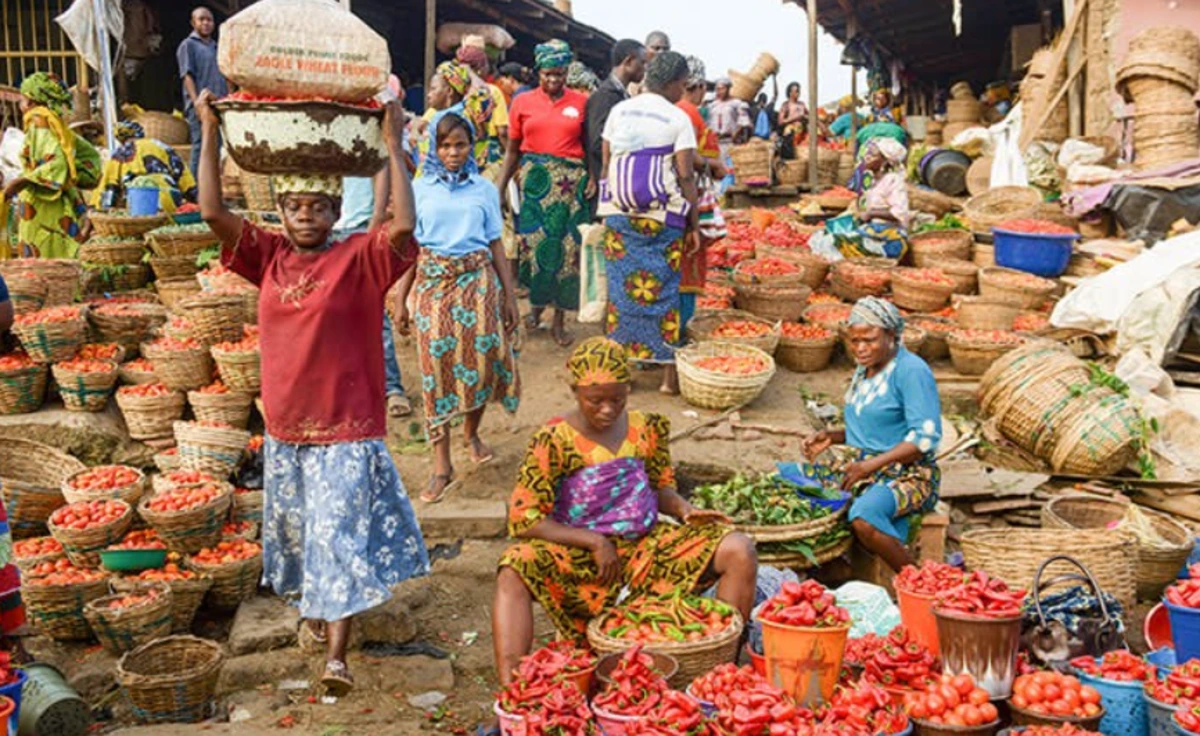
Food prices – Food inflation remains the biggest source of the rise in inflation, despite the commencement of the harvest season. Increased supply of some food items such as tubers, vegetables and other staples could provide some relief while distribution challenges could affect the impact.
Fuel and energy costs – Increases in petrol and diesel prices always contribute to transportation, production and distribution costs, creating a potential factor that limits the pace of disinflation.
Base-year effects – Comparing with the inflation rate of August 2025 could push the year-on-year inflation rate higher even if the rate of monthly price increases moderates.
Food inflation remains a major source of pressure in Nigeria’s inflation basket, with the YoY rate increasing continuously since February 2026 and reaching 20.31% in July, its highest level in 11 months since September 2025.
The July data also showed a sharp increase in food inflation to 5.56% month-on-month.
The harvest season could reduce food-price pressures in August, but the impact of the season may not be immediately felt due to the lag effect.
Although analysts expect the MoM headline inflation rate to moderate slightly, the base effect and elevated food inflation could make the YoY rate increase in August.
The key question, therefore, is whether increased food supply during the main harvest season will be strong enough to offset persistent increases in energy prices and its offshoot effects.