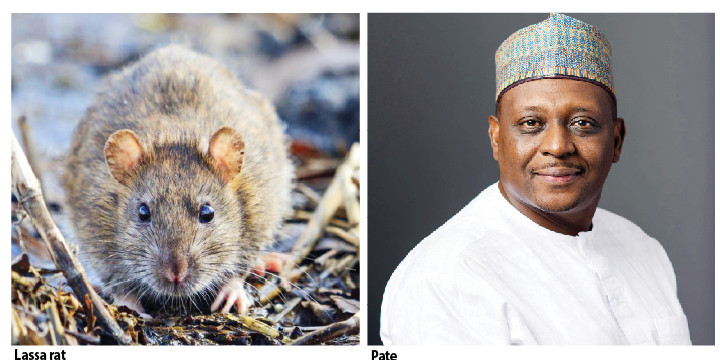
Lassa Fever and Diphtheria should be footnotes in Nigeria’s public health history. Instead, they remain headlines. A rat in the kitchen, a child who missed a routine immunisation, a health centre without gloves or early diagnosis – these small gaps are where preventable infections become deadly obituaries. PATIENCE IVIE IHEJIRIKA reports.
Nigeria is facing a troubling contradiction in its public health as diseases that can be prevented, detected early or effectively managed continue to claim lives and overwhelm communities across the country.
From the persistent spread of Lassa fever to the resurgence of diphtheria, epidemiological data revealed a pattern that extends beyond isolated outbreaks.
They point to enduring weaknesses in environmental sanitation, vaccination coverage, disease surveillance, diagnostic capacity, healthcare access and public awareness.
While the two diseases have different causes and modes of transmission, experts said their persistence exposes the difficulty of translating available public health knowledge and interventions into sustained action at the community level.
The situation is particularly concerning as the records show a rising Lassa fever fatality rate and continues to battle a major diphtheria outbreak, with children bearing much of the burden.
According to the Nigeria Centre for Disease Control and Prevention (NCDC), as of epidemiological week 34 of 2026, Nigeria had recorded 7,580 suspected Lassa fever cases, 1,056 confirmed cases and 253 deaths, for a case fatality rate (CFR) of 24 per cent.
The figure is considerably higher than the 18.7 per cent CFR recorded during the corresponding period of 2025.
Professor of Virology, Oyewale Tomori, said the recurring outbreaks demonstrate that Nigeria has failed to treat Lassa fever with the urgency required of a major public health threat.
He warned that unless the disease is taken more seriously, it would continue to ravage communities.
Tomori also called for more targeted public education, arguing that generic messages about avoiding bush meat do not adequately explain how Lassa fever is transmitted or how communities can protect themselves.
He identified Nigeria’s diagnostic capacity as another major weakness, saying only about 10 per cent of suspected Lassa fever cases are laboratory-confirmed.
According to him, the country therefore remains largely ignorant of the diagnoses of the majority of suspected cases.
The Lassa virus causes Lassa fever and is primarily transmitted through food or household items contaminated with the urine or faeces of infected Mastomys rats, commonly known as multimammate rats.
Human-to-human transmission can also occur through contact with infected bodily fluids, particularly in healthcare settings with inadequate infection prevention and control.
Environmental health expert, Juliet Ojieabu, said the recurring Lassa fever outbreaks demonstrate the need for Nigeria to move from reactive outbreak response to sustained prevention.
She stressed that Lassa fever is not solely a health-sector problem but also an environmental and community challenge.
According to her, improved sanitation, effective waste management, proper food storage and sustained rodent control are critical to reducing transmission, particularly in endemic communities.
She also called for stronger diagnostic capacity, warning that delayed confirmation can prevent patients from receiving appropriate treatment early enough.
Ojieabu said public awareness campaigns must also extend beyond urban centres and be delivered in local languages through traditional rulers, religious leaders, community health workers and other trusted community voices.
“People need practical information on how transmission occurs, how to protect food from rodents, and when to seek medical attention,” she said.
The expert told LEADERSHIP Weekend that one of the biggest weaknesses in the country’s response is the authorities’ continued heavy focus on responding to outbreaks rather than on preventing them.
“We know the major risk factors, and we know the states where cases repeatedly concentrate. That should allow us to target interventions before the next outbreak becomes severe,” she said.
The Director-General of NCDC, Dr Jide Idris, has similarly advised Nigerians to seal gaps that allow rodents into homes, properly store food, and dispose of waste appropriately.
He encouraged households to keep food such as rice, garri, beans and maize in tightly covered containers, while communities are advised to establish waste disposal sites away from residential areas.
However, Ojieabu said that such advice can be difficult to implement in communities that lack adequate sanitation infrastructure, organised waste collection, and affordable food storage facilities.
The current Lassa fever situation report indicated that 21 new confirmed cases were recorded in week 34, compared with 14 in week 33. The new cases were reported in Ondo, Edo, Bauchi, Taraba and Akwa Ibom states.
In total, 24 states have recorded at least one confirmed case across 118 Local Government Areas in 2026. Five states, namely Ondo, Bauchi, Taraba, Edo and Benue, account for 87 per cent of confirmed infections, with Ondo contributing 33 per cent, Bauchi 25 per cent, Taraba 13 per cent, Edo 10 per cent and Benue six per cent.
The concentration of cases in a handful of states is not new. In 2024, Ondo, Edo and Bauchi accounted for 72 per cent of confirmed cases. The three states accounted for 76 per cent in 2023 and 72 per cent in 2022. In 2021, Edo, Ondo and Bauchi accounted for 84 per cent of confirmed infections.
According to the NCDC epidemiological report, in 2025, the country recorded 1,148 confirmed cases from 9,389 suspected cases and 195 deaths as of week 49, with a CFR of 18.2 per cent. By week 52, deaths had risen to 215 and the CFR to 18.7 per cent.
In 2024, 1,309 confirmed cases were recorded from 10,098 suspected cases, resulting in 214 deaths and a CFR of 16.3 per cent.
The country recorded 1,270 confirmed cases and 227 deaths in 2023, while 2022 recorded 1,055 confirmed cases and 184 deaths. In 2021, 510 confirmed cases resulted in 102 deaths, giving a CFR of 20 per cent.
Diphtheria: When Vaccine Gaps Become Fatal
While Lassa fever exposes the consequences of environmental and diagnostic vulnerabilities, Nigeria’s diphtheria crisis highlights another preventable weakness: immunisation gaps.
Between epidemiological week 19 of 2022 and week three of 2026, Nigeria recorded 40,460 confirmed cases of diphtheria and 2,151 deaths, according to NCDC data.
During the period, 61,930 suspected cases were reported across all 36 states and the Federal Capital Territory, involving 450 LGAs.
The outbreak was heavily concentrated in northern Nigeria. Kano recorded the highest number of confirmed cases with 24,687, followed by Borno with 5,077, Bauchi with 4,139, Yobe with 3,159 and Katsina with 2,589.
Together, the seven states with the highest number of suspected cases accounted for 94.6 per cent of suspected infections. The crisis has continued into 2026.
As of 28 August, the NCDC DG said Nigeria had recorded more than 10,000 confirmed diphtheria cases this year, with most concentrated in Kano, Borno and Bauchi.
However, there was an improvement, as the proportion of confirmed cases resulting in death had declined considerably compared with the same period of the previous year.
The development suggests that improvements in case detection, treatment and outbreak response can save lives.
However, the continued high number of infections shows that prevention remains the greater challenge.
How Diphtheria Spreads
Diphtheria is a serious bacterial infection caused by Corynebacterium diphtheriae and primarily affects the nose and throat.
NCDC explained that Diphtheria spreads through respiratory droplets when an infected person coughs or sneezes, direct contact with an infected person or contact with contaminated clothing and personal items.
The organisation said early symptoms can include fever, sore throat, cough and runny nose, adding that as the infection progresses, patients may develop neck swelling and a thick grey or white membrane around the tonsils or at the back of the throat. Severe disease can interfere with breathing and may become fatal.
It has urged people with symptoms suggestive of diphtheria to seek medical attention immediately and avoid close contact with others while awaiting medical evaluation.
The persistence of diphtheria is particularly troubling given the availability of effective vaccines. Under Nigeria’s childhood immunisation schedule, children are expected to receive three doses of the pentavalent vaccine, which protects against diphtheria, at 6, 10 and 14 weeks of age.
Yet the vaccination data from confirmed cases revealed substantial gaps. The problem, therefore, goes beyond vaccine availability. It includes missed routine immunisation, incomplete vaccination, inadequate access in some communities, misinformation, and difficulties in reaching underserved populations.
Meanwhile, the Federal Government has responded to the latest outbreaks by activating an emergency task force comprising the Federal Ministry of Health and Social Welfare, the NCDC, the National Primary Health Care Development Agency, affected states, and development partners.
The response includes strengthened surveillance, intensified immunisation and efforts to ensure timely treatment.
The NPHCDA has also deployed 500,000 doses of diphtheria-containing vaccines to Kano and Katsina to support intensified immunisation in affected and high-risk communities.
Although Lassa fever and diphtheria are fundamentally different diseases, their continued spread serves as a broader warning about Nigeria’s public health system.
We’ve got the edge. Get real-time reports, breaking scoops, and exclusive angles delivered straight to your phone. Don’t settle for stale news. Join THISTIMES on WhatsApp for 24/7 updates →
Join Our WhatsApp Channel