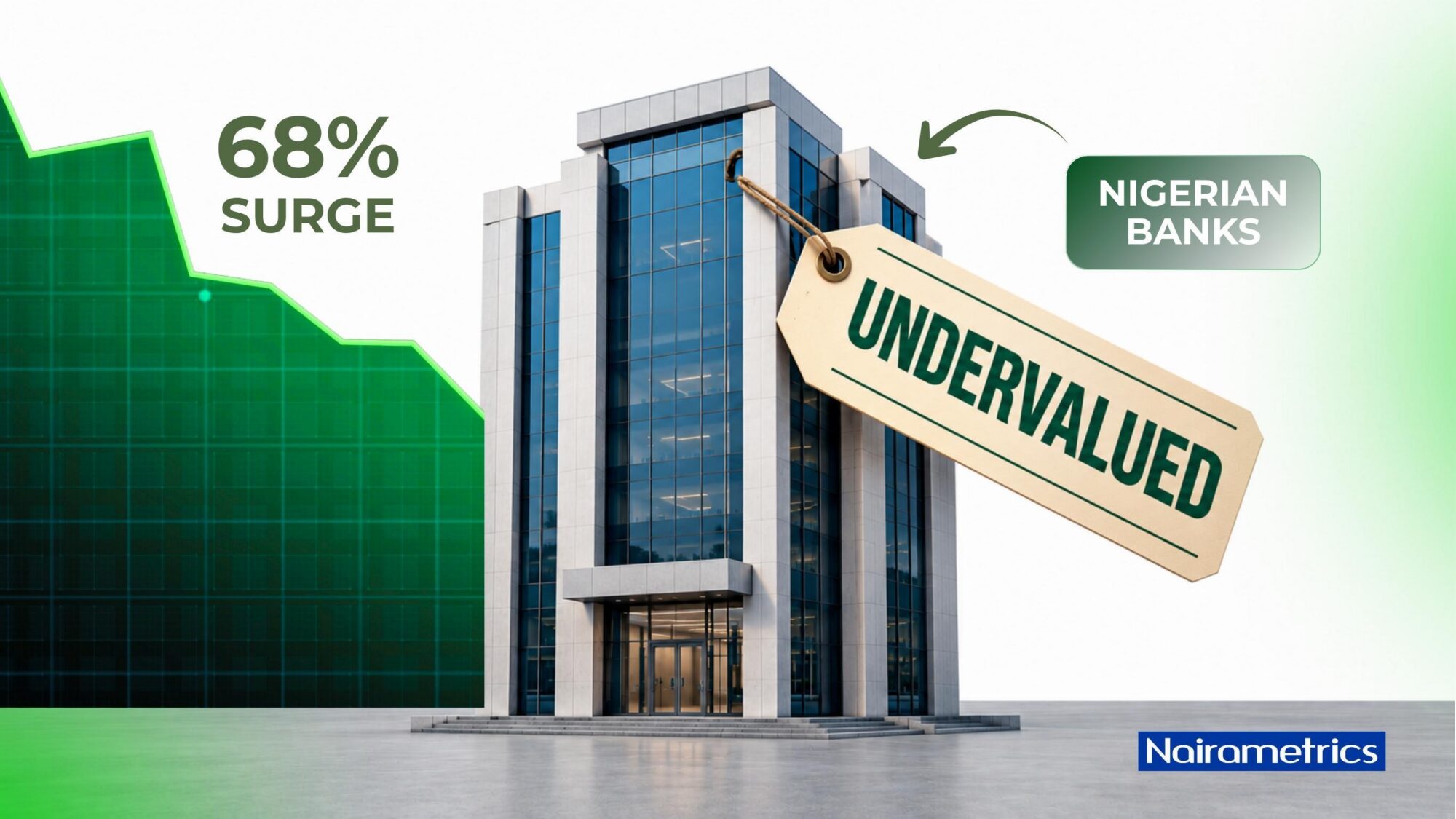
Nigerian banks trade at discount to African peers despite 68% surge

Nigerian banking stocks have rallied strongly in 2026, adding more than N11 trillion in market value in less than nine months.

However, several of the country’s largest banks still trade below the valuations of comparable African lenders, with some below book value and at relatively low price-to-earnings multiples despite strong share-price gains and earnings growth.

Data reviewed by Nairametrics shows that the NGX Banking Index gained 67.96% year-to-date as of September 14, outperforming the broader NGX All-Share Index, which rose 56.35% over the same period.

The rally lifted the combined market value of the 12 banks reviewed by Nairametrics from about N16.44 trillion at the end of December 2025 to N27.61 trillion as of September 14, 2026, adding roughly N11.17 trillion in less than nine months.

Most of the increase came from rising share prices rather than new share listings. Despite the rally, the sector’s average valuation remains modest. Several banks still trade below the value of their net assets, while others command lower earnings multiples than peers in Kenya, South Africa, Ghana and Tanzania.

As share prices have risen, banking valuations have also moved higher, although the re-rating has been uneven across the sector.

Nigerian banks also remain cheaper than several African peers, including major lenders in Kenya, South Africa, Ghana and Tanzania.

The comparison suggests that despite the strong NGX rally, investors continue to apply a substantial valuation discount to several Nigerian banks.

Analysts believe some of the factors that previously weighed on banking-sector valuations have improved significantly in 2026.

ARM noted in May that the completion of the Central Bank of Nigeria’s recapitalisation exercise had removed an overhang that weighed on sentiment for much of the previous year, while Afrinvest Research said recapitalisation, attractive dividend yields and stronger earnings helped sustain demand for equities in the first half of 2026.

Ukpoma also expects the inclusion of some Nigerian banks in the FTSE Russell Frontier 50 Index to support demand, particularly from foreign investors.

He also pointed to strong trading volumes in Access Holdings as evidence of continued investor interest, while noting that Zenith Bank has continued to show strength as it attempts to return to its 52-week high and GTCO could have further room if it confirms another upward move.

One explanation for the persistent discount is that investors may still be questioning how sustainable the strong earnings recorded by Nigerian banks over the past few years will be.

FirstHoldCo’s performance, however, demonstrates how quickly the valuation gap can narrow when investor confidence improves, with the stock gaining about 194.4% this year amid continued disclosures showing its largest shareholder accumulating additional shares in the company.

Only Zenith Bank and FirstHoldCo are currently worth more than N5 trillion, with FirstHoldCo the only Nigerian bank in the billion-dollar mega-cap (BMC) bracket.

The market-capitalisation ranking highlights the uneven distribution of value across the sector, with only two banks exceeding N5 trillion and most of the remaining lenders valued between N1 trillion and N2.5 trillion.

Nigerian banks trade at discount to African peers despite 68% surge

Nigerian banking stocks have rallied strongly in 2026, adding more than N11 trillion in market value in less than nine months.

However, several of the country’s largest banks still trade below the valuations of comparable African lenders, with some below book value and at relatively low price-to-earnings multiples despite strong share-price gains and earnings growth.

Data reviewed by Nairametrics shows that the NGX Banking Index gained 67.96% year-to-date as of September 14, outperforming the broader NGX All-Share Index, which rose 56.35% over the same period.

The rally lifted the combined market value of the 12 banks reviewed by Nairametrics from about N16.44 trillion at the end of December 2025 to N27.61 trillion as of September 14, 2026, adding roughly N11.17 trillion in less than nine months.

Most of the increase came from rising share prices rather than new share listings. Despite the rally, the sector’s average valuation remains modest. Several banks still trade below the value of their net assets, while others command lower earnings multiples than peers in Kenya, South Africa, Ghana and Tanzania.

As share prices have risen, banking valuations have also moved higher, although the re-rating has been uneven across the sector.

Nigerian banks also remain cheaper than several African peers, including major lenders in Kenya, South Africa, Ghana and Tanzania.

The comparison suggests that despite the strong NGX rally, investors continue to apply a substantial valuation discount to several Nigerian banks.

Analysts believe some of the factors that previously weighed on banking-sector valuations have improved significantly in 2026.

ARM noted in May that the completion of the Central Bank of Nigeria’s recapitalisation exercise had removed an overhang that weighed on sentiment for much of the previous year, while Afrinvest Research said recapitalisation, attractive dividend yields and stronger earnings helped sustain demand for equities in the first half of 2026.

Ukpoma also expects the inclusion of some Nigerian banks in the FTSE Russell Frontier 50 Index to support demand, particularly from foreign investors.

He also pointed to strong trading volumes in Access Holdings as evidence of continued investor interest, while noting that Zenith Bank has continued to show strength as it attempts to return to its 52-week high and GTCO could have further room if it confirms another upward move.

One explanation for the persistent discount is that investors may still be questioning how sustainable the strong earnings recorded by Nigerian banks over the past few years will be.

FirstHoldCo’s performance, however, demonstrates how quickly the valuation gap can narrow when investor confidence improves, with the stock gaining about 194.4% this year amid continued disclosures showing its largest shareholder accumulating additional shares in the company.

Only Zenith Bank and FirstHoldCo are currently worth more than N5 trillion, with FirstHoldCo the only Nigerian bank in the billion-dollar mega-cap (BMC) bracket.

The market-capitalisation ranking highlights the uneven distribution of value across the sector, with only two banks exceeding N5 trillion and most of the remaining lenders valued between N1 trillion and N2.5 trillion.