by IGHO OYOYO, Francis Okoye, ACHOR ABIMAJE, ABU NMODU, KALU EZIYI, AZA MSUE, KABIR WURMA, IBRAHIM OBANSA, RICHARD NDOMA, DAMILOLA ORIGBEMISUYI, Alo Abiola, Ado-Ekiti, FELIX IGBEKOYI, INIOBONG EKPONTA, Adebayo Waheed, Anayo Onukwugha
Many states in Nigeria are struggling to meet the October 1 deadline to reduce transportation costs, LEADERSHIP findings have revealed.
Although several states have announced plans to cut transport fares, findings show that many are still struggling to keep pace with the current realities, while others lack the infrastructure required to support cheaper transportation, including Compressed Natural Gas (CNG) conversion and refuelling facilities.
President Bola Tinubu had directed state governments to ensure that lower operating costs from CNG-powered transportation are reflected in reduced fares for commuters from October 1.
Tinubu gave the directive in a statement on Saturday while providing an update on the National Affordable CNG Transit Programme, which was launched following his August 27 meeting with the 36 state governors.
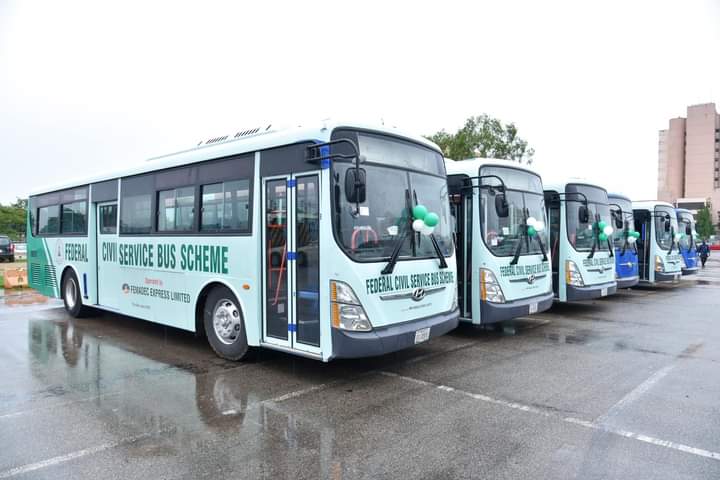
Findings by LEADERSHIP revealed that while a few states are providing free transportation to citizens on selected routes, others have acquired CNG-powered vehicles without adequate refuelling infrastructure.
Abuja
In Abuja, the federal government’s announcement of a 40 per cent reduction in transport fares for CNG-converted commercial vehicles has yet to translate into lower fares at the Area 1 Motor Park.
A commercial driver at the park, Uche Chijioke, who spoke with LEADERSHIP yesterday, said neither drivers nor operators at the park had received any directive on the new fare regime following President Tinubu’s announcement.
He said drivers could not unilaterally reduce fares without clear instructions from their companies and the relevant authorities.
Chijioke, however, warned that directing operators to cut fares by 40 per cent without a compensation mechanism could create serious financial pressure on transport companies.
According to him, operators are already contending with the costs of vehicle maintenance, salaries, spare parts and other operational expenses, making it difficult to absorb such a significant fare reduction without government support.
Borno
In Borno State, there is no federal government electric vehicle deployment yet. The electric vehicles and tricycles currently operating in Maiduguri were procured by the Borno State Government.
The state-owned electric vehicles, comprising luxury buses, saloon cars and tricycles, were introduced in batches, with subsidised fares on selected routes within Maiduguri, the state capital.
However, about 10,000 electric buses and cars, as well as 13-seater tricycles procured by the federal government through the North East Development Commission (NEDC), are currently being assembled for distribution to the six states of the Northeast, with commissioning expected in October this year.
The special adviser on media to the state governor, Mallam Dauda Iliya, when contacted, said he was not aware of any federal government electric vehicles deployed to the state, adding that such vehicles would not be deployed without the knowledge of the state government.
Plateau
In Plateau State, although Governor Caleb Mutfwang has prioritised investment in affordable mass transit over ad hoc palliatives, two commuters, Ahmad Yusuf and Israel Mang, who spoke to our correspondent in Jos, said they were not aware of any reduction in transport costs.
According to the duo, the state has no CNG or electric buses providing public transportation, to the best of their knowledge.
Niger
In Niger State, there is neither a CNG conversion centre nor a refuelling station. Consequently, CNG buses are not operating anywhere in the state.
LEADERSHIP had reported that the state government purchased 200 CNG buses, which were still parked at the Trade Fair Complex in Minna and had not commenced operations.
The government said the delay was due to the lack of CNG refuelling stations in the state.
It was gathered that three CNG plants were under construction in the state — two in Minna and one in Suleja.
Kebbi
In Kebbi State, findings revealed that the government had neither received nor purchased CNG-powered vehicles specifically to ease the increase in transport fares ahead of October 1.
However, the Commissioner for Transport and Renewable Energy, Bala Muhammad Gagga, told our correspondent in a telephone interview on Monday that the administration of Governor Nasir Idris had purchased more than 50 new 18-seater buses and deployed them for commercial transit under the Kebbi State Transport Authority (KSTA) at subsidised rates.
According to him, the buses transport passengers from Birnin Kebbi to the other 21 local government headquarters in the state at affordable fares.
He said the buses had reduced the fare from Birnin Kebbi to Sokoto to N3,500, from N8,000; from Zuru to N8,000, from N10,000; and from Bagudo to N5,000, from N8,000.
Imo
In Imo State, the government said Governor Hope Uzodimma was working to make life easier for residents.
Findings show that fares for commercial buses have remained unchanged since January, despite fluctuations in petrol prices, which currently range between N1,370 and N1,420 per litre in the state.
The commissioner for information, Strategy and public orientation, Chief Declan Emelumba, said the government was concerned about the well-being of residents and was working to address the challenges.
Emelumba said, “Government is doing everything possible to make life easier for Imo people, and Governor Hope Uzodimma is particularly about that. He has started and will continue to ensure that he makes life easier for the people.”
Kogi
Kogi State currently does not operate a state-owned transport service, while the much-anticipated CNG buses have yet to commence operations. This has raised questions about how the state will meet the Federal Government’s directive for states to reduce transportation costs by October 1, 2026.
Although the directive is expected to ease the burden of transportation on Nigerians, it remains uncertain how Kogi State will implement the policy in the absence of a government-owned mass transit system.
A driver at the Kogi International Park in Lokoja, Muhammed Danladi, told LEADERSHIP that the state government could achieve the target by acquiring and operating its own buses and fixing fares at affordable rates.
Cross River
In Cross River State, the commissioner for transportation, Kingsley Egumi, said the state government was aware of the Federal Government’s directive, describing it as a step in the right direction towards reducing transport costs and improving the welfare of residents.
He said the state government had been working to meet the target and deadline.
“We already have the vehicles on the ground. If you go to the yard of the fabrication academy, you will see the long e-buses which will be used for that purpose,” he said.
However, the services are yet to be made available to residents.
Ondo
The Ondo State Government is expanding its CNG programme as part of measures to reduce transportation costs ahead of the October 1 deadline set by the federal government.
The special adviser on transportation to Governor Lucky Aiyedatiwa, Muyiwa Ogunyemi, said the state was working to establish more CNG conversion centres and expand access to existing outlets to accelerate the conversion of commercial vehicles.
Abia
Abia State operates electric buses under the Abia Green Shuttle Service, with a fleet of 40 buses.
The service is described as efficient and timely, but the number of buses remains too small to effectively cover the state. As of press time, checks indicated that there had been no reduction in transportation costs.
Kaduna
The Kaduna State Government said the 100 CNG buses recently launched by President Bola Ahmed Tinubu were carrying passengers free of charge in the state.
Speaking with LEADERSHIP on the telephone on Saturday, Governor Uba Sani’s chief press secretary, Ibraheem Musa, said the buses were serving residents without collecting fares as part of efforts to address transportation challenges.
Ekiti
In Ekiti State, the government said it was taking steps to keep transportation costs and fares low.
Speaking with LEADERSHIP in Ado-Ekiti, the state capital, the commissioner for information, Rt. Hon. Taiwo Olatunbosun, said the government had been supporting the transport sector, investing heavily in infrastructure, improving the road network and providing free bus shuttle services for workers and students travelling to and from their workplaces and schools.
Delta
In Delta State, the government has received 50 CNG buses as part of efforts to introduce a mass transit system.
The pilot phase is expected to improve inter-city and intra-city transportation, supported by modern transport infrastructure to make everyday movement easier for residents.
The commissioner for transport, Onoriode Agofure, described the 50 buses as the pilot phase of the programme, adding that more buses would be acquired if the initiative proves successful.
Akwa Ibom
To cushion the impact of the prevailing socio-economic challenges, Governor Umo Eno of Akwa Ibom State has taken delivery of no fewer than 50 CNG-powered buses, which are expected to operate across the state’s 31 local government areas at subsidised fares.
Receiving the buses, which are currently parked at Government House, Uyo, the state capital, the government said they would be deployed on October 1.
The state government said the buses would improve transportation across the 31 local government areas, describing their arrival as “a major milestone in the administration’s plan to provide a safer, easier and more efficient public transport system.”
Oyo
Ahead of October 1, the Oyo State Government has deployed CNG buses to Pacesetter Transport Service (PTS), which previously reduced the Lagos-Ibadan fare from about N8,000 to N3,200.
A staff member of PTS, Olanrewaju Ademuyiwa, who disclosed this, said the state government also planned to introduce electric buses on city routes to meet the federal government’s October 1 transport cost-reduction target.
Rivers
In Rivers State, the government said it would continue to intervene to reduce transportation costs by providing free transport services for civil servants and other residents.
The head of the Land Transportation Department, Rivers State Ministry of Transport, Engr. Andrew Alapuberesisika, disclosed this while speaking with LEADERSHIP in Port Harcourt, the state capital.
Alapuberesisika said the state government was also exploring other options, including the provision of CNG buses, to further reduce transportation costs.
We’ve got the edge. Get real-time reports, breaking scoops, and exclusive angles delivered straight to your phone. Don’t settle for stale news. Join THISTIMES on WhatsApp for 24/7 updates →
Join Our WhatsApp Channel