Despite repeated peace accords and pledges by political actors to ensure peaceful elections, violence has remained a persistent feature of Nigeria’s electoral process, raising questions about the effectiveness of these agreements and stakeholders’ commitment to turning their promises into action. Ademu Idakwo reports
Every election cycle in Nigeria comes with familiar promises by political parties and candidates to play by the rules, shun violence and accept the outcome of the ballot.
One of the most visible expressions of such commitments is the Peace Accord, usually signed by presidential and gubernatorial candidates ahead of elections.
But while the ceremonies have become a regular feature of Nigeria’s electoral calendar, questions remain over their effectiveness in curbing political violence, thuggery and inflammatory campaigns.
The central question is no longer simply whether politicians will sign the accord, but what happens after the signatures are appended.
A Promise Repeated Every Election Cycle
The National Peace Committee, which facilitates the accord, was established amid concerns over violence and tensions surrounding Nigeria’s elections.
The 2015 election remains a significant reference point, particularly after then-President Goodluck Jonathan conceded defeat to Muhammadu Buhari. The concession was widely seen as helping to ease tensions surrounding the closely contested election.
Since then, similar peace agreements have been signed before subsequent elections.
Yet the recurrence of political violence has continued to raise questions about whether signing the document has translated into sustained compliance on the campaign trail and after the results are announced.
What Happened In 2023?
The experience of the 2023 general election provides some indication of the gap between signing a peace agreement and complying with its provisions.
The National Peace Committee’s 2023 Peace Accord Monitoring Report recorded 89 clause infractions across 52 instances, with breaches of the commitment to issue- and policy-based campaigning among the most prominent violations.
The committee also identified personality-focused and ethnic-based attacks by political actors and their spokespeople. The development demonstrated that signing the accord did not automatically prevent political actors from engaging in conduct contrary to the spirit and provisions of the agreement.
The committee intervened at various stages of the 2023 electoral process when the conduct of political actors and the reactions of their supporters raised concerns about possible escalation.
According to Asabe Ndahi, Project Manager, Kukah Centre Secretariat of the National Peace Committee, in an interview with LEADERSHIP Sunday, the NPC responded to the documented violations through its mandate for convening and engagement.
She said that on 19 January 2023, the committee convened political parties and presidential candidates, presented documented infractions, discussed the risks arising from the reported conduct, and secured renewed commitments to peaceful and responsible political engagement ahead of the 25 February 2023 presidential and National Assembly elections.
The intervention highlights one of the central roles of the Peace Committee: bringing political actors together to address conduct that threatens the peaceful conduct of elections.
But it also raises the broader question of what happens when political actors fail to respond to such interventions.
Did The Accord Prevent Violence?
Available evidence suggests that the accord has not eliminated electoral violence. An analysis by the Armed Conflict Location & Event Data Project (ACLED) ahead of the 2023 election recorded more than 200 violent events involving political party members or supporters in the 12 months before the election, resulting in nearly 100 fatalities.
There were also dozens of violent incidents involving INEC offices and personnel in the period leading up to the election.
The figures point to the limits of relying solely on political undertakings to address violence that may involve party supporters, political actors, criminal groups and other interests.
The Peace Accord may provide a platform for dialogue and de-escalation. Still, the persistence of violence means its effectiveness cannot simply be measured by the number of candidates who sign it.
What Happens When Politicians Break Their Word?
This is where the legal status of the Peace Accord becomes important.
Speaking with LEADERSHIP, Lagos-based legal practitioner Yomi Ogunsaya said the Peace Accord should be regarded as a moral code rather than a criminal instrument. According to him, violations of the agreement do not attract criminal consequences because the accord is essentially a gentleman’s agreement.
“It is a gentleman’s agreement; that is why politicians can decide not to sign or honour it, because it does not carry any legal consequences for violating it,” he said.
Ogunsaya’s position raises a fundamental question about the enforcement gap regarding the accord.
If a candidate can sign an agreement to maintain peaceful conduct yet face no direct criminal consequences for breaching the undertaking, the effectiveness of the document may depend largely on political pressure, public scrutiny, moral persuasion and the willingness of other institutions to act when the underlying conduct constitutes an offence.
This distinction is important because a breach of the Peace Accord and a breach of Nigeria’s electoral laws are not necessarily the same thing.
A political actor may violate the spirit or terms of the accord without committing a criminal offence solely because of that violation. However, where the conduct constitutes an offence under applicable law, the relevant law-enforcement or electoral authorities may still have powers to act.
The issue, therefore, goes beyond whether politicians sign the document. It concerns whether there are effective mechanisms to identify violations, document them and take action where the conduct also breaches existing laws.
The National Peace Committee Responds
The National Peace Committee has, however, acknowledged that it does not possess statutory powers to arrest, prosecute or impose legal sanctions on political actors.
Responding through Asabe Ndahi, Project Manager, The Kukah Centre Secretariat of the National Peace Committee, the committee said its experience of the 2023 electoral cycle had reinforced the importance of moving from documenting violations to stronger accountability and follow-up.
According to her, for the 2027 electoral cycle, the NPC is strengthening its monitoring, verification and documentation through the Election Security Information (ESI) Hub.
She explained that where a suspected breach is identified, the committee will verify the information, document the conduct against the relevant provision of the Peace Accord, and assess whether the conduct may also constitute an offence under Nigerian law.
“Where appropriate, verified cases will be followed up with the concerned political actors and brought to the attention of the relevant statutory authorities for action within their respective legal mandates,” she said.
The committee will also deploy its convening, dialogue and preventive-diplomacy mandate to engage political parties, candidates and other relevant stakeholders where patterns of non-compliance pose a risk to peaceful elections.
Ndahi emphasised that the NPC does not seek to replace the police, INEC, the courts or other statutory institutions responsible for investigating, prosecuting or adjudicating electoral offences.
Its role, she explained, is to ensure that credible violations do not simply remain as entries in a monitoring report, but are verified, brought to the attention of the appropriate institutions, and followed up within the committee’s mandate.
The NPC documented and reported violations of the 2023 Peace Accord, but the committee does not have statutory powers to arrest, prosecute or impose legal sanctions on political actors.
According to the committee, the Peace Accord commitments fall within the broader constitutional, electoral and legal framework governing Nigeria’s electoral process.
Ndahi disclosed that in March 2026, the committee presented annotations to the Peace Accord to clarify the relationship between the commitments undertaken by the signatories and the existing constitutional and legal framework, and to reinforce the responsibilities of relevant political and institutional actors.
Where conduct may constitute an offence under Nigerian law, enforcement remains the responsibility of constitutionally and legally empowered institutions, including relevant law-enforcement agencies and the courts.
The NPC, for its part, exercises its moral authority, convening power, preventive diplomacy and public engagement to promote compliance, address emerging breaches and bring credible findings to the attention of the appropriate authorities.
Following the documented breaches in 2023, the committee used its convening mandate to engage political parties and candidates, present identified infractions and secure renewed commitments to peaceful conduct.
From Allegations To Verified Violations
Another important issue raised by the NPC concerns how alleged violations are identified and made public. Ndahi said the committee would, as appropriate, report significant findings and verified patterns of non-compliance, based on information that has undergone the necessary verification process.
Through the ESI Hub, the NPC will systematically monitor, verify, and document reported violations throughout the electoral cycle. Where findings warrant public reporting, the committee will communicate significant incidents, trends and patterns of non-compliance.
The committee will also clearly distinguish between reported allegations, verified incidents, and conduct established by competent authorities.
According to the NPC, the distinction is essential to ensuring that information released by the committee is evidence-based and responsible, and that it does not unfairly attribute unverified conduct to any individual or political organisation.
The objective, therefore, is not simply to compile a list of alleged violators, but to establish a credible and transparent record of verified Peace Accord compliance and non-compliance, and to ensure that matters that may constitute offences are appropriately brought to the attention of the relevant statutory authorities.
For 2027, the emphasis, according to the committee, is clear: monitor, verify, document, engage, escalate where necessary and follow through.
The Benue Question
The issue of participation has also emerged at the state level ahead of the 2027 elections. In Benue State, Governor Hyacinth Alia of the All Progressives Congress (APC), Peoples Democratic Party (PDP) governorship candidate Michael Aondoakaa, National Democratic Congress (NDC) candidate Professor Terhemba Shija, and African Democratic Congress (ADC) candidate Iorwase Herman Hembe were reported to be absent from a police-organised Peace Accord meeting.
However, their representatives participated and signed on their behalf. Absence from a signing ceremony is not necessarily the same as a refusal to support the accord, particularly where a candidate’s representative attends and signs.
It nevertheless raises a question about whether personal participation by candidates matters in demonstrating political commitment to the undertaking.
The Thuggery Problem
Beyond the formal signing ceremonies lies the more difficult problem of political thuggery. Political campaigns in Nigeria have repeatedly been accompanied by allegations of intimidation, attacks, destruction of campaign materials, clashes between supporters, and the recruitment of youths and other groups for political activities.
The police have consequently continued to warn political parties, candidates and their supporters against recruiting thugs, cult groups and criminal elements during election campaigns.
But warnings alone may not be enough where political actors believe there are few consequences for violating agreed standards of conduct.
This is why the question of enforcement remains central to any assessment of the Peace Accord. Who monitors compliance? Who determines when an agreement has been breached? Who publicly identifies the violator? Who investigates conduct that constitutes a criminal offence? And, most importantly, what happens afterwards?
Faith Nwadishi’s Earlier Position
The concerns over the effectiveness and enforceability of the Peace Accord are not new. In an earlier interview with LEADERSHIP Sunday, Faith Nwadishi, Executive Director of the Centre for Transparency and Advocacy, raised concerns about the effectiveness of the National Peace Accord ahead of the 2027 general elections.
Nwadishi argued that the accord’s voluntary nature and the absence of sanctions for violations had weakened its effectiveness over the years.
She called for the agreement to be backed by an enforceable legal framework so that political actors who sign it could be held accountable for breaches. According to her, the intention behind the Peace Accord remained commendable, but its impact would remain limited unless there were mechanisms to compel signatories to comply with its provisions.
Nwadishi also linked the credibility of the electoral process to the conduct of institutions beyond INEC, particularly the judiciary and security agencies.
She said restoring public confidence would require a holistic approach involving all critical institutions in the electoral process. She specifically criticised the conduct of some security personnel during elections, saying actions that were inconsistent with the Electoral Act had contributed to voter apathy and weakened public confidence in the electoral system.
She further called for closer engagement between INEC and the judiciary, arguing that judicial pronouncements on electoral matters should reflect and protect voters’ mandate. Her position adds a civil society perspective to the legal debate: while the NPC says it can monitor, verify, engage, and escalate credible violations to statutory authorities, Nwadishi argues that the absence of enforceable sanctions remains a fundamental weakness.
The 2027 Campaign
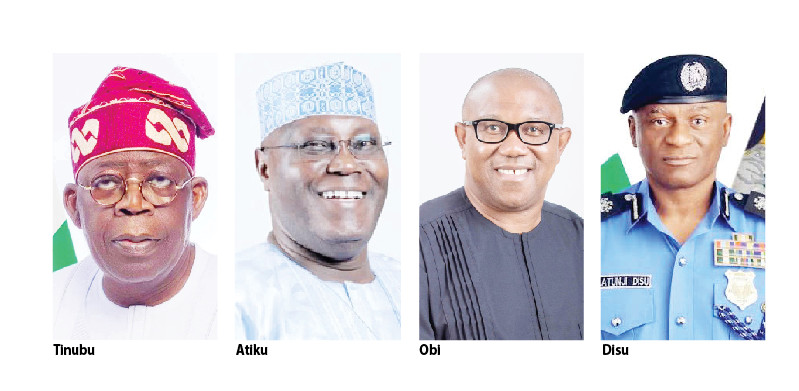
The issue has become even more relevant as Nigeria moves towards the 2027 general elections. A national Peace Accord was signed in Abuja on 18 August 2026, ahead of the elections. Several presidential candidates and political parties participated in the exercise, while some notable political actors were absent. The ADC, whose presidential candidate, Atiku Abubakar, did not attend, subsequently defended his absence, arguing that repeatedly signing agreements without effective consequences for violations does not adequately address the problem.
The position adds another dimension to the debate over whether the accord requires stronger enforcement mechanisms. The question is not simply whether politicians should continue signing the document, but whether the existing arrangement can change political behaviour once the cameras are gone and campaigns intensify.
From Ceremony To Accountability
The Peace Accord has clearly become an established part of Nigeria’s electoral process. Its value, however, cannot be determined merely by the number of signatures obtained at ceremonies held before elections. The experience of the 2023 elections, the continued incidence of political violence and the debate over the legal consequences of violating the agreement all point to the same unresolved issue: accountability.
We’ve got the edge. Get real-time reports, breaking scoops, and exclusive angles delivered straight to your phone. Don’t settle for stale news. Join THISTIMES on WhatsApp for 24/7 updates →
Join Our WhatsApp Channel