Lawyers have warned politicians and political parties against attempting to circumvent electoral laws, saying those who fail to comply with statutory requirements cannot expect favourable outcomes.
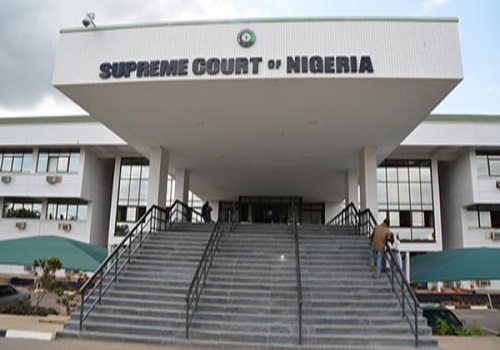
They spoke against the backdrop of the September 24 judgment of the Supreme Court, which upheld the electoral guidelines and provisions being applied by the Independent National Electoral Commission (INEC) ahead of the 2027 general election.
The apex court upheld an appeal filed by INEC against the Court of Appeal judgment which had voided parts of the Electoral Act 2026 relating to political party primaries and membership registers.
INEC had appealed against the Court of Appeal judgment in a suit instituted by the Zenith Labour Party (ZLP) at the Federal High Court.
Delivering judgment in the appeal filed by INEC through its counsel, Dr Alex Izinyon, SAN, Justice Adamu Jauro ruled in favour of the electoral body and set aside the Court of Appeal judgment which had favoured the ZLP.
The Supreme Court upheld the judgment of the trial court and awarded N2 million costs against the respondent, ZLP.
The original suit, marked FHC/ABJ/509/2026, was filed by the ZLP against provisions of the Electoral Act 2026.
The provisions at the centre of the dispute include Sections 77(5), 77(6), 77(7) and 84(2) of the Electoral Act 2026.
Sections 77(5), 77(6) and 77(7) concern statutory requirements relating to political parties’ membership registers, while Section 84(2) prescribes direct primaries or consensus as methods for the nomination of candidates by political parties.
The ZLP had argued at the trial court that the provisions conflicted with the 1999 Constitution and amounted to unconstitutional interference in the internal affairs of political parties.
The party’s case was anchored, among others, on Sections 221 and 222 of the Constitution, which provide the constitutional framework governing political parties.
After the Federal High Court dismissed the suit, the ZLP appealed, leading to the Court of Appeal’s July 16 judgment.
INEC, dissatisfied with that judgment, subsequently lodged an appeal before the Supreme Court.
A Senior Advocate of Nigeria, Abdul Balogun who spoke with LEADERSHIP weekend, said politicians could not attempt to subvert the electoral process and expect favourable outcomes.
He said, “In a political process, you can’t attempt to subvert the process and get a positive result. The law must always catch up with you.”
Balogun said Sections 77 and 84 of the Electoral Act 2026, as amended, govern political party membership registers and the statutory procedures for nominating candidates for elections.
He said Section 77(5) mandates that voters and candidates must be listed in a membership register submitted to INEC at least 21 days before party primaries.
Section 77(6), he added, prescribes disqualification for parties that fail to meet the submission deadline.
He criticised political parties for failing to comply with electoral requirements and, in the process, wasting the time of the courts.
He said, “Some of the political parties know what is right but will deliberately fail to do it. The Electoral Act 2026 has no ambiguity, yet some persons will find one and approach the court to test the waters.
“In fact, some of these people know that the cases they file in court will not go anywhere, yet they will approach the court to waste the time of everybody.
“I am not saying it is not within their rights to approach a law court to seek redress, but I feel there are cases one should not waste his time on.”
A professor of law, Ajida Bello, urged strict compliance with electoral laws and the judgment of the Supreme Court.
According to Bello, INEC should comply with the Supreme Court judgment and apply it where necessary.
He said, “If politicians and political parties refuse to abide by the provisions of the law, they must learn the hard way. You cannot pick and choose which law to obey during the electoral process.
“The law must be fully complied with. INEC must implement the judgment of the Supreme Court where necessary.”
Constitutional lawyer, Barrister Ume Ukpo, also said the law was clear enough and should be understood and complied with by all political actors.
He said applying the provisions of the law to the Supreme Court’s pronouncement meant that some candidates of political parties could become ineligible to contest elections where their parties had failed to meet statutory requirements.
Ukpo said, “With the judgment of the Supreme Court, it is automatic disqualification for some candidates because their parties failed to live up to expectations.
“You cannot fail to do what you are supposed to do and expect positive results. The law must always catch up with you.”
We’ve got the edge. Get real-time reports, breaking scoops, and exclusive angles delivered straight to your phone. Don’t settle for stale news. Join THISTIMES on WhatsApp for 24/7 updates →
Join Our WhatsApp Channel