The organisation said the scale of the crisis requires more than the treatment of malnourished children, calling for stronger preventive measures, improved primary healthcare, food security interventions and sustained government and donor support.
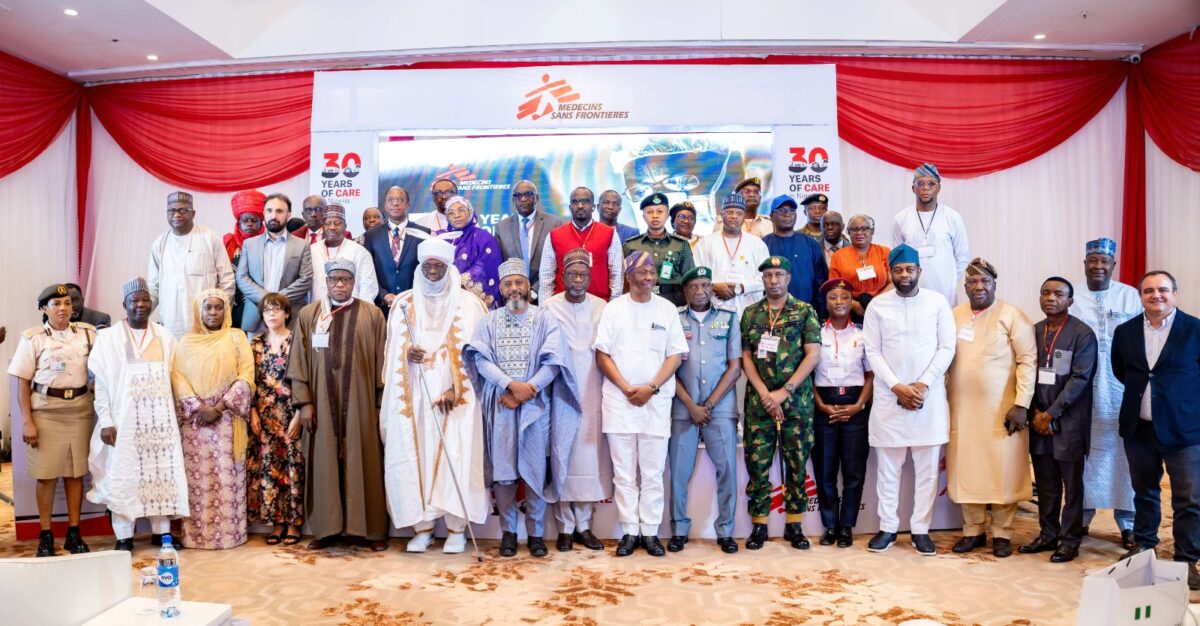
MSF Country Representative in Nigeria, Dr Ahmed Aldikhari, disclosed this in Abuja at an event marking the organisation’s 30th anniversary of medical and humanitarian operations in Nigeria.
He said the situation had become particularly critical in northern Nigeria, where malnutrition is compounded by infectious diseases, displacement, insecurity and limited access to essential healthcare.
“Malnutrition, infectious diseases, maternal health needs, displacement and insecurity are closely connected. A child weakened by malnutrition may be more vulnerable to disease, while displacement can make it harder for families to access food, clean water and healthcare,” Aldikhari said.
According to MSF, its teams treated 57,999 children in inpatient facilities and 220,995 children through outpatient programmes between January and August 2026.
The organisation said the figures underline the continuing pressure on communities and health services as families struggle to access adequate food and healthcare.
For the 2026 lean season, the Food and Agriculture Organization estimated that 34.7 million people in Nigeria could face crisis or worse levels of acute food insecurity, while more than 5.4 million children were expected to suffer from acute malnutrition.
Aldikhari said although treating severely malnourished children remained a critical part of MSF’s work, the scale of the problem meant that treatment alone was insufficient.
“Treatment is essential — it is why we exist — but treatment alone cannot resolve a crisis of this scale. We cannot treat our way out of it. We must also prevent it,” he said.
The MSF representative called for stronger collaboration among government authorities, donors, international organisations, communities and humanitarian partners to address the underlying factors driving malnutrition.
He said nutrition could not be considered in isolation from other health and humanitarian challenges, noting that diseases such as malaria, cholera, diphtheria and measles could further endanger children already weakened by malnutrition.
The United Nations Resident and Humanitarian Coordinator in Nigeria, Ms Elsie Attafuah, also highlighted the scale of the crisis, noting that MSF treated more than 400,000 children for malnutrition in northern Nigeria in 2025.
She said behind the statistics were children and families dealing with insecurity, rising living costs, disrupted livelihoods and limited access to essential services.
Attafuah urged stakeholders to strengthen prevention and invest in services capable of addressing malnutrition before children require emergency treatment.
She identified nutrition, vaccination, safe water, sanitation, maternal healthcare and reliable referral systems as areas requiring greater attention.
The UN official also stressed the importance of protecting humanitarian access and ensuring that health workers and vulnerable communities could safely access essential services.
Representing the federal government, the Director of Internal Cooperation at the Federal Ministry of Budget and Economic Planning, Dr Sampson Ebimaro, called for continued partnership between government and MSF in addressing the needs of vulnerable Nigerians.
He said stronger collaboration and investment in health systems were necessary to sustain gains and ensure that vulnerable communities were not left behind.
MSF, which began its operations in Nigeria in 1996 during a meningitis epidemic in Kano, Bauchi and Katsina states, currently works across 10 states.
The organisation said more than 90 per cent of its over 3,400 staff in Nigeria are Nigerians.
As it marks three decades in the country, MSF said tackling malnutrition would require a combination of timely treatment and longer-term measures aimed at preventing children from becoming malnourished in the first place.