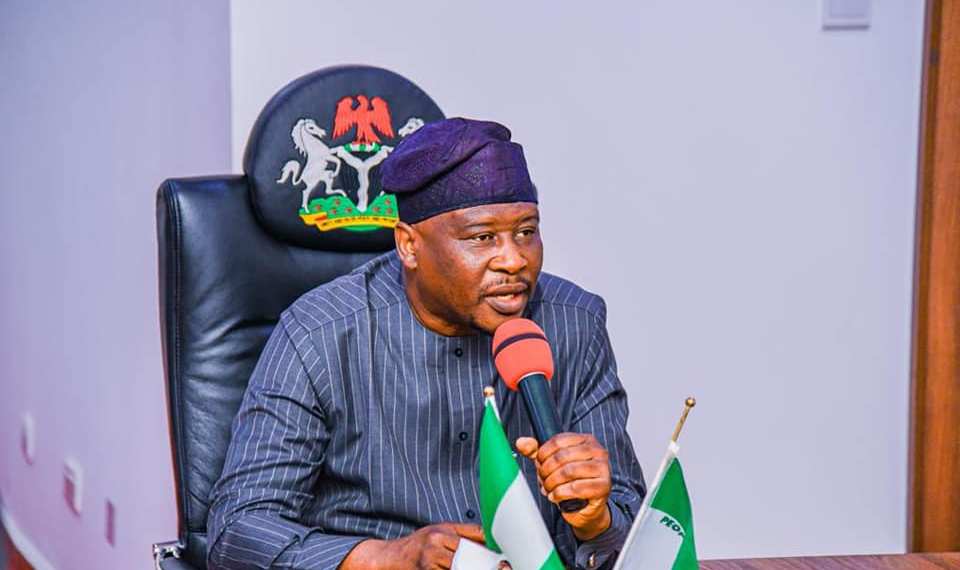
Since 2019, the administration of Adamawa State Governor, Rt. Hon. Ahmadu Umaru Fintiri, has made education a major component of its human capital development agenda, with interventions spanning school infrastructure, access to education, teacher recruitment and welfare, scholarships, girl-child education and long-term sector planning.
The administration’s approach has focused on expanding learning facilities, reducing financial barriers to education, strengthening the teaching workforce and improving opportunities for children and young people, particularly girls and vulnerable groups.
Infrastructure Development
One of the most visible aspects of the administration’s education programme has been investment in school infrastructure across the state.
Key interventions include the construction of 21 model schools covering nursery, primary and junior secondary education, with one located in each of Adamawa’s 21 Local Government Areas.
The government has also developed comprehensive science and technical secondary schools, including facilities in Hong, Lamurde and Gulak, alongside supporting infrastructure such as access roads and drainage systems.
Other interventions include the renovation of 1,670 classrooms across the state and the provision of 85,340 two-seater desks and chairs for students, as well as 22,467 tables and chairs for teachers and administrators.
The administration has also undertaken the construction and rehabilitation of 449 VIP toilets, provided motorised boreholes in 56 schools and carried out fencing projects to improve security.
Additional investments have targeted legacy secondary schools, technical colleges and tertiary health-training institutions. These include a Computer-Based Test centre at the School of Nursing and Midwifery in Yola and classroom blocks at the College of Health Technology, Michika.
The establishment of the Adamawa State College of Technology, Innovation and Entrepreneurship Studies in Gulak represents another component of the government’s strategy, with emphasis on practical skills, technology, innovation and entrepreneurship.
Collectively, these interventions are intended to improve learning environments, enrolment, retention and attendance while contributing to efforts to reduce the number of out-of-school children.
Expanding Access and Reducing the Cost of Education
The administration has pursued policies aimed at reducing the financial burden of education on families, including free and compulsory basic and secondary education and the removal of fees and levies in public schools.
Government support also includes payment of WAEC, NECO and other examination fees for eligible students, helping more young people complete secondary education and pursue tertiary studies.
Other measures include free feeding in boarding schools and scholarships through the Adamawa State Scholarship Trust Fund, which has supported more than 85,000 beneficiaries.
The state has also implemented overseas scholarship programmes, including the Fintiri Wings initiative, under which beneficiaries have pursued studies in countries including Turkey, Australia, Canada and India in disciplines such as medicine, engineering and the sciences.
Another initiative has provided university education support for female students who achieve nine credits in WAEC, as part of efforts to encourage academic excellence and increase female participation in higher education.
Teacher Recruitment, Welfare and Development
Teacher recruitment and welfare have also featured prominently in the administration’s education programme.
More than 10,000 teachers have been employed under the administration, alongside a more recent recruitment drive targeting an additional 5,000 teachers.
In 2025, the Nigeria Union of Teachers recognised Governor Fintiri with its Golden Award of Excellence, citing measures including teacher recruitment, school infrastructure, welfare improvements, prompt salary payments, professional training, extension of teachers’ retirement age by five years and implementation of the new minimum wage.
The government has also taken steps to address outstanding promotion and upgrading issues affecting basic education teachers.
In collaboration with development partners, including UNESCO and the European Union, the state has pursued teacher-policy reforms focusing on continuous professional development, digital literacy, welfare and inclusive education.
Girl-Child and Inclusive Education
The administration has also placed emphasis on expanding educational opportunities for girls and vulnerable groups.
Through the Adolescent Girls Initiative for Learning and Empowerment, AGILE, conditional cash transfers have been introduced to encourage enrolment, attendance and retention among schoolgirls. About 24,000 girls have benefited from phases of the programme, including initial payments of ₦40,000 linked to school participation requirements.
Adamawa has also developed policy guidelines supporting the re-entry of married and pregnant adolescent girls into the education system. Developed with partners including the Malala Fund, the initiative seeks to remove barriers that may prevent affected girls from continuing their education.
Broader interventions have also targeted rural communities, persons with disabilities, out-of-school children and communities affected by insecurity.
Building a Long-Term Education Framework
Beyond physical projects and immediate interventions, the Fintiri administration has sought to establish a longer-term framework for education development.
The state launched the Adamawa State Education Policy alongside a 10-year Education Sector Plan, developed with support from UNICEF and the National Institute for Educational Planning and Administration.
The framework identifies priorities including reducing the number of out-of-school children, improving learning outcomes, expanding infrastructure, strengthening teacher development, promoting inclusive education and improving sector financing.
Adamawa has also participated in education programmes supported by development partners, including the World Bank-backed Better Education Service Delivery for All, BESDA, and the HOPE Education Programme.
The administration has additionally pointed to improvements in examination performance, literacy and school-completion indicators as part of the outcomes of its education interventions.
Education as a Human Capital Priority
Taken together, the initiatives reflect an education strategy built around four broad areas: expanding infrastructure, removing financial barriers to schooling, strengthening the teaching workforce and widening opportunities for girls and vulnerable groups.
From model schools and classroom rehabilitation to scholarships, teacher recruitment, examination support and long-term education planning, the administration has positioned education as a central pillar of its broader human capital development agenda.
As Adamawa continues implementing its long-term education plans, the challenge will be to sustain these investments, measure their impact on learning outcomes and ensure that improvements in infrastructure and access translate into better educational opportunities for children across the state.
We’ve got the edge. Get real-time reports, breaking scoops, and exclusive angles delivered straight to your phone. Don’t settle for stale news. Join THISTIMES on WhatsApp for 24/7 updates →
Join Our WhatsApp Channel