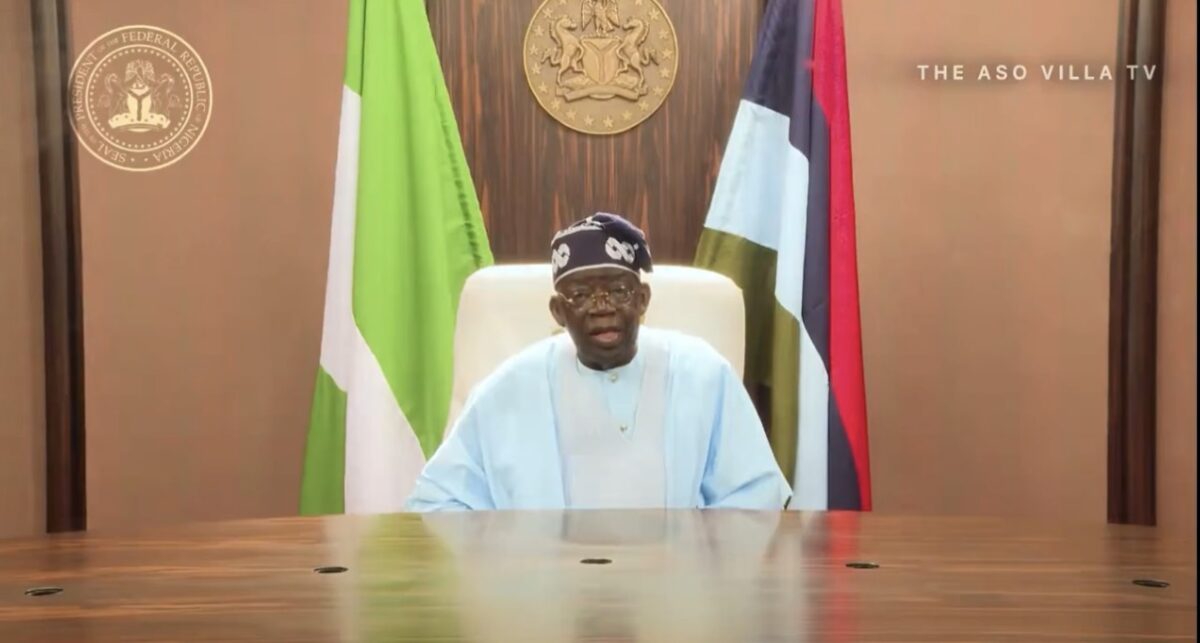
President Bola Tinubu has addressed Nigerians in his Independence Day speech, saying the country has passed through a difficult period of economic reforms and is now entering what he described as an “age of prosperity”.
In his address marking Nigeria’s 66th anniversary, on Thursday, October 1, Tinubu reflected on the country’s journey, defended his administration’s reforms and outlined what lies ahead.
LEADERSHIP has put together 10 important takeaways from the President’s Independence Day address.
1. Nigeria has passed through its “Red Sea”
Tinubu said Nigeria had gone through difficult years of economic adjustment but had now “passed through our own Red Sea”.
He urged Nigerians not to look back, saying the country had corrected its economic course and laid the foundation for what he described as a more prosperous future.
“Nigeria has corrected its course. We have passed through our own Red Sea. This is not the time to look back.”
2. The era of reforms is giving way to prosperity
The president said the central economic task of his administration had changed after three years of reforms.
According to Tinubu, the government’s focus is now on achieving “shared and widespread prosperity” rather than concentrating primarily on correcting economic distortions.
“The age of reform has done its work. Now begins the age of prosperity.”
3. He defended his administration’s economic reforms
Tinubu argued that the reforms implemented since he assumed office did not create Nigeria’s economic weaknesses but were introduced to address problems that had accumulated over time.
He compared the situation to a cancer patient who must endure difficult treatment instead of relying on medication that merely masks the symptoms.
The president said Nigerians should resist calls to abandon the reforms and return to what he described as unsustainable subsidy arrangements.
4. Nigeria’s key economic indicators have improved
The president said Nigeria’s economy had grown by more than four per cent in the year, with both the oil and non-oil sectors contributing to growth.
He also said oil theft had declined, inflation had fallen from its peak, foreign reserves had been rebuilt, and the foreign exchange market had stabilised.
Tinubu added that Nigeria recorded more than $6 billion in non-oil export revenue in 2025, describing it as the country’s highest ever.
5. Reducing the cost of living is now a priority
Tinubu said his administration’s priority was to bring down the cost of living by reducing the cost of producing and transporting goods.
He said the government was expanding mechanised irrigation and dry-season farming, improving access to seeds and fertiliser, investing in mechanisation and expanding storage and transportation infrastructure.
He also pointed to roads, railways and ports as part of efforts to connect farms and factories to markets.
6. The government wants to create more productive jobs
The president said jobs, enterprise and industrial growth would remain central to the next phase of his administration.
He said the government would use Nigeria’s gas resources to power industries, support businesses seeking to revive factories, expand digital connectivity and invest in skills required by employers.
Tinubu also said he wanted to see more Nigerians producing goods locally and Nigerian businesses selling their products to international markets.
7. Poverty reduction will remain a major focus
Tinubu acknowledged that millions of Nigerians were still struggling with food, school fees, medical bills and transportation costs.
He said the government was strengthening direct support for poor households and improving the National Social Register to ensure assistance reached people who genuinely needed it.
The president also highlighted the Nigerian Education Loan Fund, CREDICORP and investments in primary healthcare and basic education as measures aimed at supporting vulnerable Nigerians.
8. The government will continue supporting education, healthcare and retirees
Tinubu said his administration would continue working with state and local governments to strengthen primary healthcare, basic education and other essential public services.
He also said salaries and pensions had been paid on time and in full since 2023, while the national pension programme had been reformed to benefit retirees and vulnerable Nigerians.
According to him, these interventions are intended as a bridge towards broader prosperity rather than a permanent substitute for economic opportunity.
9. Tinubu said Nigeria must become more productive
The president said sustainable prosperity would require increased productivity and the creation of millions of productive opportunities.
He said Nigeria’s young population should become an economic strength rather than a source of despair by providing young people with jobs, skills, finance and opportunities to build businesses.
Tinubu said he wanted to see young Nigerians building globally successful companies while creating opportunities for others at home.
10. He urged Nigerians to look forward with renewed hope
We’ve got the edge. Get real-time reports, breaking scoops, and exclusive angles delivered straight to your phone. Don’t settle for stale news. Join THISTIMES on WhatsApp for 24/7 updates →
Join Our WhatsApp Channel