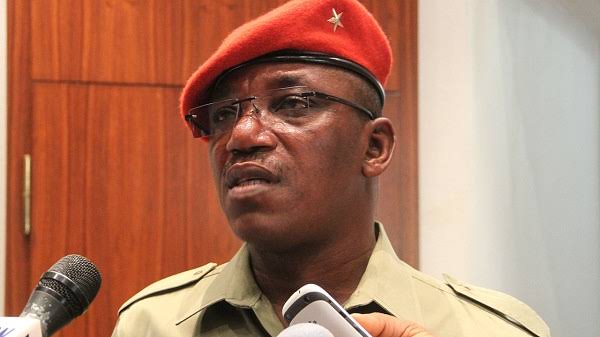
Former Minister of Youth and Sports, Barrister Solomon Dalung, has described President Bola Ahmed Tinubu’s 66th Independence Day address to Nigerians as “rhetorical,” “empty” and “disappointing,” saying the President should be accounting for his administration’s achievements rather than making promises three years into office.
Dalung stated this while speaking with LEADERSHIP Sunday in Jos, Plateau State.
He faulted President Tinubu’s continued emphasis on the challenges his administration inherited in 2023, arguing that Nigerians expected an account of what the government had achieved after more than three years in office.
According to him, “The President’s speech was rhetorical, wishful, ambitious, but very, very disappointing and empty.
“He spent 20 minutes before the television, but he was just very rhetorical. Three years into office, and he’s still saying, ‘I will, I will, I will.’
“By virtue of being in office for three years, Nigerians expect him to be accounting for his achievements in three and a half years as president, not promising.
“It is those who are seeking to be elected for the first time that will be promising.”
The former minister also faulted Tinubu’s continued reference to the economic challenges inherited by his administration, questioning the beneficiaries of the reforms introduced by the government.
He said, “The reforms Tinubu embarked on, for whose benefit? It’s reforms for him, his wife, his children, and people in government.
“He’s the only beneficiary of the reform because he’s the only person that, despite the fact that he was crying about economic challenges, he bought a new Airbus, worth $150 million, and customised it.”
Dalung further criticised what he described as the government’s demand for sacrifice from Nigerians, saying the leadership should also demonstrate sacrifice.
“The same person who is asking Nigerians to exercise patience, when I bought a Cadillac worth nine million dollars, that is to hope. When I bought a yacht, where even there are no water bodies in Abuja, he bought a yacht worth seven billion, then the President is asking Nigerians to sacrifice,” he alleged.
On the economy, Dalung questioned whether the reported growth in the country’s Gross Domestic Product had translated into improved welfare for ordinary Nigerians.
According to him, “The World Bank had recorded them positively in terms of GDP growth of four per cent, but proceeded to say that the number of hungry Nigerians has risen to about 130 million within a year.
“So, where does the four per cent growth fall from now?
“It means GDP growth without commensurate welfare improvement for Nigerians.
“So the more you have the GDP growing, the more Nigerians are dying in poverty and hunger.”
Dalung also rejected the President’s claim that no previous government had achieved what his administration had achieved.
He said, “Of course, he’s correct. Tinubu is very correct because there is no government in Nigeria that has been as clueless as Tinubu’s government.”
Dalung criticised the administration’s removal of the fuel subsidy, increases in electricity tariffs, bank charges and data costs, as well as the deregulation of the foreign exchange market.
The former minister also raised concerns over the country’s debt profile, saying the government had borrowed substantially since coming into office.
Turning to insecurity, the former minister commended Nigerian soldiers for operating under difficult circumstances but called for greater investment in modern military equipment and technology.
He said, “The issue of insecurity was not because he did not say anything. Rather, he complimented the servicemen.
“Correct, the servicemen are working against very turbulent odds. Nowhere in the world, a country as rich as Nigeria, nowhere in the world that fighting this type of war is as difficult as Nigeria.”
Dalung argued that Nigeria’s military needed modern weapons and technology to confront insurgency and other security threats.
“If you look at the weapons carefully, if you look at the AK-47 our soldiers carry, they were the ones used during the Second World War,” he said.
“Can you compare that with the guns Israeli soldiers are carrying? Can you compare that with the guns Iranian soldiers are carrying? Can you even compare that with the guns soldiers in Ghana carry?
“Go and take a closer look at a serviceman. The uniforms are still ramshackle. The boots were the ones used during the Second World War.
“And yet you still tell us that all that they are trying because no soldier will ever survive this type of struggle.”
He called for increased deployment of technology in the fight against insecurity, arguing that modern warfare requires more sophisticated equipment and intelligence-driven operations.