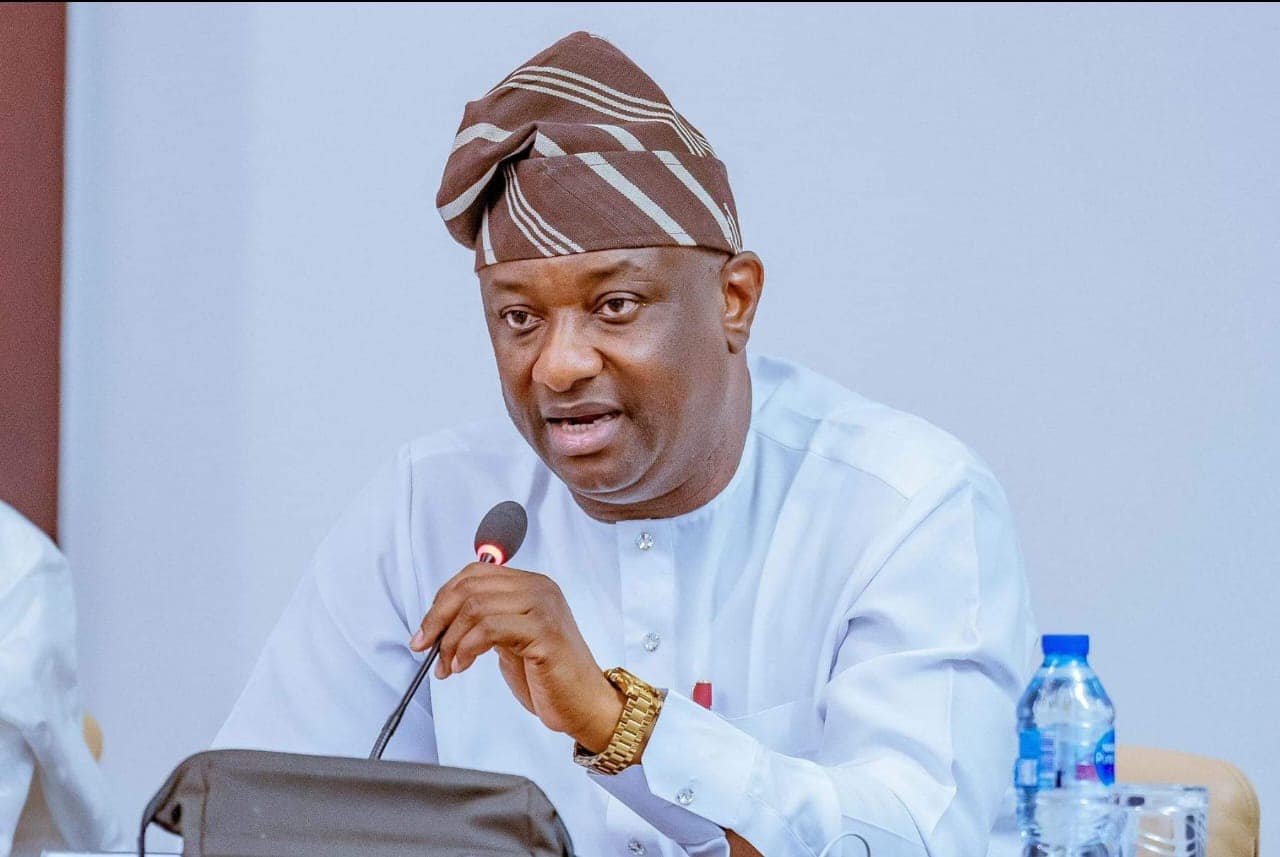
The Minister of Aviation and Aerospace Management, Festus Keyamo, has said the removal of fuel and foreign exchange subsidies helped the administration of President Bola Tinubu raise about $500 million to reconstruct the Lagos airport and other aviation infrastructure within two years without borrowing.
Keyamo disclosed this at Aero Contractors’ 67th anniversary celebration on Monday, October 5, 2026, in Abuja.
He said the removal of the subsidies and increased liquidity had enhanced the Federal Government’s capacity to fund critical aviation infrastructure across major airports in the country by freeing resources previously committed to subsidies and improving government liquidity.
While responding to a question from the Managing Director of Aero Contractors about the status of the aviation industry under the Renewed Hope Agenda, Keyamo said the funds used for critical infrastructure development were not raised through borrowing but were made possible by improvements in the country’s liquidity and foreign reserves.
Keyamo said Nigeria’s inability to adequately finance its major airports over the years was largely linked to revenues committed to fuel and foreign exchange subsidies.
“Because the country had no money for infrastructure, the thing we managed to do was to borrow money,” he said.
The minister said the policy changes had created more room for government to fund critical aviation infrastructure without relying solely on borrowing.
Keyamo said terminals constructed in Lagos, Abuja, Kano and Port Harcourt were funded with Chinese loans, which Nigeria was still repaying. He also said the construction of a second runway at the Nnamdi Azikiwe International Airport, Abuja, would cost about N400 billion.
He described the increase in the cost of the Abuja runway project as a lesson on the consequences of postponing infrastructure projects, stressing that government must invest in critical facilities when needed rather than allow costs to escalate.
According to Keyamo, the Lagos airport reconstruction has also generated employment, with more than 2,000 Nigerians working daily on the project.
“People that were previously unemployed are there at the Lagos airport welding and plumbing among other artisans. They are all local,” he said.
The minister said aviation policies also aimed to create an environment where Nigerian airlines could expand and regain international routes.
In August 2025, the Federal Executive Council (FEC) approved N987 billion worth of contracts for extensive infrastructure upgrades at airports across Nigeria.
The approval forms part of the government’s broader infrastructure programme for the aviation sector, with the Renewed Hope Infrastructure Development Fund identified as the financing mechanism for the approved projects.