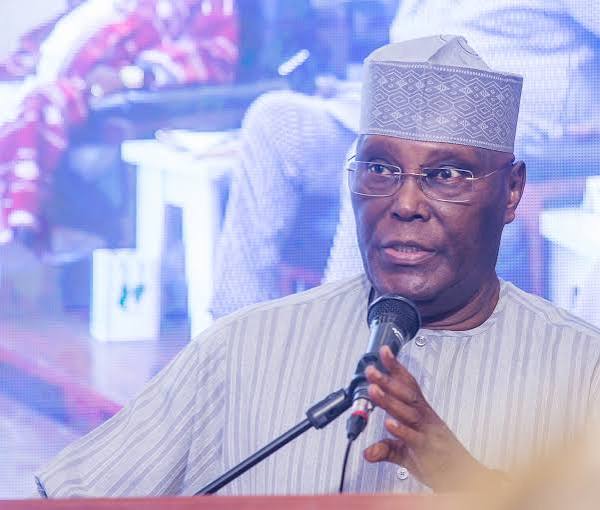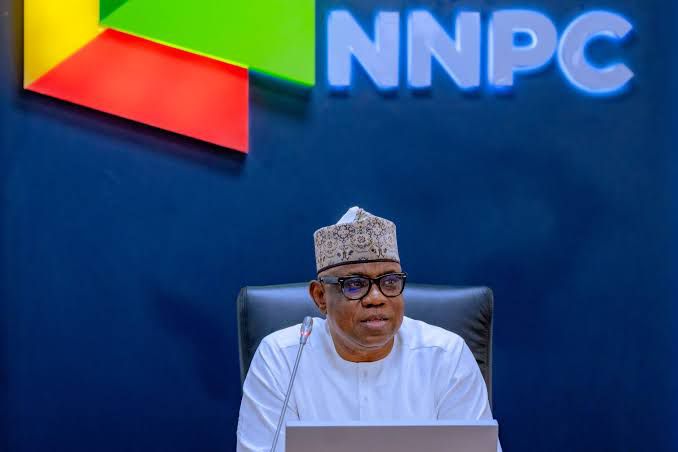
The Nigerian National Petroleum Company Limited (NNPCL) and the Independent National Electoral Commission (INEC) were absent from the House of Representatives probe into the alleged N802.19 billion financial breaches.
The House Committee on Public Accounts had scheduled Tuesday for an investigative hearing into the allegations contained in the Auditor-General for the Federation’s reports for 2021 to 2023.
The reports raised questions about government agencies’ procurement procedures, revenue management, payments, and compliance with financial regulations.
LEADERSHIP gathered that the Auditor General’s reports raised alleged financial infractions of about N514 billion against NNPCL and N288.19 billion alleged financial breaches for INEC.
Although the national oil company and electoral body were scheduled to appear before the committee, they did not attend, and the panel did not explain why.
Meanwhile, the six Area Council Chairmen in the Federal Capital Territory (FCT), for the umpteenth time, failed to appear before the committee to answer questions over alleged financial infractions contained in audit reports involving about N100 billion.
The chairmen had requested 22 September 2026 as the date for their appearance before the committee, but failed to attend or send representatives.
Consequently, the committee issued a seven-day “final” summons to the Directors of Personnel Management and Finance, as well as Heads of Audit of the six councils, directing them to appear on Wednesday next week or face sanctions in accordance with the relevant service rules.
The audit queries are contained in the Annual Audit Report of the Auditor-General for the Six FCT Area Councils for the year ended 31 December 2021.
According to the report, the six councils had outstanding liabilities of about N7.65 billion arising from unremitted pension deductions, Pay As You Earn (PAYE), Value Added Tax (VAT) and withholding tax, as well as unpaid obligations to contractors.
A breakdown showed that AMAC had the highest outstanding liability at N2.19 billion, followed by Bwari at N1.49 billion and Kwali at N1.46 billion.
Gwagwalada had N1.01 billion in outstanding liabilities, Kuje N892.2 million and Abaji N593.8 million.
The report said the liabilities were due for remittance to the Nigeria Revenue Service, FCT Inland Revenue Service, Pension Fund Administrators and contractors.
It stated: “The Auditor General for the Six Area Council reported in the annual report of the year 2021 that the Six Area Councils had outstanding liabilities of N7.6bn as at 31 December 2021, comprising unremitted pension deduction, unremitted Pay as You Earn (PAYE), unpaid capital projects, unpaid value added tax and withholding tax.”
The Auditor-General also faulted the councils over the management of their fixed assets, noting that asset registers were not properly maintained and updated.
Gwagwalada Area Council was specifically cited for non-current assets valued at N336 million that the report said were not properly recorded or updated.
The report stated that: “the Auditor General for the Six Area Council reported that the value of non-current assets of Gwagwalada Area Council stood at N336m.
“However, the Auditor General observed that the ledger records of the non-current assets were not properly maintained and updated as at when due, which could give room for loss of assets without being traced. This exception is common among other FCT Area Councils.”
The committee is also seeking explanations and supporting documents on N24.87 billion expended by the six councils on personnel, overheads and capital expenditure in 2021.
The breakdown showed that AMAC spent N5.03 billion, Gwagwalada N4.66 billion, Kuje N3.85 billion, Kwali N3.84 billion, Bwari N3.74 billion and Abaji N3.71 billion.
Speaking with journalists in Abuja on Tuesday, Chairman of the Public Accounts Committee, Hon. Bamidele Salam, said the councils had repeatedly failed to honour invitations and provide documents required by the committee to resolve the audit queries.
“The last date of appearance of the Abuja Area Councils was 22 September 2026, which was a date they requested and which was graciously granted by the committee. Yet, they failed to appear or send in any representation.
“The committee has therefore decided to issue summons to the Directors of Personnel Management and Finance of these local governments, including their Heads of Audit, to appear without fail on Wednesday, 14 October, failure of which they will be made to bear consequences according to service rules,” he said.
Salam said the committee had also uncovered further concerns in audit reports for 2022 and part of 2023, including alleged understatement of Internally Generated Revenue (IGR), unauthorised disposal of assets, non-disclosure of statutory revenue and failure to remit withholding tax to the appropriate authorities.
He further disclosed that the councils had failed to audit and submit their financial accounts for 2023, 2024 and 2025, contrary to statutory requirements.
The lawmaker stressed the need for public funds to be managed with transparency, accountability, and prudence, warning that officials found culpable would be held to account in accordance with the law.
We’ve got the edge. Get real-time reports, breaking scoops, and exclusive angles delivered straight to your phone. Don’t settle for stale news. Join THISTIMES on WhatsApp for 24/7 updates →
Join Our WhatsApp Channel