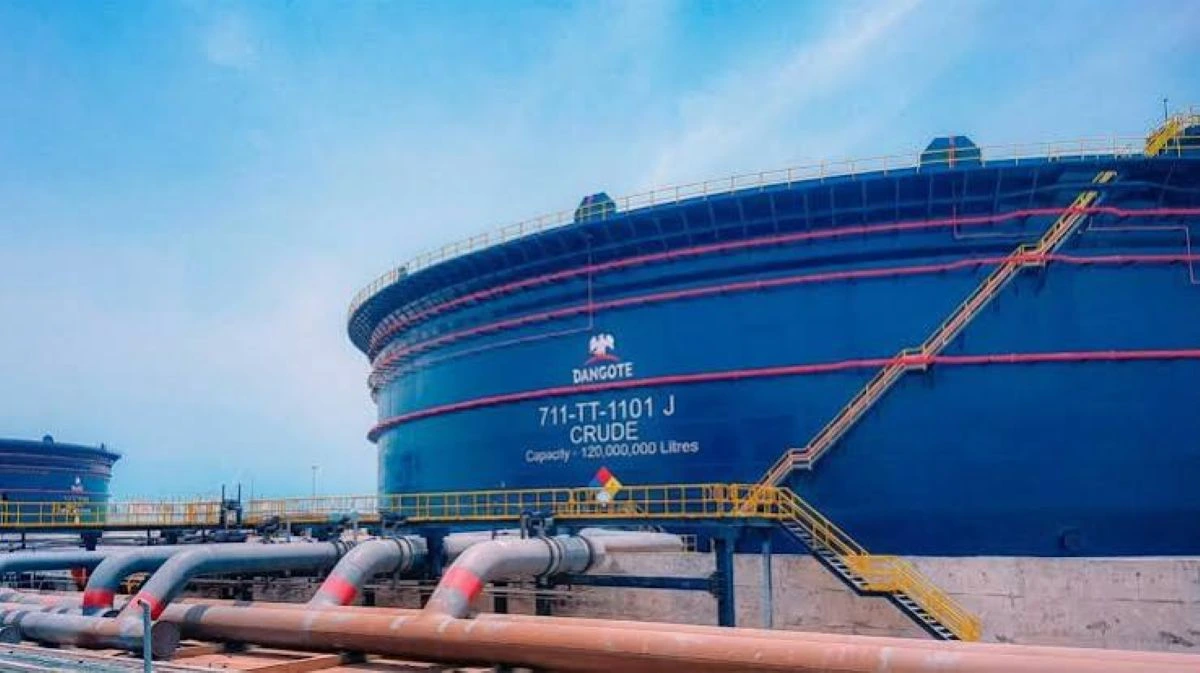
Kenyan investors can now participate in the Dangote Petroleum Refinery Initial Public Offering (IPO) through a KES 39 billion Global Depository Receipt (GDR) offer, but the transaction will only proceed if it meets strict subscription and regulatory conditions.
According to an information memorandum approved as a short-form prospectus, the offer opened on October 6, 2026, and will close on October 13, 2026.
However, the document states that the offer will only be successful if both the value of allocated shares and fully paid applications reach at least KES 50 million.
Failure to meet this threshold would result in the offer lapsing and investors receiving refunds of their application monies without interest.
The memorandum further states that the GDRs will only be allotted and issued if the minimum success threshold is achieved and the Securities and Exchange Commission (SEC) of Nigeria grants approval or a no-objection for the listing of the GDRs on the Nairobi Securities Exchange (NSE).
Even if the minimum subscription requirement is achieved, the offer still faces a second hurdle.
The Nairobi Stock Exchange (NSE) has granted approval for the admission of the GDRs, but actual listing remains conditional on regulatory clearance from Nigeria’s SEC.
Should the Nigerian regulator withhold approval, the GDRs will neither be issued nor listed in Kenya.
In that scenario, investors would continue to own the underlying Dangote Refinery shares through an omnibus account maintained by the GDR issuer, while liquidity would be provided through the sale of the underlying shares on the Nigerian Exchange (NGX).
The Kenyan tranche comprises 728,971,962 GDRs priced at KES 53.50 each, translating to a total offer size of approximately KES 39 billion.
Applicants are required to pay the full subscription amount upfront, while cash payments are not permitted.
The memorandum notes that the offer is not underwritten and that the GDR issuer has no guaranteed allocation of Dangote Refinery shares.
If Kenyan demand exceeds the number of shares ultimately allocated to the GDR issuer, applications may be scaled back.
According to the document, any allocation methodology will be subject to approval by Kenya’s Capital Markets Authority (CMA), with the objective of creating a broad and diversified shareholder base.
Investors who purchase the GDRs will be entitled to dividends paid by Dangote Refinery. Any dividends declared in naira or dollars will be converted into Kenyan shillings before distribution, after applicable taxes and fees.
However, GDR holders will not be able to vote directly at shareholder meetings. Voting rights attached to the underlying shares will be exercised collectively through the nominee structure.
The memorandum also notes that Kenyan investors participating through the GDR structure will not qualify for the Retail Investor Incentive Programme attached to the main Nigerian IPO.
Additionally, there is currently no mechanism for converting the GDRs into the underlying ordinary shares.
The prospectus outlines several risks prospective investors should consider before subscribing.
These include the possibility of double taxation due to the absence of an active double taxation agreement between Kenya and Nigeria, potential trading suspensions if the underlying shares are halted on the NGX, and free-float requirements that could affect liquidity.
The document states that at least 15% of the GDR pool must remain in the hands of Kenyan investors. Failure to maintain that threshold could result in reduced liquidity, regulatory sanctions, or even delisting.
Kenya’s Capital Markets Authority approved the GDR structure on October 5, allowing eligible investors to access the Dangote Refinery IPO through negotiable certificates representing shares in the Nigerian company.
Uganda’s Capital Markets Authority has also approved the promotion and distribution of the offer within the country.
The Kenyan and Ugandan offerings form part of Dangote Refinery’s broader effort to attract regional participation in what is shaping up to be one of Africa’s largest equity offerings, while also deepening cross-border capital market integration on the continent.