Victims of police brutality in Bayelsa State are still waiting for compensation years after the Bayelsa State Judicial Panel of Inquiry on Police Brutality and Other Related Offences submitted its recommendations, raising concerns about the implementation of the report and the government’s response to their complaints.
The panel, which was established following the 2020 #EndSARS protests against police brutality, recommended monetary compensation for some victims and disciplinary action against certain police officers, according to a member of the committee, Comrade Samuel Numonengi.
Numonengi, a former chairman of the Nigeria Union of Journalists (NUJ) in Bayelsa State, said the panel completed its assignment and submitted its recommendations to the state government, after which a White Paper Committee was expected to take further steps.
He said he understood that the state government had taken the necessary steps and that the next stage involved working with the Federal Government to secure approval for compensation payments.
“Our own job was to submit our recommendations and leave the rest for the state government to do,” Numonengi said.
He added that the panel’s recommendations included financial compensation for victims and a recommendation that a police officer involved in an incident in which a woman suffered an eye injury be demoted.
Numonengi said he could not confirm the current status of the process but urged the state government to continue pressing the Federal Government to ensure that the affected persons receive compensation.
He said some victims had continued to approach members of the panel to ask about the outcome of their cases, while the delay in compensation had prolonged their wait for justice.
“As long as that compensation has not been made, there will still be that thought in them that that’s what happened to them. That’s why we’re wasting their time bringing them out to testify about everything they did. And they are still just waiting for justice to be done,” he said.
However, the Chairman of the Civil Liberties Organisation (CLO) in Bayelsa State, Comrade David West, accused the state government of failing to follow through on the recommendations and provide relief for affected residents.
West, who said his organisation represented some victims before the panel, questioned what had happened to the report several years after its submission.
He said government officials had told him that the panel was a Federal Government initiative carried out at the state level, but argued that the victims were Bayelsa residents who deserved support from their state government.
According to him, the state government could have considered providing assistance to victims while awaiting action from the Federal Government.
“What did the governor do with the report? The victims are still complaining,” West said.
He disclosed that some victims and their families had sought government assistance, including by sending a letter to the governor through the then deputy governor’s office.
West said he was later informed that the letter had been referred to an official for further action, but he had yet to see any result from the process.
He added that some affected families had borrowed money to pay lawyers to represent them, while survivors continued to seek financial assistance and medical care.
West appealed to the state government to revisit the panel’s recommendations and consider providing relief to the victims, even if the Federal Government had yet to complete its part of the process.
“It will not bring back the dead. But then, at least, concern has been shown by government and by people to say, look, what happened to you, it was wrong,” he said.
The Chairman of the Bayelsa Non-Governmental Organisations Forum (BANGOF), Comrade Taritein Boco, also expressed concern over the delay, describing it as a sign of insufficient attention to the plight of affected residents.
Boco said establishing a panel was not enough without taking steps to implement its recommendations.
“It is one thing to set up a committee; it is another thing to follow through on the recommendations of that committee,” he said.
He argued that the authorities should prioritise the welfare of affected residents and ensure that reports from public inquiries lead to practical action.
Boco also called for greater public participation in demanding accountability, saying citizens should seek leaders who would address their concerns rather than allow important issues to be overshadowed by politics.
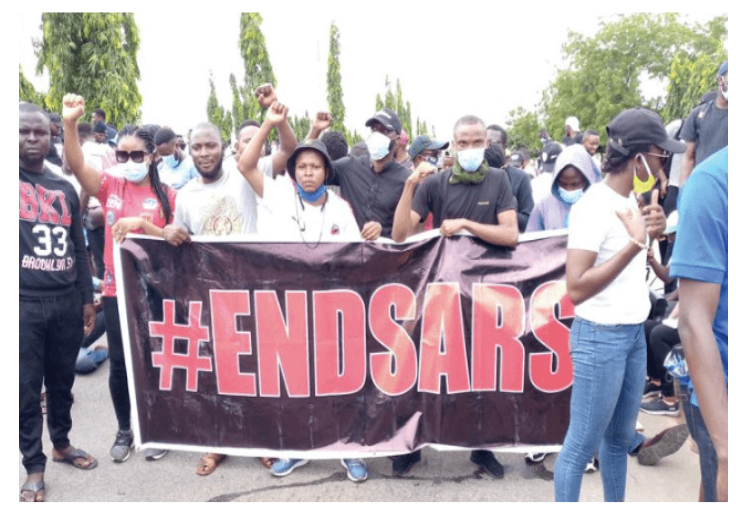
The #EndSARS protests began in 2020, with demonstrators demanding an end to police brutality and abuses, particularly those associated with the disbanded Special Anti-Robbery Squad (SARS).
In Bayelsa, the panel heard complaints of alleged abuses by security personnel and recommended compensation for victims. However, the accounts of West and Numonengi show that questions remain over the status of the recommendations and the payment process.
While Numonengi said the state had taken steps and should continue engaging the Federal Government, West maintained that the state could do more to support its residents while the process remains unresolved.
For victims and their families, the central concern remains whether the recommendations made after their testimonies will lead to compensation, appropriate disciplinary action and a meaningful response to their complaints.
We’ve got the edge. Get real-time reports, breaking scoops, and exclusive angles delivered straight to your phone. Don’t settle for stale news. Join THISTIMES on WhatsApp for 24/7 updates →
Join Our WhatsApp Channel