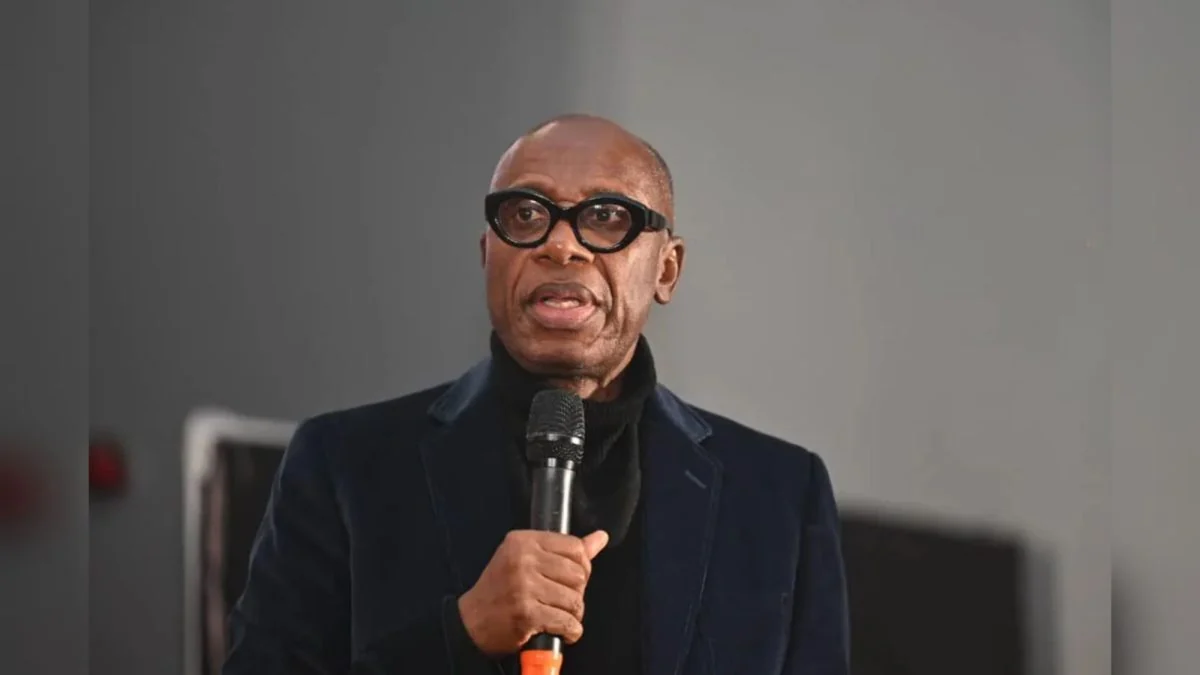
Former Minister of Transportation, Rotimi Amaechi, has revealed that the late President Muhammadu Buhari assured him of the All Progressives Congress (APC) presidential ticket ahead of the party’s 2022 presidential primary but advised him against campaigning or negotiating with delegates.
Amaechi said he relied on Buhari’s promise and consequently failed to build the political alliances that could have strengthened his chances of emerging as the party’s presidential candidate.
The African Democratic Congress (ADC) vice-presidential candidate disclosed this during an interview on Mainland 98.3FM’s The Situation Room programme in Lagos on Friday.
He was discussing the circumstances surrounding his defeat to President Bola Tinubu during the APC presidential primary held in June 2022.
According to Amaechi, Buhari personally assured him that he would emerge as his preferred candidate.
He said the former president even communicated the promise in writing, making him believe that there was no need to engage in the intense political negotiations taking place ahead of the primary.
The former Rivers State governor described his decision to follow Buhari’s advice as one of the biggest mistakes he made during the contest.
He said, “The first mistake that I made at that primary was that I listened to President Buhari. He said to me, ‘Don’t campaign. Don’t do anything. I will announce you as my candidate.’
“He told me that. He put it in writing. When I write my book, I’ll put it out.”
Amaechi explained that his relationship with Buhari influenced his decision to accept the former president’s position without aggressively pursuing support from influential members of the ruling party.
Having served as Minister of Transportation under Buhari, Amaechi said he regarded the former president as someone whose assurance carried considerable political weight.
He believed that Buhari’s decision to support him would give him an advantage over other presidential aspirants.
However, the former minister said his failure to engage governors and other powerful party stakeholders in political negotiations affected his chances at the primary.
He argued that presidential contests within political parties require extensive consultations, alliances and agreements.
According to him, several governors and influential party members were in positions to influence the outcome of the exercise, but he did not make the necessary commitments to secure their support.
Amaechi maintained that he could have offered key political positions to some of the governors in exchange for their backing.
He specifically mentioned the offices of Vice-President and Secretary to the Government of the Federation as positions he could have discussed during negotiations.
He said his unwillingness to enter such arrangements gave Tinubu an opportunity to strengthen his political base and secure support from different groups within the APC.
“Now, I didn’t do deals. So I would have promised you vice-president, promised you SGF, and then would have gone for this primary, I would have possibly won. I would have had governors on my side.
“Because I didn’t do deals, Tinubu had the chance to do deals,” he said.
The ADC chieftain also spoke about the role of religion in the 2022 APC presidential contest, accusing Tinubu’s supporters of using religious sentiments to mobilise delegates, particularly in the northern part of the country.
Amaechi alleged that a group of Southern Yoruba Muslims approached governors in the North-West and appealed to them to support Tinubu on religious grounds.
He suggested that the strategy helped Tinubu attract support from political stakeholders who might otherwise have considered other candidates.
The former minister also referred to former Kaduna State Governor, Nasir El-Rufai, who he said had initially supported his presidential ambition before eventually backing Tinubu.
Amaechi cited El-Rufai’s comments in a viral video as part of his argument that religious considerations influenced the political calculations surrounding the primary.
“El-Rufai was my supporter. El-Rufai, in a viral video, said this is done for the faith,” Amaechi said.
Despite his allegations, Amaechi maintained that he would not adopt religious mobilisation as a strategy to secure political support, even if doing so could improve his chances of winning an election.
He described himself as a nationalist and argued that Nigeria’s religious diversity should not be turned into a tool for political competition.
According to him, using religious identity to mobilise voters could create unnecessary divisions among Nigerians and threaten peaceful coexistence in the country.
Amaechi said he would not want to become president through a campaign that encouraged members of a particular religious group to vote for him simply because they shared the same faith.
He maintained that political leaders should seek support across religious and ethnic boundaries rather than encourage voters to view elections through narrow identity considerations.
Explaining his position, the former governor said religious mobilisation could create tension in a country with a large population of Christians and Muslims.
He said, “I wouldn’t want to run that kind of federation. Catholics are 35 million in Nigeria. I wouldn’t want to go to the Catholic Church and say, please announce me. Tell them that all Catholics must go out and vote Amaechi.
“It will cause confusion. It will cause problems in the country. That makes me a nationalist,” he said.