African startup funding rebounded strongly in October 2026, with investors committing $324.42 million across 38 disclosed deals, reversing the slowdown witnessed in September.
The month’s investment activity was heavily concentrated among a handful of large transactions, as the top 10 startups accounted for $301.5 million, representing 92.94% of all capital raised during the month.
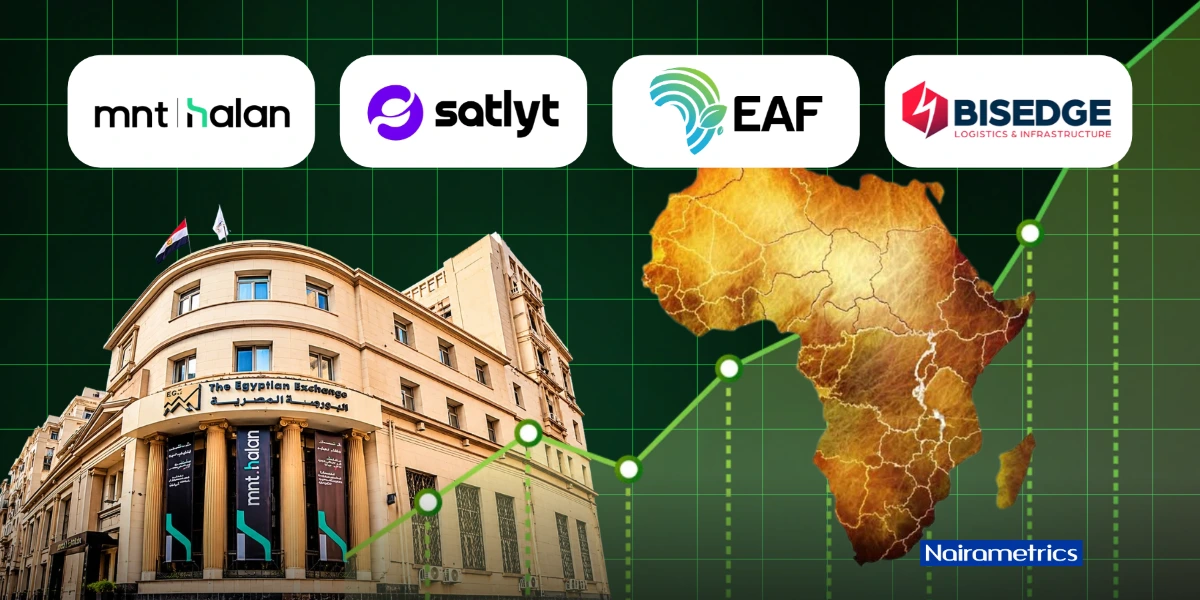
The October funding landscape was largely influenced by Egypt-based fintech MNT-Halan, which raised $150 million through an initial public offering (IPO), accounting for almost half of the month’s total disclosed funding.
Notably, eight startups, including three mergers and acquisitions (M&A) transactions, did not disclose funding amounts, meaning actual capital deployment during the month could be higher than reported.
According to the data, African startups raised $324.42 million in October 2026, compared to $240.2 million in September 2026, representing a 35.06% month-on-month increase, suggesting a recovery in funding activity following the previous month’s relatively weaker performance.
While the top 10 startups represented 89.29% of total funding in October 2025 and 84.3% in September 2026, their share surged to 92.94% in October 2026, highlighting investor preference for larger and more established businesses amid a still challenging venture capital environment.
Kuunda, a digital lending infrastructure company expanding access to credit across Africa, today completed a $5 million secondary share sale led by E4E Africa and increased position participation from existing investors Accion Ventures, Portugal Gateway Fund, and Seedstars Africa Ventures.
The transaction gives early investors a meaningful return while bringing in an aligned, long-term shareholder base to back Kuunda through its next phase of growth. It also demonstrates that African fintech companies can generate liquidity for shareholders well before an IPO or acquisition.
British International Investment (BII), the UK’s development finance institution, has committed a $7 million debt facility to Okra Solar, an Australian-founded provider of mesh-grid technology, in a move aimed at accelerating clean electricity access in Nigeria.
The financing is structured as working capital, enabling Okra to procure solar panels, batteries and long-lead-time components upfront and in volume, rather than waiting for individual project transactions to close.
Kenyan deeptech startup, Satlyt raised $8 million in a seed funding round, to build virtual AI data centers in space.
This funding will accelerate product development, expand our engineering and customer delivery teams, and bring Satlyt to more spacecraft and customers.
The fund was led by non-sibi Ventures and participation from TLCOM, Antler, Slauson & Co., Launch Africa Ventures, Enza Capital, Askya Investment Partners, Demos, BAG Collective, Gaingels, Axian Investment, and others, with existing investors also making follow-on investments.
The European Bank for Reconstruction and Development has approved a financing package worth up to $10 million for Beacon Power Services, a Nigeria-focused energy technology company.
The facility will accelerate smart metering and grid management deployments across six of Nigeria’s 11 electricity distribution companies. Total project cost is estimated at $20.9 million, with $7.5 million expected from a parallel financing facility and equity covering the balance.
Nigerian logistics and transport startup Bisedge raised a €10 million (approximately $11.2 million) in debt financing from Finnfund, the Finnish development financier and impact investor.
The facility will fund the expansion of Bisedge’s electric material handling fleet across its African operations, with a particular focus on Nigeria and the East Africa region. It follows the recent equity investment from Metier Private Equity and gives Bisedge further momentum as it enters its next phase of growth in Nigeria and East Africa.
Senegal-based renewable energy company Afreenergy Solar secured €12 million (approximately $13.3 million) in debt financing through the Renewable Energy Performance Platform 2 (REPP2) to expand its commercial and industrial solar portfolio in Senegal.
The investment will increase its installed capacity from 2.7 MWp to 14.9 MWp and add 5.7 MWh of battery storage. The expansion comes as businesses look for ways to cut electricity costs and improve the reliability of their power supply.
Egyptian fintech company ValU, the leading universal financial technology powerhouse in the Middle East and North Africa (MENA), closed its 23rd securitized bond issuance, valued at EGP 945.8 million (approximately $17 million), with EFG Hermes an EFG Holding company and the leading investment bank in the Middle East and North Africa (MENA).
The transaction marks the fourth issuance under Valu’s eighth securitization program, which has a total value of EGP 10 billion.
The bond is backed by a receivables portfolio assigned to EFG for Securitization, which acts as the special purpose vehicle (SPV) for the issuance.
Morocco-based healthcare startup ABA Life secured $40 million through a venture round backed by with pan-African private equity firm Admaius Capital Partners, subject to customary closing conditions and approval from Morocco’s Competition Council.
This deal makes it one of the largest healthcare-related startup transactions recorded during the month.
The investment will support the company’s AI for Sovereign Health programme, including its Mediot AI platform and clinical intelligence solutions, alongside the expansion of its healthcare technologies and services and entry into international markets.
Tanzania-based agritech startup East Africa Foods raised $40 million in a Series B round, with participation from InfraCo Africa, Oikocredit, FMO and the Acumen Resilient Agriculture Fund, among other investors.
The proceeds will fund East Africa Food’s next phase of expanding processing, storage and logistics capacity, the digital platform that runs it, and the move into new markets. EAF aims to reach 100,000 smallholder farmers over the next few years, cutting food waste across its network by a third.
Egypt-based fintech MNT-Halan launched subscriptions for the Cairo Stock Exchange listing of MNT Tech Holding, its Egyptian operating entity, pricing shares at EGP 24.5 each. The base deal comprises 320 million existing shares – a 20% stake targeting gross proceeds of approximately $150 million and implying a company’s valuation of around $750 million.
More than one-third of the base offering is secured through anchor commitments from Commercial International Bank (CIB), Egypt’s largest listed private bank, and London-based asset manager Redwhee, with participation from other investors.
The fundraising made it the largest disclosed startup transaction in Africa during October, accounting for approximately 46.24% of the month’s total funding.
Regional data shows that Northern Africa remained Africa’s startup funding powerhouse, buoyed largely by Egypt’s outsized fundraising activity, recording $208.93 million, representing 64.40% of the continent’s total funding across nine deals.
At the country level, Egypt emerged as the largest country-level recipient of startup funding in October, attracting $168.93 million, representing 52.07% of the continent’s total funding across eight deals.
The country’s dominant position was largely driven by MNT-Halan’s $150 million IPO, which alone accounted for approximately 88.8% of Egypt’s disclosed funding.
Other countries recorded comparatively smaller funding amounts:
Sectoral data reveals that fintech sector remained the largest recipient of startup funding in October, attracting $178.45 million, representing 55.01% of total disclosed funding across nine deals.
By deal type, capital deployment was largely skewed towards IPO financing, attracting $150 million, representing 46.24% of total disclosed funding from one transaction.