When a bag of cement or a tin of milk costs more, the buyer has a choice: pay the new price, buy less or switch to something cheaper.
The manufacturer has a choice too: raise the price and risk losing sales, or absorb the higher cost and keep less from each sale.
In 2025, higher prices helped some Nigerian manufacturers cope with rising costs. In 2026, several kept more from each sale because the goods they sold cost them less.
That shift matters: a company can make more on each sale without charging shoppers more.
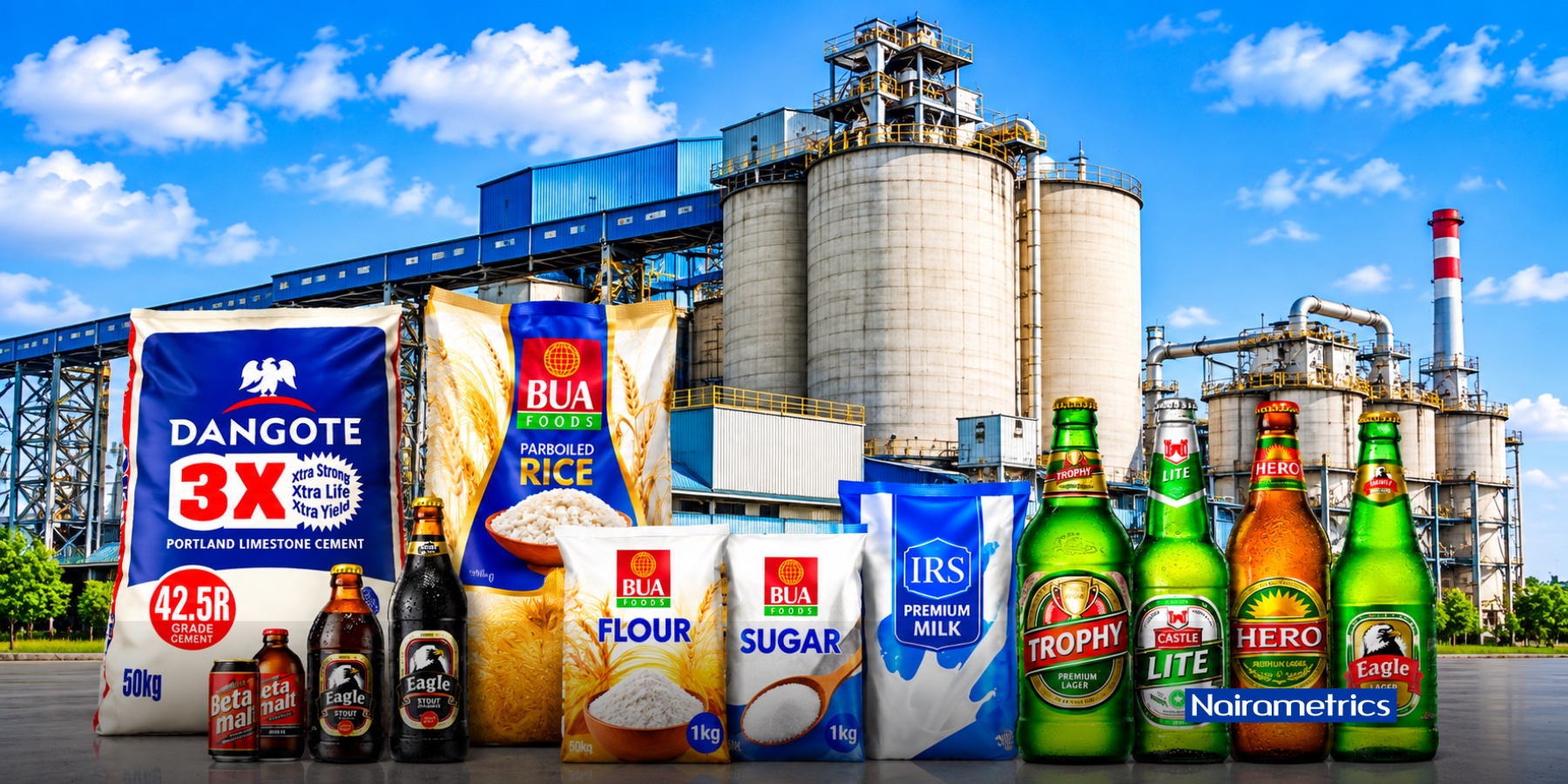
The accounts of Dangote Cement, BUA Foods, HBM Nigeria and International Breweries show what changed.
In the first nine months of 2025, their combined sales rose about 31% while the cost of what they sold rose 15%.
The broader sample of 10 listed manufacturers showed the same pattern in 2026: sales rose 10.7%, while the cost of what they sold fell 1.6%.
That left them with N53 out of every N100 of sales after those costs, up from N48 a year earlier.
Some manufacturers still had room to charge more, as cement showed. But the 2026 results give investors less reason to assume that the next rise in costs will simply land on the shopper’s bill.
A 50kg bag of cement that cost about N10,000 in Lagos and Ogun in September 2025 sold for N12,000 to N15,000 between July and September 2026.
Dangote’s Nigerian business shows what changed. In the first nine months of 2025, it took in about 42% more per tonne while selling roughly the same amount as a year earlier.
That suggests the market could bear higher prices this year. But the price at the dealer’s shop doesn’t tell us how much of the increase reached the factory or how much covered the cost of making and delivering the cement.
The next test is whether someone who needed 100 bags this year will still buy all 100 if the price rises again.
Higher palm oil prices helped Presco and Okomu grow sales in 2025 without a drop in the amount they sold.
That suggests they had room to charge more, though it’s hard to say how much of the increase covered higher costs.
In 2026, cheaper imported oil gave buyers an alternative and made it harder for local producers to raise prices.
In 2025, Nigerian Breweries raised prices to offset inflation. Its parent, Heineken, said revenue in Nigeria grew even though it sold less beer.
The brewers could still raise prices in 2026. Whether they can keep doing it is another matter. Heineken reported selling less in Nigeria in the third quarter as demand remained under pressure. The next price increase may bring in more per bottle. The question is how many bottles customers will still buy.
Higher prices helped BUA Foods, Nestlé Nigeria and Unilever Nigeria grow sales in 2025. A year later, BUA Foods shows how much the story had changed.
The lesson is that better margins in 2026 are a weaker sign that shoppers paid more. BUA Foods, Dangote Sugar and NASCON show how much a lower cost bill can do. The harder test comes if those costs rise again.
Only where buyers are willing and able to keep buying. Cement makers had the clearest room in 2026: buyers paid more, and the big producers still sold more.
Across the manufacturers reviewed, another round of price increases is too uncertain to build into a 2027 profit forecast.
The more durable route to higher earnings per share is to sell more while keeping costs under control. The better case for a higher valuation is a manufacturer that can show customers are still buying, costs are under control, and more of the money from sales is reaching shareholders as profit.