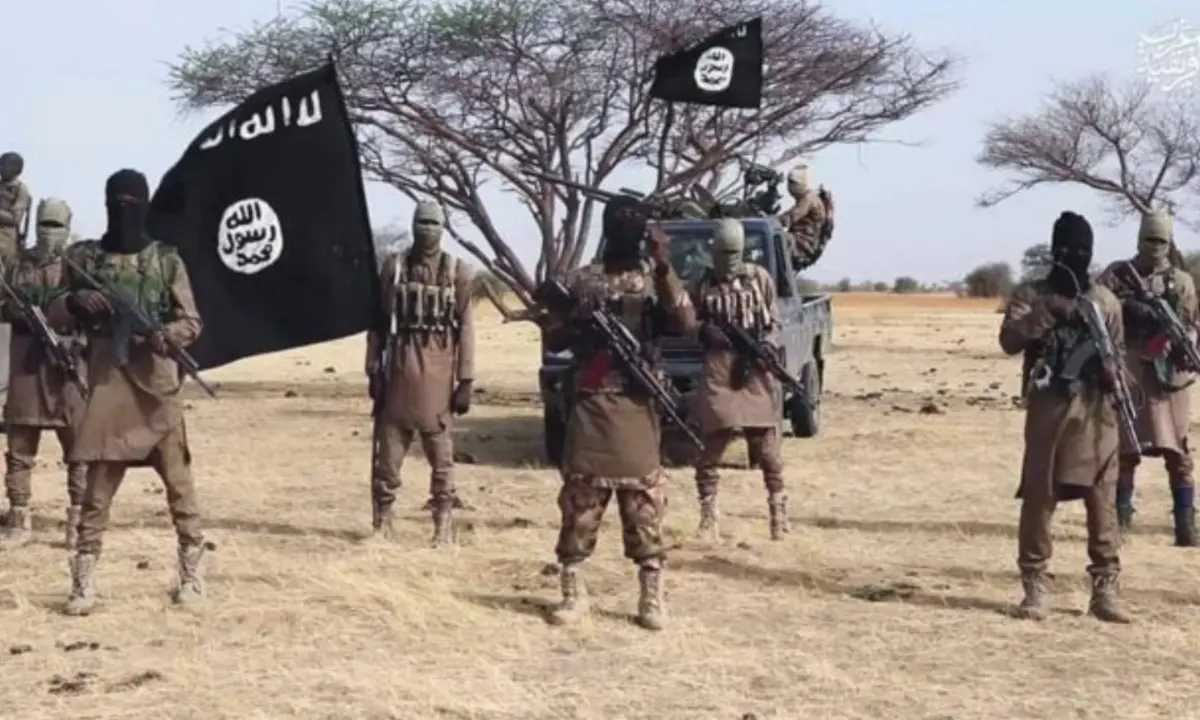
A senior commander of the Islamic State West Africa Province (ISWAP), Ba’a Shuwa, has reportedly declined an offer to assume a top leadership position within the terrorist group following the death of veteran insurgent leader Abubakar Mainok, also known as Abu Bilal al-Mainuki.
According to fresh intelligence assessments, the development comes in the aftermath of Mainok’s reported killing during a joint counterterrorism operation carried out by Nigerian and United States forces in the Lake Chad Basin.
The operation is said to have significantly weakened ISWAP’s command structure and triggered efforts by the group’s central leadership to reorganise its ranks.
Security sources familiar with the matter disclosed that following Mainok’s death, the Islamic State’s central command moved swiftly to identify influential figures within ISWAP who could fill the leadership vacuum.
Among those reportedly considered for a broader leadership role was Ba’a Shuwa, a senior figure believed to wield considerable influence within the terrorist organisation.
However, intelligence reports indicate that Shuwa has shown little interest in taking up the position despite being viewed as a suitable candidate by the group’s leadership.
Sources said the reluctance may be linked to growing fears among senior insurgent commanders over the increasing effectiveness of intelligence-led military operations in the Lake Chad region.
In recent months, several high-profile terrorist figures have reportedly been eliminated through targeted operations and precision airstrikes, creating uncertainty among surviving commanders.
Security analysts believe the trend has heightened concerns within ISWAP’s upper ranks, with many leaders now facing constant pressure from intensified military campaigns across the region.
Mainok, before his reported death, was regarded as one of ISWAP’s most influential commanders. He was widely believed to have played a key role in coordinating operations across Nigeria, Niger, Chad and Cameroon while maintaining strategic links with the wider Islamic State network.